


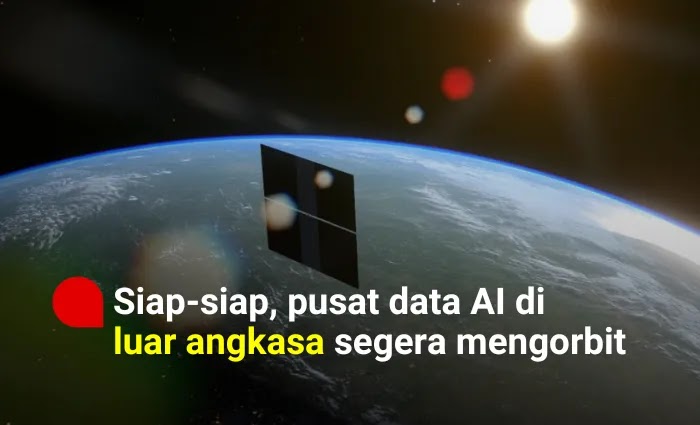
The race to build sustainable, high-performance data centers is entering a new era as AI infrastructure prepares to leave Earth’s surface. The first AI-powered space data center will soon orbit the planet, signaling a breakthrough in energy efficiency, carbon emissions reduction, and data processing power.
Starcloud, a technology startup that is partnered with the NVIDIA Inception program, is at the forefront of this revolutionary move. Their satellite, Starcloud-1, is scheduled for its inaugural launch, aiming to bring unparalleled GPU capabilities directly into Earth’s orbit.
AI Data Centers Take to the Skies
Traditional ground-based data centers increasingly face two critical challenges: massive energy consumption and cooling requirements. Starcloud hopes to solve both by positioning its data center hardware in space, where unlimited solar energy and natural cooling conditions are readily available.
Philip Johnston, CEO of Starcloud, shared that space offers nearly limitless, low-cost renewable energy. “The only environmental cost is at launch,” Johnston noted. “After launch, we expect a tenfold reduction in carbon dioxide emissions over the data center’s operational lifetime compared to terrestrial data centers.”
Technical Specifications and Environmental Impact
Starcloud’s orbital data center is projected to span approximately four kilometers and be powered exclusively by solar panels. With a planned capacity of up to 5 gigawatts, the facility promises to surpass conventional centers in both scale and sustainability.
This initiative will begin with a 60-kilogram satellite comparable in size to a small refrigerator. The satellite will be the first to carry the powerful NVIDIA H100 GPU into space, a major leap since prior satellite data systems operated at only a fraction of this performance.
Key features of Starcloud-1 include:
- Operating capacity equivalent to 100 times more computational power than legacy orbital data systems.
- Direct reliance on solar energy, providing substantial cost and efficiency benefits.
- Significant reduction in CO2 emissions—up to ten times less over the center’s service lifetime.
GPU Power Beyond Earth
The debut of NVIDIA’s H100 GPU in orbit symbolizes a major advance for scientific computing and AI research. Until now, space-based computing relied on lower-end processing units, limiting the types and scale of applications possible in fields such as climate modeling, space observation, and deep learning.
By deploying a data center module powered by the H100, Starcloud promises not only unmatched raw processing speed but also the flexibility required for fast-paced, evolving AI workloads.
How Space Advantages Address Terrestrial Limitations
Cooling is among the most pressing power consumption issues in data centers. Space, with its frigid vacuum, provides a natural environment for dissipating heat, allowing hardware to run efficiently without complex cooling infrastructures.
In addition, uninterrupted access to solar radiation enables centers to generate consistent power without depending on national energy grids or fossil fuels. This is a crucial advantage for sustainable long-term operations.
Potential Applications and Industry Impact
The high-powered orbital data center opens up new opportunities for industries seeking low-latency, high-bandwidth, and sustainable AI computing. Anticipated beneficiaries include:
- Earth observation and environmental monitoring.
- Deep space exploration missions.
- Secure, off-grid cloud computing for privacy-focused enterprises.
- Advanced AI research, including large-scale generative AI.
Enterprises and researchers could rent processing time on these orbital GPUs, granting access to resources traditionally limited by ground-based infrastructure constraints.
Sustainability Metrics and Global Relevance
With AI model training and data workloads projected to soar, energy consumption by data centers is a pressing environmental concern. According to Starcloud, their space-based approach yields a tenfold decrease in carbon emissions across the full system lifecycle compared to on-Earth data hubs.
This innovation dovetails with worldwide net-zero policies and green technology trends. Initiatives leveraging predominantly renewable energy sources can support the rise of AI while minimizing planetary impact.
Comparison Table: Earth vs. Space Data Centers
| Criteria | Terrestrial Data Center | Starcloud Space Data Center |
|---|---|---|
| Main Energy Source | Grid electricity, mix | Solar (space-based, continuous) |
| Cooling System | Complex HVAC, water, refrigerants | Space cooling (vacuum-assisted) |
| Carbon Emissions | High (energy + cooling) | 10x lower over operation lifecycle |
| GPU Power | High (limited by cooling/energy) | 100x greater (H100 in orbit) |
| Operational Cost | High (energy + infrastructure) | Lower after initial launch |
The Road Ahead for Space-Based Data Centers
Industry analysts expect that orbital data centers could set a new standard for future AI infrastructure. As more companies prioritize sustainability and efficiency in their digital operations, the feasibility and demand for off-planet data solutions will likely rise.
Research institutions, global enterprises, and even governments are closely monitoring Starcloud’s progress as the successful operation of Starcloud-1 may lead to a new blueprint for addressing the world’s rapidly growing digital processing needs.
Challenges and Future Prospects
Some technical and logistical obstacles still require attention, such as secure data uplink/downlink protocols, orbital debris management, and cost-effective mass deployment of larger data center structures. Startups and established aerospace agencies are exploring partnerships to address these challenges and finalize safe operational standards.
Further improvements in GPU design, energy storage, and satellite resilience will be critical in scaling space-based data centers from initial satellites to expansive orbital networks. Market observers expect a steady increase in private investment into this dynamic sector in the coming years.
Updates from Starcloud’s team and future launches are set to shape the global discussion around green technology, AI, and space exploration. As AI continues to evolve rapidly, so too does the infrastructure to power it—reaching above and beyond Earth’s atmosphere.