


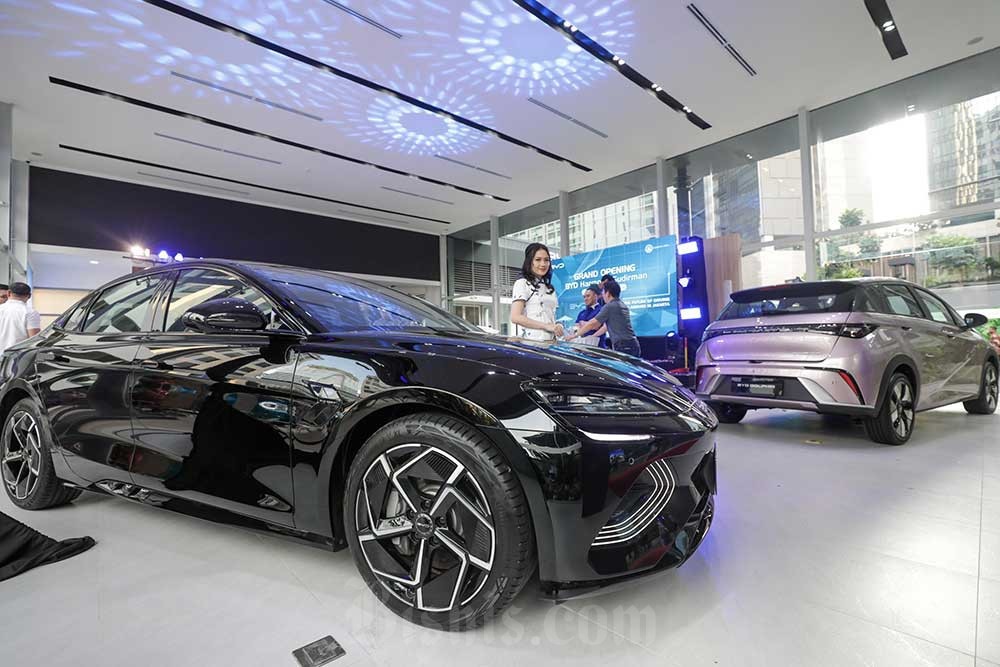
Electric vehicle (EV) sales have seen an outstanding surge, breaking previous industry records. According to the Indonesian Motor Vehicle Industry Association (Gaikindo), battery electric vehicle (BEV) wholesale sales reached 55,225 units in the first nine months of this year. This figure is a clear leap over the total of 43,188 units reported in all of the previous year.
The growing interest in EVs is driven by a steady influx of new brands and models to the market. More models mean more choices for consumers, which has led to stiffer competition and accelerated EV adoption across Indonesia. New players such as VinFast from Vietnam, Polytron, and Maxus have joined the local race, pushing established automakers to enhance innovation and localization.
EV Sales Growth and Market Dynamics
One of the key factors behind the spike in EV sales has been the active support from government incentives and policies. These incentives make electric vehicles more affordable for the public, encouraging faster transition from traditional vehicles to EVs. Gaikindo highlights that several manufacturers, like BYD, Geely, and VinFast, have benefitted from import incentives ahead of mandatory local production deadlines.
The Indonesian government is determined to end import-based incentives by the close of the current policy period. Automakers must then meet local content requirements, in line with the Domestic Component Level roadmap, to continue operating seamlessly. This regulation demands that manufacturers produce BEVs locally and match imports with local outputs at a one-to-one ratio. Failure to comply could lead to enforcement of bank guarantees as stipulated by the Ministry of Investment regulations.
Several OEMs have made strategic investments, totaling over Rp15.52 trillion, to comply with these future requirements. New manufacturing plants and local assembly lines are being established in preparation for these regulatory changes. For instance, BYD is currently building a factory in Subang, West Java, and aims for completion in the near term. This move not only gears up for compliance but also strengthens its foothold in the local market.
Competitive Landscape: Top 10 Best-Selling Electric Car Brands
Despite the crowded market, BYD stands out as the dominant player in the Indonesian EV space. Data reveals that BYD sold 20,077 units within nine months, far surpassing rival brands. The popularity of its models—such as Atto 3, Dolphin, and Seal—has been central to its success. The assemblage of stylish design, competitive range, and local assembly has cemented BYD’s market leadership.
Trailing BYD, Wuling secured the second spot with 8,345 units sold. Its core models, notably Air EV, Binguo EV, and Cloud EV, benefit from localized manufacturing at its Cikarang facility. Wuling’s combination of affordability and reliability resonates strongly with entry-level and urban EV buyers.
Denza, a premium sub-brand under the BYD Group, claimed third place by delivering 6,775 units. Denza only relies on one model, the D9, which has captured attention with its upscale features and modern design. Right behind Denza, Chery posted a strong performance, selling 6,170 units, primarily from its J6 and E5 models.
Here is a complete list of the top 10 best-selling electric car brands in Indonesia this year, based on wholesale sales data from Gaikindo:
- BYD – 20,077 units
- Wuling – 8,345 units
- Denza – 6,775 units
- Chery – 6,170 units
- Aion – 4,405 units
- VinFast – 2,841 units
- Geely – 1,876 units
- Hyundai – 1,164 units
- Morris Garage (MG) – 1,123 units
- Neta – 487 units
This ranking is shaped by both established and newcomer brands. Each competes on aspects of technology, price point, and local assembly, which play pivotal roles in consumer preferences.
Policy Shifts and Localization Challenges
Policy changes remain central to ongoing market transformation. With the deadline for import-based incentives fast approaching, automakers must accelerate investment and adaptation toward fully localized production. According to government regulations, starting from the next cycle, automakers cannot depend solely on imports for BEV distribution. Those who received incentives must fulfill their commitments to local manufacturing or risk penalties.
To support this mandate, automakers are rolling out strategic projects and partnerships with local suppliers. This not only assists with regulatory compliance, but also nurtures the domestic industrial ecosystem for electric vehicles. Industry analysts argue that this is the most sustainable way to ensure technology transfer and long-term growth of EV adoption in Indonesia.
Companies like BYD, Wuling, and even new entrants like VinFast and Aion, are integrating local supply chains and technology sharing. They are forming key partnerships to ensure vehicle parts, especially batteries and drivetrains, can meet required local content thresholds. This transition creates opportunities for Indonesian talent and suppliers to become a significant part of the EV value chain.
Consumer Adoption, New Players, and Market Trends
The rise in BEV sales also highlights positive changes in consumer attitudes towards electrified vehicles. Increased consumer awareness, widespread information on cost savings, and consistent government messaging have combined to fuel interest. Access to public charging infrastructure is improving, reducing consumer anxiety about range limitations and daily usability.
New brands continue to energize the market. VinFast and Maxus have made impressive entries, with VinFast recording 2,841 units sold. Their focus on affordable and feature-rich models responds to the evolving needs of Indonesian families and urban commuters. Polytron, a domestic brand, also represents a promising contender in the ongoing shift towards homegrown EV brands.
Chery and Aion, which ranked in the top five, show that mid- to premium-segment EVs are also gaining attention. Hyundai continues to stake its presence with over one thousand units sold, while the likes of MG and Neta, although still niche, indicate rising choices in the lower-priced segment.
Investment Impact and the Road Ahead
The escalation in sales numbers is a testament to the industry’s resilience and adaptability. Investments funneled into local EV assembly, new models, and charging infrastructure are paying off. Furthermore, these efforts align with Indonesia’s goals of reducing emissions and fostering industrial competitiveness at a global scale.
Market analysts project that with ongoing manufacturer investments and regulatory clarity, Indonesia will remain a go-to market for both global and local electric vehicle makers. The transition period is critical, especially as automakers pivot from imports to robust domestic production. As new models enter the market and brands bolster their ecosystem, Indonesian consumers are expected to enjoy greater variety and value in their electric mobility options. The momentum of EV adoption is likely to continue, changing the landscape of the country’s automotive industry for years to come.