


The clearest buying strategy in a market like this is no longer chasing the newest release, but setting a firm price ceiling before walking into a store. That matters more in May 2026, when many phones are getting more expensive while the spec sheet does not always improve at the same pace.
For buyers, the question has shifted from “what is new?” to “what still makes sense at this price?” In that context, several iPhone and Android models stand out not because they are the most hyped, but because they stay within a range that still feels rational.
Where iPhone prices still make sense
Apple’s older models remain relevant for buyers who want to avoid paying too much. A used iPhone 14 is still positioned at up to Rp7.8 million, while the used iPhone 14 Plus sits at Rp8.8 million.
Higher up the range, the used iPhone 14 Pro is around Rp10.7 million, and the used iPhone 14 Pro Max reaches Rp12.5 million. These prices show how quickly Apple’s premium tier rises, even before moving to the newer generation.
The iPhone 15 line gives a clearer picture of where the market currently feels stable. The regular iPhone 15 is at Rp15.0 million new and Rp10.7 million used, while the iPhone 15 Plus is Rp17.1 million new and Rp12.5 million used.
For buyers who want the Pro models, the iPhone 15 Pro is listed at Rp16.0 million new, and the iPhone 15 Pro Max at Rp19.6 million new. That already places them in a segment where price discipline matters more than impulse buying.
The iPhone 16 series climbs far higher. The iPhone 16 is at Rp22.5 million, the iPhone 16 Plus at Rp26.0 million, the iPhone 16 Pro at Rp30.3 million, and the iPhone 16 Pro Max at Rp37.5 million.
One model is singled out as relatively stable: the iPhone 17 is said to hold around Rp26.7 million. If a store is asking above that level, it is wiser to wait a few weeks until the market settles again.
Android buyers need to be even stricter at the entry level
The lower Android segment looks tempting on paper, but it is also where poor value shows up fastest. In the Rp1.5 million to Rp2.5 million range, devices with less than 6GB of RAM are better avoided because performance may start to lag within a few months.
Among the more sensible choices here, the Poco M7 Plus stands out at roughly Rp2.3 million to Rp2.5 million. It offers a 120Hz display, a 7,000 mAh battery, and reverse charging, although it relies on a single speaker and an 8MP front camera.
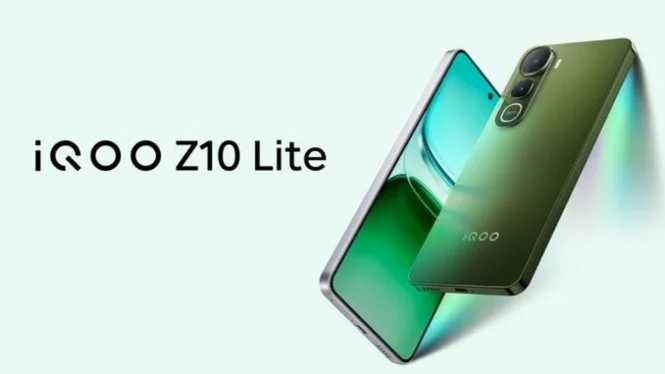
Another option is the iQOO Z10 Lite at around Rp2.5 million. It is aimed at users who want more mature low-light graphics performance, but it comes with a 90Hz drop-notch screen and 720p resolution.
The most balanced middle class is still crowded with practical options
The Rp3 million to Rp4.5 million range appears to be the sweet spot for most buyers. The CMF Phone 2 Pro, priced at Rp3.0 million to Rp3.2 million, is notable for its triple camera setup, AMOLED 120Hz display, and clean OS without bloatware.
Realme P4 sits a little higher at Rp3.3 million to Rp3.5 million. Its main strengths are a 7,000 mAh battery, an extra-bright HDR10 display, and a 3+4 year software update promise.
Motorola Edge 6 Fusion, priced at around Rp3.5 million, takes a different route with a curved body. Buyers still need to decide whether a curved display design suits daily use, since the appeal is more about feel than raw specification.
For most people, these choices are more sensible than pushing into a pricier class without a clear need. Balanced features often deliver more practical value than one extreme specification paired with clear compromises elsewhere.
Higher-value models are now defined by usability, not just specs
Realme P3 Ultra becomes interesting at around Rp4.1 million. Its main selling point is strong haptics and smoother animation optimization, which help the overall feel of the phone.
Vivo T4 Pro, priced around Rp4.4 million to Rp4.6 million, is better suited to buyers who care more about camera performance. It runs OriginOS 6 based on Android 15, but it does not include NFC.
OnePlus Nord CE6 comes in at Rp5.0 million and is positioned as an everyday all-rounder. Its distinct OnePlus haptic feedback is one of the features that makes it stand out in this crowded bracket.
Once the budget rises further, the value discussion becomes more specific. OnePlus Nord 6 at Rp6.5 million is described as the most complete flagship killer this year, with strong performance and long battery life, even though it still uses a polycarbonate body.
At Rp7.5 million, the iQOO 15R or OnePlus 15R is aimed at heavy gaming users. Both come with 256GB base storage and 4+6 years of OS updates.
The strongest long-term picks sit below the premium ceiling
Vivo X200T, priced around Rp9.0 million, remains one of the more interesting options below Rp10 million. The 512GB variant is especially notable if it can be found around Rp9.2 million.
Its combination of Zeiss cameras, haptics, and an ultrasonic sensor makes it highly competitive in that segment. For buyers who want a phone that can stay relevant for work and hobbies, that mix is hard to ignore.
At the top end, Oppo Find X9 sits between Rp11.3 million and Rp11.5 million. Its 6.6-inch size and camera quality, described as comparable to a professional pocket camera, make it a strong high-end choice.
Samsung Galaxy S25 Ultra is positioned at around Rp16.9 million to Rp17.2 million. Compared with a much more expensive S26 Ultra, the S25 Ultra is considered the smarter financial choice because its flagship feel, S-Pen quality, and battery endurance remain on the same level as the newer version.
For students or family purchases, a safe ceiling is still around Rp5 million. That makes models like the OnePlus Nord CE6 and CMF Phone 2 Pro more practical than forcing a jump into a higher tier that does not match the actual need.
For buyers who want a phone built to last through demanding work and long-term use, Vivo X200T and Samsung S25 Ultra remain among the most rational options available right now. In a market where prices keep climbing, both manage to offer a rare balance of hardware and long-term usefulness.