


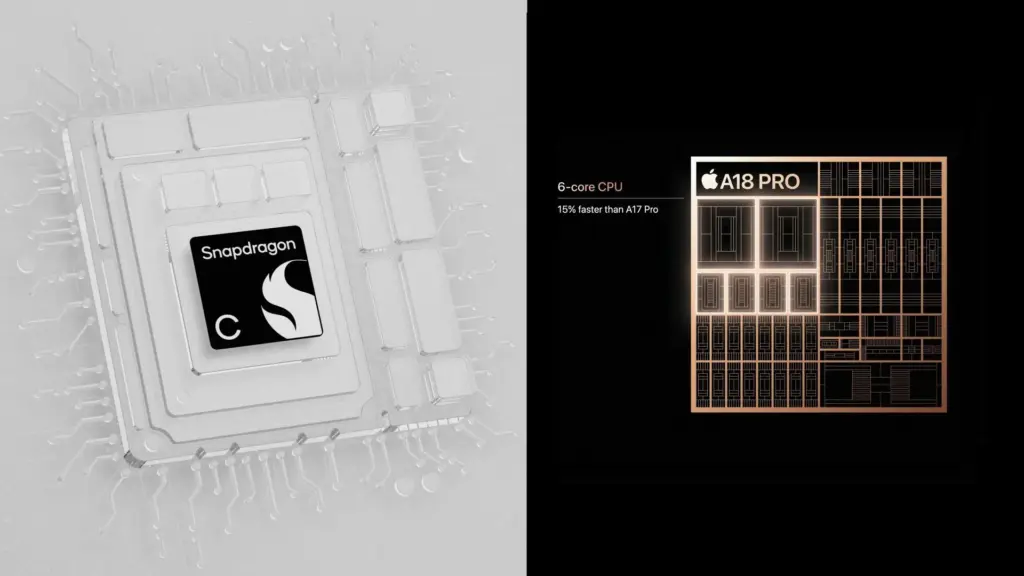
Qualcomm’s Snapdragon C is emerging as one of the company’s most serious attempts to break into the low-cost laptop market, where price alone has rarely been enough to win over buyers. With devices targeted to start at $300, the chip is being positioned not just as an affordable option, but as a challenge to the kind of premium feel that has made MacBook Neo stand out.
That matters because MacBook Neo has shown that a lower-priced laptop can still feel refined. Demand for the device has reportedly been so strong that Apple ran out of stock and is said to have had to produce the Neo at a higher cost.
What Snapdragon C needs to prove
For Qualcomm, the opportunity is clear: many Windows laptops in this price class still struggle to match build quality, battery life, performance, and the overall user experience. Snapdragon C is meant to raise the floor for cheap Windows laptops, not just undercut the market on price.
To be seen as a genuine rival, a Snapdragon C laptop has to deliver in four areas. Those are usable performance, strong app compatibility, solid battery life, and convincing build quality.
Two hurdles are already moving in the right direction
Among those requirements, two now look more promising than before. Microsoft’s latest PRISM update is said to have significantly improved app compatibility, while Qualcomm has confirmed that all-day battery life is a target for the Snapdragon C family.
That leaves performance and physical quality as the main deciding factors. Those are the areas that will separate a budget laptop that is merely cheap from one that feels close to premium.
Performance may define the whole project
Qualcomm already has a strong second-generation Oryon core in the X2 lineup, but that core is considered unlikely to appear in a budget-focused Snapdragon C chip. Qualcomm has also not revealed the core configuration in detail, which has fueled speculation that the chip will not use the custom Oryon design found in higher-end models.
If that turns out to be true, Snapdragon C will probably rely on reference ARM core designs instead. That would leave it well below Snapdragon X and X2 in raw power, but still intended to handle everyday tasks at its price point.
The most realistic expectation is simple, practical performance for common use. Some observers believe its capability could land around the level of Apple’s A18 Pro, which is used in MacBook Neo.
Cost control will shape the hardware
Price remains the other major constraint. To keep costs down, Qualcomm is likely to pair Snapdragon C devices with 8 GB of RAM, a choice that helps protect the starting price but does not automatically create a premium experience.
Hardware design will matter just as much as the silicon itself. Cooling, display quality, keyboard feel, and chassis materials will continue to define how the laptop is received once it reaches users.
At the expected $300 starting point, many models are likely to use plastic bodies. The case for competing with MacBook Neo may become stronger in higher-priced versions, especially around the $500 range, where metal chassis are considered more plausible.
A new fight in the budget laptop segment
That distinction is important because MacBook Neo is not winning only on specifications. It is also known for strong build quality, something that many inexpensive Windows laptops have struggled to match.
If Qualcomm can keep performance acceptable, maintain app compatibility, and deliver all-day battery life, the foundation of a serious alternative will be in place. Better materials on select models could help Snapdragon C approach the formula that has made MacBook Neo so attractive.
Qualcomm will not be alone in this segment for long. Intel is also said to be preparing a competing CPU for the same space through its Wildcat Lake platform, which suggests the battle for premium-feeling budget laptops is only beginning.
Source: tech.sportskeeda.com