


The next generation of Windows PCs may be built less like traditional computers and more like on-device AI workers. NVIDIA and Microsoft are pushing that shift by turning Windows machines into places where AI agents can operate locally, with faster responses and less reliance on the cloud.
That direction matters because cloud-based AI processing is starting to run into practical limits in everyday use. With new developer tools, software makers can build agents that understand system context more deeply and carry out tasks across apps with minimal delay.
Local AI agents are moving into Windows
The goal is no longer just to have an assistant that answers prompts. Local AI agents on Windows are designed to take action, handle multi-step workflows on their own, and do so in a way that is both secure and more efficient than conventional virtual assistants.
An on-device approach brings three clear advantages for users. It can automate workflows, improve privacy because inference happens on the local chip, and reduce dependence on the internet when users are offline.
In practical use, an AI agent could summarize documents from email, draft a presentation, and then schedule a meeting from a single command. That kind of flow reduces the need to move data manually between apps.
RTX Spark sits at the center of the hardware push
Running large language models locally requires serious compute power. NVIDIA is using Tensor Cores in GeForce RTX architecture and shifting heavy AI model execution to the GPU so the CPU can stay responsive.
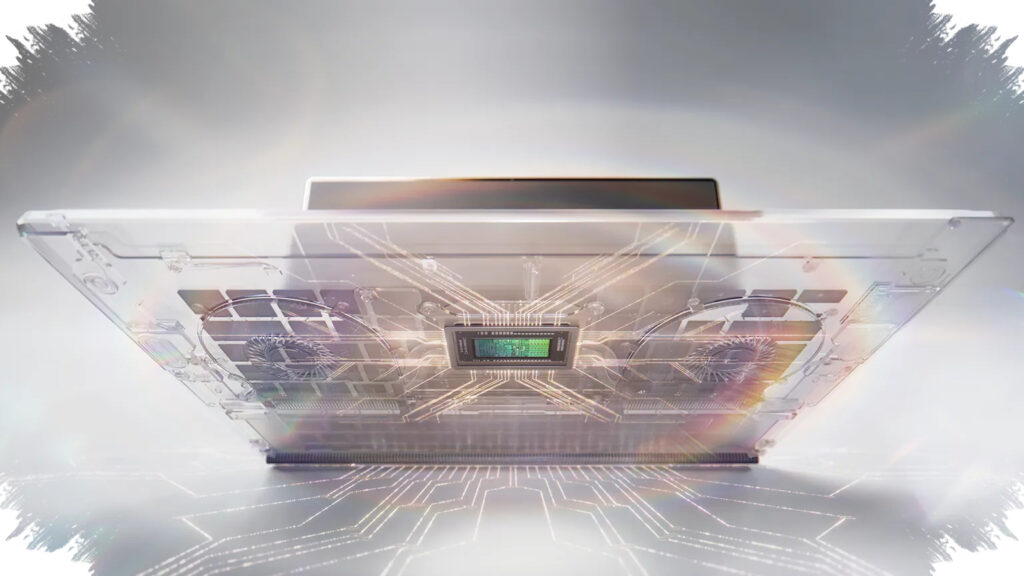
RTX Spark is the headline device in this approach. The family of processors combines a 20-core Arm-based Grace CPU developed with MediaTek, up to 6,144 Blackwell GPU cores, and up to 128GB of unified LPDDR5x memory in a single chip.
With that design, RTX Spark is described as NVIDIA’s first system-on-chip to unite high-end CPU and GPU computing in one package for the consumer segment. Based on the available data, the chip includes 20 CPU cores with a minimum clock of 2.81GHz and an iGPU whose performance is estimated to be on par with a GeForce RTX 5070 Ti.
A stronger push for Windows on Arm
RTX Spark also fits Microsoft’s Windows on Arm strategy. That move takes NVIDIA deeper into a market that has long been led by Qualcomm’s Snapdragon X lineup.
NVIDIA is positioning the chip-based device as the consumer version of Project Digits, the mini workstation PC introduced at CES 2025. The planned form factors include laptops and 2-in-1 notebooks.
Jensen Huang has described the launch as “the first PC line redesigned and reinvented in 40 years.” That framing reflects how broad the change is meant to be, not only in hardware performance but also in how the PC is expected to work.
Laptop models based on RTX Spark will be produced by Dell, HP, and Microsoft. For Windows users, that opens the door to laptops and workstations that are not only faster for graphics, but also better at understanding the context of work.
The combination of local processing, RTX acceleration, and Microsoft support gives Windows a new foundation. It points toward a class of PCs built for AI agents first, rather than systems that simply run traditional applications.