For many users in 2026, the real question is no longer whether a YouTube video can be saved for offline viewing, but which download method fits the job best. The answer now depends heavily on whether the priority is speed of access or steady performance over repeated use.
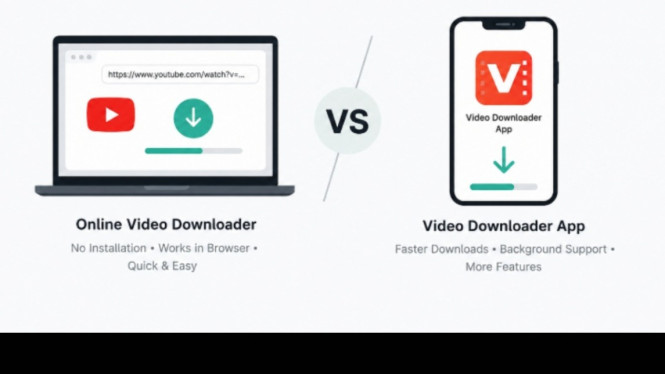
Two options dominate the conversation: browser-based online downloaders and dedicated Android apps. Both can pull video from the internet, but they behave very differently once the download starts.
When speed of access matters most

Online video downloaders are built for immediate use. They run directly in a browser, so there is nothing to install before a user can paste a YouTube link, choose a format or resolution, and download the file.
That makes the method attractive on borrowed devices, shared tablets, or phones with limited storage. It also avoids adding extra background processes that can weigh down a device.
In 2026, many online services support video up to 4K and process links faster than before. Compatibility has also expanded, with many platforms now supporting downloads from a wider range of social media services.
VidSave is one example of this type of service. It supports downloads from YouTube, Instagram, TikTok, Facebook, X/Twitter, Pinterest, Vimeo, and dozens of other platforms, along with MP3 options and a shortcut method that adds the word “vids” before a YouTube address.
Why Android apps still appeal to frequent users
Android downloader apps take a different route. They are native apps installed directly on the device, and many are distributed as APK files rather than through Google Play Store.
The setup is usually longer. Users need to download the APK from the official site, enable “Install from Unknown Sources,” and then complete the manual installation.
Once installed, though, the experience is often more convenient for people who download regularly. These apps usually offer background downloading, better file management, simultaneous multi-downloads, faster download speeds, and tighter integration with device storage.
VidMate remains one of the better-known options in 2026. It supports more than 1,000 websites, including YouTube, TikTok, Instagram, Facebook, and Pinterest, and it offers 4K video downloads, MP3 audio extraction up to 256kbps, batch downloading, and multi-threaded technology to speed up the process.
Where the performance gap becomes obvious
The strongest difference appears when large files or multiple downloads are involved. Online tools are limited because everything runs inside the browser, and many services handle only one download at a time.
They can also be interrupted if the browser tab is closed or the screen is locked. For a single quick download, that may not matter much.
Android apps use the device’s processor and memory more directly. With multi-threaded downloading, they can handle bigger files and 4K video more efficiently, especially when users process several files at once.
That is why online tools are still practical for occasional use, while Android apps are usually better for heavy, repeated downloading.
Storage, background use, and safety
Online downloaders have another advantage: they take up almost no extra storage beyond the file being saved. They are also lighter for older phones with limited RAM because they do not keep permanent services running in the background.
Android apps require more space and may run certain background processes. At the same time, that background support is part of the appeal, since downloads can continue while users switch to other apps, listen to music, or lock the screen.
Security also differs between the two approaches. Browser-based services are relatively safe because they run in a browser sandbox and typically do not ask for full device access.
The main risk with Android apps comes from unofficial APK sources. If the file is downloaded from the wrong place, malware can be introduced along with the app.
Which option fits which type of user
Occasional users, people who switch devices often, and anyone who wants a light solution without installing extra software will usually find online downloaders more suitable. They also work well when a quick answer is needed without much setup.
Android apps are better suited to people who download videos every day, want background downloading, need higher speed, and prefer to manage many media files in one place.
Many users end up using both. In practice, the online option wins on convenience and fast access, while the Android app remains the stronger choice when stability, speed, and long-term comfort matter more.