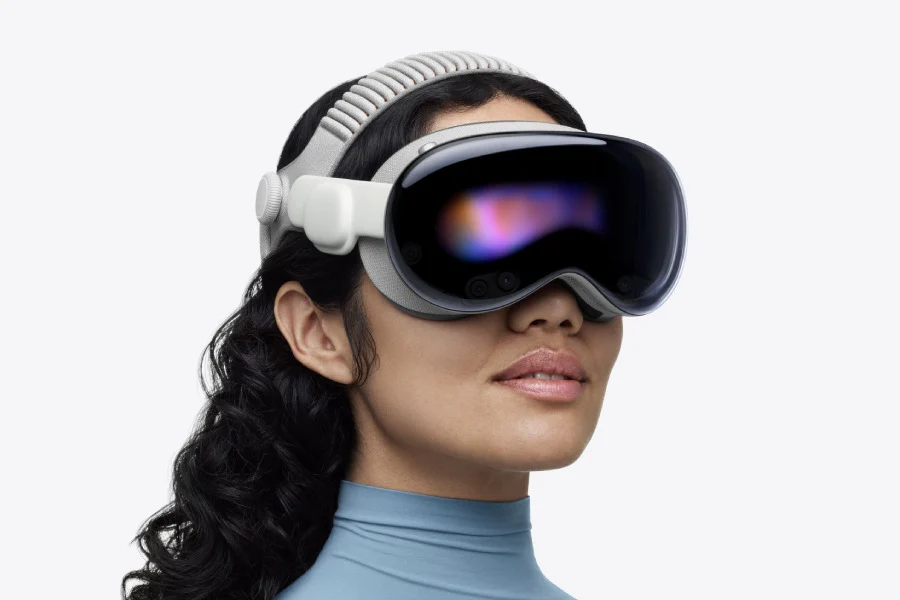
Apple’s wearable roadmap appears to be shifting in a big way, with smart glasses moving ahead of the next Vision Pro. That change suggests the company now sees lighter, more practical eyewear as a better path to mainstream use than a larger mixed reality headset.
Ming-Chi Kuo says the new direction has already been approved by Apple’s expected next CEO, John Ternus. According to Kuo, the company is now concentrating on two smart glasses projects while holding back a major expansion of the Vision line.
Vision Pro’s next step is said to be on hold
Kuo reports that Apple has stopped plans for both a second-generation Vision Pro and a lighter Vision Air model. The move simplifies Apple’s wearable lineup and shifts attention away from the headset category that had been expected to grow further.
That is a notable change from earlier expectations, when the Vision family was widely seen as the start of a broader headset strategy. Instead, Apple is now said to be prioritizing a product category that resembles everyday eyewear far more closely.
The shift also fits the broader direction of the market. Lighter wearables are easier to use for longer periods, and that makes them more appealing for regular consumers than bulky premium headsets.
Two smart glasses projects remain active
Apple’s current wearable push is centered on two different smart glasses efforts, according to Kuo. The first is a pair of AI smart glasses without a display, which is expected to compete with products such as Meta Ray-Ban smart glasses.
That display-free model is reportedly planned for 2027. It would give Apple a more accessible entry point into smart eyewear, focusing first on AI features rather than full augmented reality.
The second project is a more advanced AR model. This version is said to use optical waveguide technology to place digital content over the real world.
That AR glasses model is targeted for 2029 or later. The longer timeline suggests Apple still needs time to mature the technology before bringing a fuller AR experience to market.
The Vision line is not necessarily finished
Bloomberg’s Mark Gurman offers a slightly different view, although the overall direction is similar. He also says Apple has halted some headset-related projects, but he notes that the company is still testing Vision Pro 2 prototypes.
Gurman adds that the broader Vision headset category is being delayed. If a successor eventually arrives, he says it is unlikely to appear before the end of the decade.
Taken together, the two reports point to the same conclusion: smart glasses now look like Apple’s more urgent wearable priority. The Vision family may not be dead, but its near-term expansion appears to have lost momentum.
Why smart glasses make more sense right now
There is a practical reason behind the change. High-end mixed reality headsets can deliver immersive experiences, but their size, weight, and cost make them harder to wear all day.
Smart glasses offer a more natural alternative for daily use. If Apple can make them light and useful enough, they could become a much more common form of tech accessory.
That is why a display-free AI model may be the more realistic first step. It would let Apple introduce wearable AI before moving into the more complicated challenge of full AR glasses.
For now, Apple has not officially confirmed the long-term plan. Still, if the reported schedule holds, the company’s next major wearable moment could come with AI smart glasses in 2027, followed later by a more advanced AR version.
Source: www.gizmochina.com-

-
-
-