For buyers scanning the Rp2 jutaan class, three Xiaomi phones stand out for a simple reason: each one pairs Snapdragon performance with 8 GB of RAM, while still keeping the price within reach. The lineup starts at Rp2.399.000 and goes up to Rp2.699.000, according to prices listed at Erafone.
The appeal is not only about memory size. Each model takes a different route on storage, display, camera, and battery, so the best choice depends heavily on what matters most to the user.
The most affordable entry point
At the lowest price in the group, the Xiaomi Redmi Note 13 is listed at Rp2.399.000. It comes with 8 GB of RAM and 256 GB of internal storage, which is the largest storage capacity among the three.
Its performance is handled by the Qualcomm Snapdragon 685 octa-core chipset, which can reach speeds of up to 2.8 GHz. Xiaomi also gives it an AMOLED display, a detail that helps it stand out in this price bracket.
The camera setup is also the most ambitious here. The Redmi Note 13 uses a 108 MP main camera, supported by an 8 MP ultrawide lens, a 2 MP macro camera, and a 16 MP front camera.
Power comes from a 5,000 mAh battery with 33W fast charging. That combination makes the Redmi Note 13 the most aggressive package for users who want the lowest starting price without giving up storage or camera resolution.
A balanced option with familiar specs
Just above it sits the Xiaomi Redmi Note 12 at Rp2.499.000. The price difference is small, but the hardware shifts in a few important ways.
This model still relies on the Snapdragon 685 built on a 6 nm process and carries 8 GB of RAM. Its internal storage is 128 GB, so it offers less room than the Redmi Note 13, although it keeps the same AMOLED screen category.
The camera system is more modest, led by a 50 MP main camera. It is joined by an 8 MP ultrawide camera, a 2 MP macro camera, and a 13 MP front camera.
Battery capacity remains at 5,000 mAh, but the Redmi Note 12 adds a microSD slot. For users who prefer extra storage expansion over a larger built-in ROM, that feature can matter more than a higher base capacity.
The battery-focused alternative
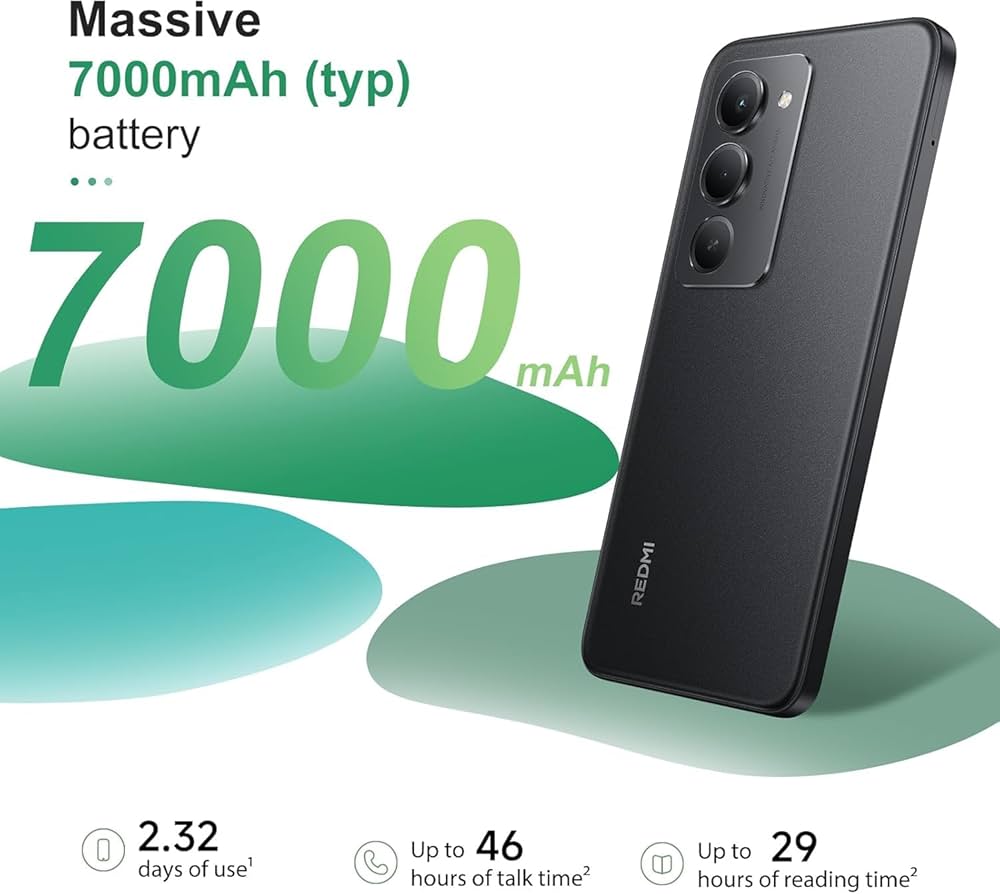
The third model in the lineup is the Xiaomi Redmi 15, priced at Rp2.699.000. It keeps the same Snapdragon 685 platform, 8 GB of RAM, and 128 GB of internal storage, while also supporting microSD expansion.
Its main distinction is endurance. The battery jumps to 7,000 mAh, far above the other two models in this group.
The Redmi 15 also changes the display approach by using an IPS LCD panel instead of AMOLED. Xiaomi positions it as a comfortable option for watching videos, browsing the web, and handling everyday tasks.
The camera setup is simpler as well, with a 50 MP main camera and an auxiliary lens on the back, plus an 8 MP front camera. That makes the Redmi 15 more clearly centered on battery life than on photography.
Quick comparison
| Model | Price | Chipset | RAM/Storage | Display | Rear Camera | Front Camera | Battery |
|---|---|---|---|---|---|---|---|
| Redmi Note 13 | Rp2.399.000 | Snapdragon 685 up to 2.8 GHz | 8 GB / 256 GB | AMOLED | 108 MP + 8 MP + 2 MP | 16 MP | 5,000 mAh, 33W |
| Redmi Note 12 | Rp2.499.000 | Snapdragon 685 (6 nm) | 8 GB / 128 GB | AMOLED | 50 MP + 8 MP + 2 MP | 13 MP | 5,000 mAh |
| Redmi 15 | Rp2.699.000 | Snapdragon 685 (6 nm) | 8 GB / 128 GB | IPS LCD | 50 MP + Auxiliary Lens | 8 MP | 7,000 mAh |
Among the three, the Redmi Note 13 is the easiest to notice on paper because it combines the lowest starting price with 256 GB of storage and a 108 MP main camera. The Redmi Note 12 fits users who want AMOLED and microSD support, while the Redmi 15 is the clear pick for those who place battery capacity above everything else.
Source: www.suara.com-
-

-

-