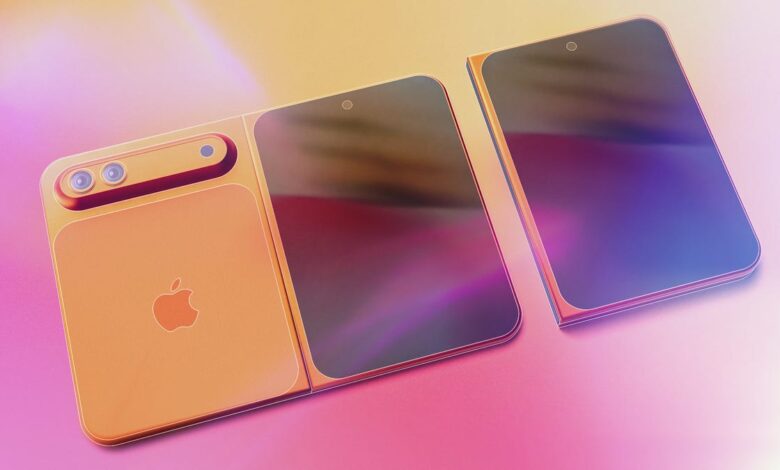
Apple’s next major software cycle is now drawing attention for what it appears to reveal about a future iPhone shape. Hidden signals in iOS 27 suggest the company is preparing support for a device that can open and fold, even though no such product has been officially announced.
The clearest clue comes from the first iOS 27 developer beta, where software researcher M1Astra reportedly found internal elements tied to a folding device. Apple appears to have built system-level logic that can detect whether a device is closed, partially open, or fully open.
That detail matters because foldable hardware depends heavily on hinge behavior. Software must know when to switch to a large-screen layout, when to present a partial view, and when to return to a standard phone interface.
Several internal terms point in the same direction. One mechanism is said to be called “foldState,” while other entries such as “mechanicalAngleDegrees” and “angleDegrees” indicate the system can read the opening angle with more precision.
The signs do not stop at hinge detection. Another area tied to Apple’s display update service includes references to a secondary screen, a second protective glass layer, and two additional light sensors.
Those additions suggest a more complex display setup than a regular iPhone. A foldable design would naturally make use of extra sensing and layered components, especially if the device needs to behave differently when folded or unfolded.
Software changes that fit a larger display
iOS 27 also includes features that appear useful for a foldable screen. Some widgets now support full-page formats, allowing apps such as Music, News, and Weather to fill an entire phone display.
On a standard iPhone, that may seem like a modest tweak. On a foldable device, however, a wider canvas makes it easier to place multiple panels side by side and use the extra space more efficiently.
Apple has also made related changes in macOS 27 Golden Gate. The company updated iPhone mirroring so a connected phone can be enlarged to roughly iPad size.
That update matches earlier reporting from Bloomberg, which said support for an iPad-like dimension would be an important part of the foldable iPhone experience. The pattern suggests Apple is preparing not only the hardware concept, but also the software behavior around it.
A message to developers
Apple used its Platforms State of the Union presentation after the keynote to highlight adaptability. The focus was on helping developers design apps that work across different screen sizes and aspect ratios.
That message is important for a foldable device, since the interface would need to stay usable in several states. Apps would have to work on a narrow display, adjust when the device is half open, and take advantage of the larger surface when it is fully opened.
By emphasizing flexibility early, Apple appears to be preparing its developer community for a form factor that does not follow the traditional iPhone model. The company has often been cautious when entering new product categories, so software clues are frequently read as early signs of a larger launch plan.
Rumors around the product itself
The rumored foldable iPhone is said to carry the name iPhone Ultra. It is also expected by some reports to arrive in September 2026 alongside the iPhone 18 Pro series.
Design details circulating around the device point to a shorter and wider profile. Its estimated price is around USD 2,000, placing it at the very top of Apple’s lineup.
Apple has not confirmed the device publicly. Even so, the combination of fold-related code in iOS 27, fuller widget layouts, upgraded iPhone mirroring, and an explicit push toward adaptability makes the direction hard to ignore.
For Apple, the software evidence suggests this is more than a concept exercise. The company appears to be preparing the operating system, the interface, and the developer tools needed for a foldable iPhone to arrive with a defined role from the start.