


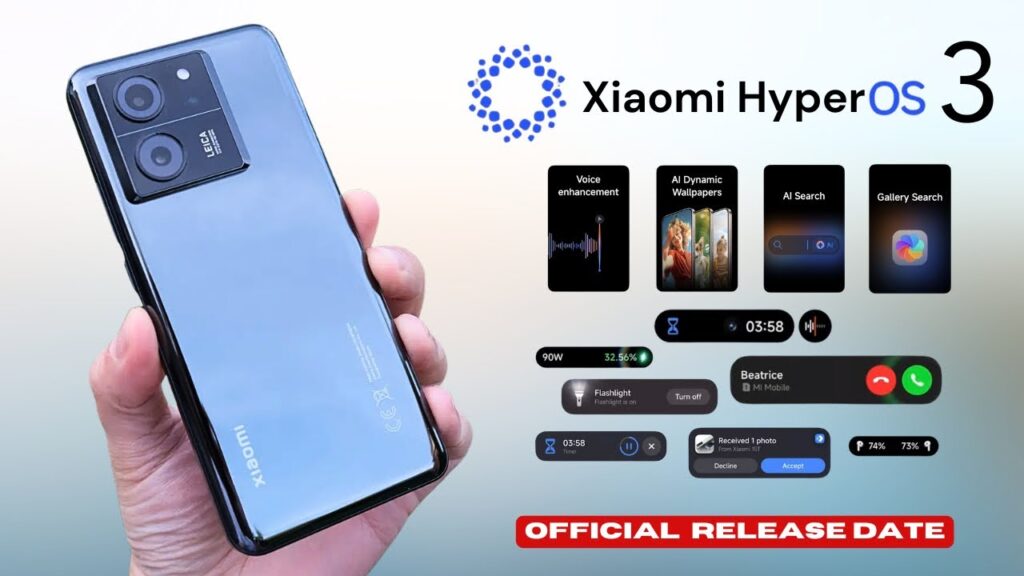
Xiaomi 13T users are finally seeing the update many had been waiting for, as Xiaomi begins rolling out stable HyperOS 3 based on Android 16. The upgrade arrives after the device spent a long time behind many other models that had already moved to the new system.
The rollout matters because Xiaomi 13T was still waiting while the first wave of HyperOS 3 reached premium models in October 2025 and later expanded to most eligible devices through March 2026. In Indonesia, the firmware is now starting to appear, with other regions expected to follow in the coming days.
The package is identified as OS3.0.1.0.WMFIDXM, and it marks a significant system change rather than a routine patch. Beyond interface updates, the release brings broader system refinements, a refreshed look, newer security patches, and a more modern feature set.
What HyperOS 3 Brings to Xiaomi 13T
One of the most visible additions is Xiaomi HyperIsland, a pill-shaped hub at the top of the display designed to surface and manage live activity more efficiently. Xiaomi has also expanded support beyond core system functions by integrating third-party apps such as WhatsApp, YouTube, and Spotify.
Personalization has also received a major push through AI Cinematic Lock Screen and AI Dynamic Wallpapers. Xiaomi says the lock-screen flow is smoother as well, including transitions from AOD to the lock screen and then to the home screen.
The update also strengthens cross-device integration, including support for Touch to share and the ability to run Xiaomi phone apps on iPad. Alongside that, Xiaomi has added AI Writing, AI Speech Recognition, AI Search, and AI Translate to the package.
Why the Update Took So Long
Xiaomi reportedly delayed the HyperOS 3 release for Xiaomi 13T because it was testing a new Android 16 kernel for the device. The kernel used in this build is version 6.12.38-android16, a core component that affects performance scheduling, memory management, graphics rendering, power use, hardware compatibility, and app compatibility.
Because the kernel sits so deep in the system, testing usually takes longer before a public release can begin. That appears to be the main reason Xiaomi 13T arrived later than many other Xiaomi devices that had already received HyperOS 3.
For users, the delay suggests a more careful validation process rather than a simple hold-up. Xiaomi seems to have chosen stability before wide distribution, especially for a major update tied to the operating system’s core layer.
Large Download, Clear Installation Requirements
The HyperOS 3 package for Xiaomi 13T is around 6.5 GB, which makes a stable Wi‑Fi connection the safer choice for downloading it. Users are also advised to keep the battery at least 40% charged before installing the update.
To check whether it is available, users can open Settings > About phone and then tap the HyperOS logo at the top. Since this is a major release, the download is larger than a normal security update and includes interface changes, new features, and the newer Android base.
The arrival of Android 16 on Xiaomi 13T gives the update extra weight, because it brings not only Xiaomi’s latest software layer but also the newest Android foundation on the device. For users in Indonesia, the appearance of OS3.0.1.0.WMFIDXM signals the start of official distribution, even if the rollout still reaches people in stages.
As HyperOS 3 continues to expand to more devices, Xiaomi is already preparing HyperOS 4 based on Android 17. For Xiaomi 13T owners, though, the immediate focus is the long-awaited upgrade that finally brings HyperIsland, AI features, broader device integration, and Android 16 to the phone.