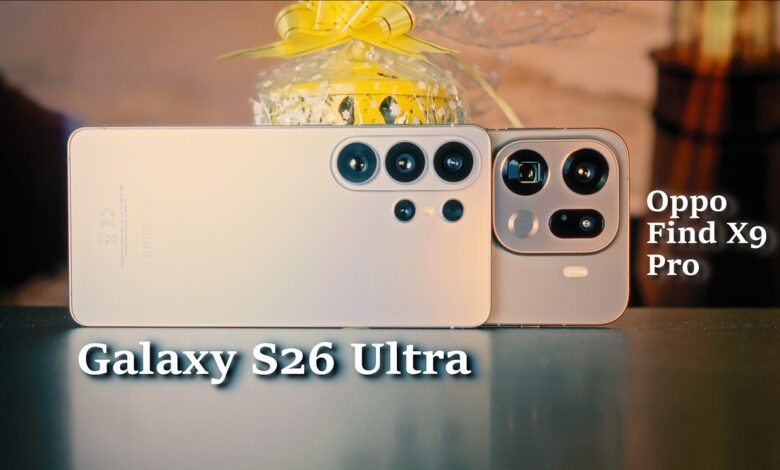
Flagship phone cameras are no longer judged only by Auto results or RAW output. Galaxy S26 Ultra and OPPO Find X9 Ultra now stand apart through special shooting modes that reveal two very different ideas of smartphone creativity.
Samsung builds a broad creative toolkit for many situations, while OPPO takes a narrower path with a stronger visual identity. That contrast becomes most visible in XPAN Mode, a feature inspired by Hasselblad’s legendary film camera heritage.
Samsung leans on flexibility and variety
Samsung treats versatility as the core of its camera strategy. Galaxy S26 Ultra includes a wide range of special modes, from computational lighting and astrophotography to AI-based tools that expand what users can do with a single camera system.
One of the most notable features is Single Take. With one shutter press, the camera can capture multiple photos and videos at once, then generate different versions such as alternate crops, filters, highlight clips, boomerang-style results, rewind effects, fast-forward clips, and alternative compositions.
The idea is to reduce the pressure of choosing the perfect frame before shooting. Samsung also makes Single Take available on the ultra-wide, 1x, 3x, and 5x cameras, which gives users more freedom across focal lengths.
Expert tools expand the creative range
Expert RAW pushes Samsung’s approach even further. Inside that mode, the company offers Virtual Reflector, Virtual Aperture, ND Filter, Multi Exposure, Astrophoto, Astroportrait, and Ocean Mode.
Several of these tools mimic professional photography gear. Others attempt to bring techniques usually associated with dedicated equipment into a smartphone, including long exposure work and astrophotography.
Samsung’s strategy is clearly aggressive in terms of volume and variety. For users who like to experiment with many shooting styles, that breadth creates a very open creative environment.
OPPO chooses a smaller but more distinctive path
OPPO follows a different direction. Find X9 Ultra does not try to outnumber Samsung’s special modes, but instead focuses on a shooting experience with a stronger sense of character and a closer link to classic camera culture.
The clearest example is XPAN Mode. It is not a regular panorama mode, but a digital interpretation of the Hasselblad XPAN film camera introduced in the late 1990s.
The original camera was known for producing ultra-wide panoramic images on 35 mm film with high quality and cinematic framing. OPPO tries to bring that spirit into the phone, rather than merely widening the frame.
In practice, XPAN Mode uses Hasselblad-style processing and creates a panoramic aspect ratio that looks immediately different from a standard smartphone photo. The result feels more deliberate, more cinematic, and more dependent on composition.
The mode also supports a wide range of focal lengths. XPAN can be used on the ultra-wide, 1x, 3x, and 10x cameras, helping the same visual style remain consistent across different zoom levels.
That consistency makes experimentation feel more controlled. Users can keep one visual identity even when switching between magnifications.
There is still a practical limitation, however. Some social platforms, including Instagram, do not fully support the panoramic ratio and may crop the image in ways that weaken the original effect.
Even with that drawback, XPAN remains one of the most distinctive creative experiences in the smartphone class. For visual identity and storytelling, OPPO’s approach is especially strong.
Virtual Reflector gives Samsung a subtle advantage
Samsung answers with a quieter but highly practical feature called Virtual Reflector. Instead of changing framing or perspective, it simulates a professional reflector to redistribute light across the subject.
The result is softer shadows, better facial balance, and more even illumination without any physical accessory. The processing is designed to stay natural and avoid looking exaggerated.
Unlike portrait effects that can feel heavy-handed, Virtual Reflector is meant to be nearly invisible to the casual eye. That makes it flexible enough to replace ordinary Auto shooting in many everyday situations.
Samsung also gives users a practical workflow advantage. A single shot can produce RAW and JPEG files at the same time, giving both a ready-to-share image and a file that still allows deeper editing.
Virtual Reflector currently works on the 1x, 3x, and 5x optical cameras. That keeps the feature useful across several important focal lengths while preserving a natural rendering style.
In the Special Modes category, Samsung scores 2 points against OPPO’s 1 point. Across the broader comparison, OPPO still leads 12 points to Samsung’s 11, which shows how close the contest remains.
Other evaluated categories include telemacro, zoom, design, camera usability, pre-order experience, unboxing, battery architecture, standby efficiency, charging, Auto photography, and RAW photography. After Special Modes, the race looks even tighter because the biggest difference is not raw image quality alone, but how each brand encourages users to create.