Apple used WWDC 2026 to unveil a major overhaul of Safari, and the update places Apple Intelligence at the center of the browsing experience. The changes are aimed at making the browser less passive and far more useful in everyday use.
For millions of iPhone and Mac users, that matters immediately because Safari is the default browser across Apple’s ecosystem. The new direction suggests Apple sees browsing as a space where AI can save time, reduce clutter, and handle repetitive tasks with less effort from the user.
Tabs Are Now Managed More Intelligently
One of the most visible changes is automatic tab organization. Apple Intelligence can now group open tabs by context inside Safari, removing the need to sort through a long row of similar site icons by hand.
The feature is designed for people who open many pages for research, shopping, work, or news reading. Instead of facing a crowded browser window, users get a setup that is easier to scan and simpler to navigate.
That change could matter most for users who regularly leave many tabs open at once. Safari is moving beyond a basic browser interface and starting to act more like a tool that recognizes browsing patterns.
Notify Me Adds A New Kind Of Monitoring
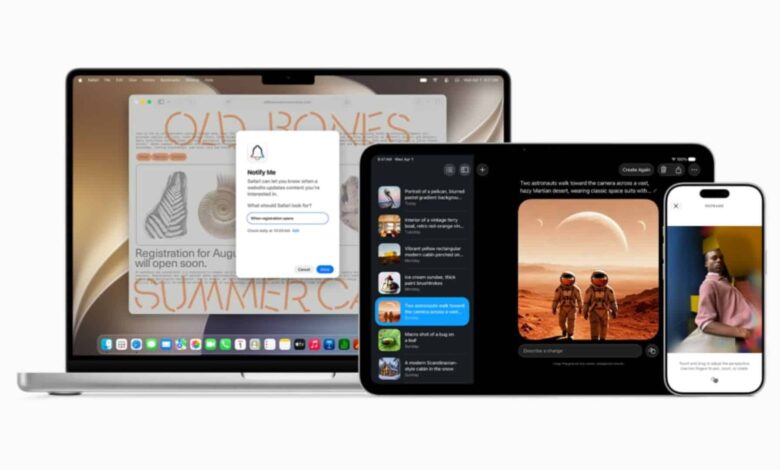
Apple also introduced Notify Me, a feature that watches selected web pages for changes and sends alerts when updates appear. It is meant to reduce the need for manual refreshing and repeated checking.
The use cases are straightforward and practical. Users can track limited stock items or price changes without keeping a page open and refreshing it over and over.
That turns Safari into something more proactive than a browser that simply opens websites. It can now help monitor information that usually demands constant attention from the user.
Apple Intelligence Reaches Into Extension Creation
Another notable addition is Describe an Extension, which lets users create their own Safari extensions with help from Apple Intelligence. The process starts with a prompt written in conversational English.
Apple Intelligence then generates the code needed for the custom extension and applies it directly in Safari. This opens a path for users to shape the browser around their own needs rather than relying only on prebuilt tools.
The idea reflects a broader shift in how Apple is presenting AI inside its software. Instead of limiting AI to content generation or simple assistance, Safari now uses it to help build browser functions themselves.
A More Active Browser Role In Apple’s Ecosystem
Taken together, the updates show Safari taking on a more active role inside Apple’s ecosystem. The browser is no longer positioned only as a gateway to the web, but as a digital assistant that organizes, watches, and adapts.
Apple is also clearly trying to keep the experience simple for the user. Tab grouping happens automatically, monitoring is set once and then runs in the background, and extension creation begins with a plain-language description.
That makes the Safari refresh one of the clearest examples of Apple Intelligence being used for everyday utility. The features are not limited to demonstration value; they target habits that many people repeat every day.
As more searching, shopping, work, and entertainment move through browsers, changes like these could have a wider impact than they first appear to. Safari’s WWDC 2026 update points toward a browser that is more adaptive, more efficient, and more helpful in routine online activity.