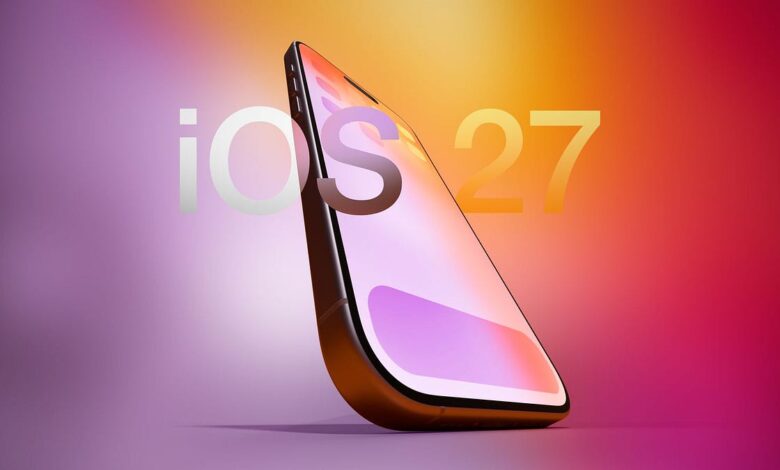
Apple’s iOS 27 will arrive with a sharper split than many iPhone owners expected. While newer devices are set to gain the next major update, models from the iPhone XS era and earlier will stop at iOS 26.
That means the upgrade path now depends heavily on hardware age. Anyone who wants iOS 27 will need an iPhone 11 or later, while older devices will be left behind even as Apple continues expanding its software platform.
These iPhones Will Not Get iOS 27
Apple has ended iOS 27 support for every model below the iPhone XR and iPhone XS line. The unsupported devices include iPhone XS, XS Max, XR, iPhone X, iPhone 8, 8 Plus, iPhone 7, 7 Plus, first-generation iPhone SE, iPhone 6s, 6s Plus, iPhone 6, and iPhone 6 Plus.
All of those models are expected to remain on iOS 26 as their final version. As a result, they will miss the newest security changes, interface updates, and ecosystem integration that arrive with iOS 27.
Why iPhone 11 Matters
Apple did not remove the iPhone 11 from the compatibility list, which makes it the oldest iPhone family that can still move to iOS 27. The iPhone 11, iPhone 11 Pro, and iPhone 11 Pro Max remain supported.
The compatible lineup also covers iPhone 12, 13, 14, 15, 16, and iPhone 17 models, including Pro, Pro Max, Plus, mini, 17e, Air, and 16e variants. For iPhone SE users, the second-generation model, third-generation model, and later versions are still eligible as well.
Support for the System Is Not the Same as Support for Apple Intelligence
iOS 27 may run on many iPhones, but Apple Intelligence is limited to a much smaller group. In the iPhone lineup, the AI features are available only on iPhone 17e, iPhone 17, iPhone 17 Pro, iPhone 17 Pro Max, iPhone Air, iPhone 16e, iPhone 16, iPhone 16 Plus, iPhone 16 Pro, iPhone 16 Pro Max, iPhone 15 Pro, and iPhone 15 Pro Max.
That leaves iPhone 15 non-Pro and every older model able to install the update without gaining the new AI layer. Devices such as iPhone 14, 13, 12, 11, and SE remain compatible with the operating system, but they will not receive Apple Intelligence.
What the AI Layer Adds
The Apple Intelligence package includes a Siri that can follow natural conversation context. It also brings automatic email and notification summaries, text rewriting in different styles, image search based on descriptions, and AI integration with third-party apps.
This separation shows a clear direction in Apple’s software strategy. The operating system can still reach a broad range of devices, but on-device AI appears to require far more capable hardware.
Beyond iPhone
Apple Intelligence is also available across other parts of Apple’s ecosystem. On iPad, support extends to the iPad mini with the A17 Pro chip and iPad and iPad Pro models with M1 or newer chips.
On Mac, support covers MacBook Air, MacBook Pro, iMac, and Mac Studio models with M1 or newer chips. Apple Watch support is available on Series 10+, Ultra 2+, and SE third-generation models when paired with a compatible iPhone, while Apple Vision Pro is also included.
Release Timing and What It Means for Older Users
Based on Apple’s release pattern over the past five years, iOS 27 is expected to reach the public around mid-September 2026, likely on 15 or 22 September, alongside the launch of the iPhone 18 series. Developer beta access has already begun with WWDC 2026, and the public beta is usually expected in July 2026.
For owners of iPhone XS and older devices, the message is straightforward: the hardware is nearing the end of its major software life. iPhone SE 2020 users still have some breathing room, since the A13 Bionic chip is considered strong enough for iOS 27 even without the most advanced AI features.
That leaves iPhone 11 users in a favorable position for now, with system support intact and no immediate cutoff in sight. For everyone below that line, iOS 26 is set to be the last stop.