


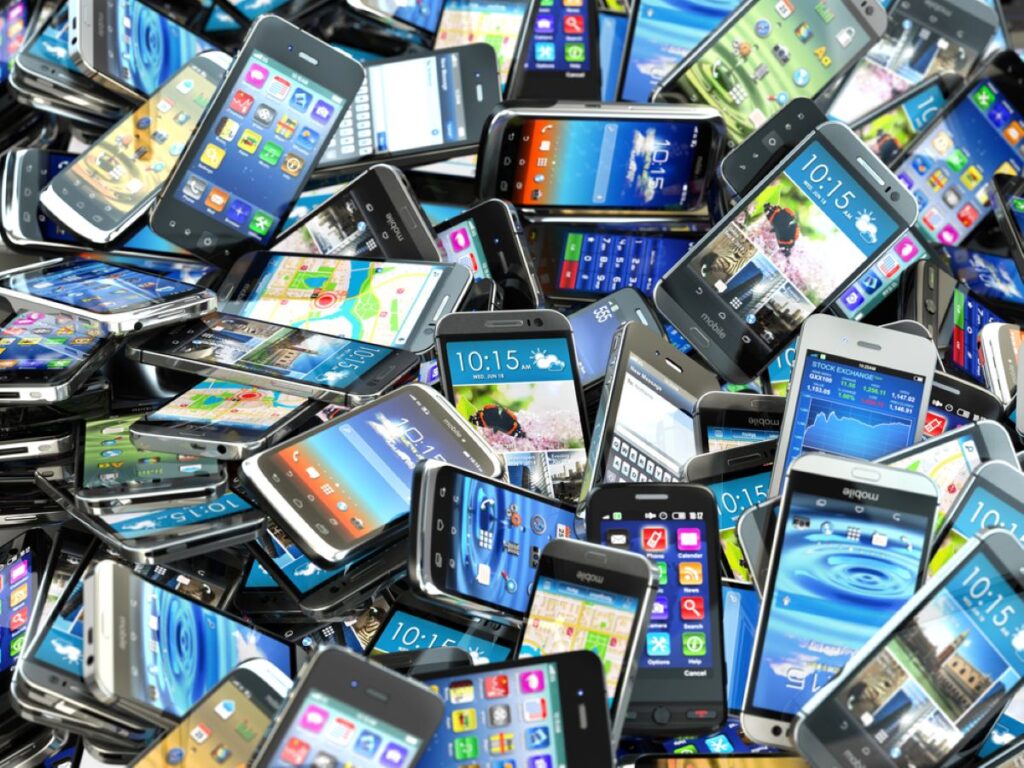
Old Pixel phones that were once considered obsolete are proving they still have substantial computing value. Google Research and UC San Diego have shown that discarded devices can be assembled into a compact data center that can match, and in some tests outperform, traditional server hardware.
The project used 2,000 retired Pixel devices and converted them into an infrastructure with computing power equivalent to 50 conventional servers. That result is drawing attention because it challenges the assumption that used smartphones are only useful as electronic waste.
Strong performance in benchmark tests
Testing showed that the Pixel Fold 2023 had a performance core that delivered higher per-thread output than an AMD EPYC server core in the SPEC CPU 2017 benchmark. Google also found that combining 25 to 50 phone motherboards could produce CPU throughput comparable to a modern dual-socket server.
The system also performed well in a classroom setting. A microcluster of 20 phones processed assignments from 75 students in a parallel programming course and finished in 50 seconds, faster than a comparable AWS instance.
How the phones were turned into servers
The conversion process stripped away the parts that were no longer needed. Screens, batteries, cameras, and speakers were removed, leaving only the motherboard with its system-on-chip, RAM, and storage.
Those boards were then mounted in server racks, powered by a centralized supply, and connected to a network like ordinary compute nodes. Android was replaced with a standard Linux distribution, then managed with Kubernetes so the phone cluster could operate like other cloud infrastructure for users and applications.
Why the project matters beyond speed
The value of the effort is not only about performance. About 50% of a smartphone’s manufacturing emissions come from the motherboard and processor assembly, so extending the life of those core components could reduce environmental impact.
The timing is notable as well. Smartphone upgrade cycles are typically only three to four years, yet much of the remaining computing capacity is often thrown away while companies keep building new servers for workloads that older devices may still handle.
Not a full replacement for data centers
Even with its promise, a phone-based cluster is not expected to replace large data centers soon. Managing thousands of heterogeneous phone boards is far more complicated than maintaining the standardization of a modern server facility.
There are also questions about long-term durability when the devices are pushed to run 24/7. Phones were never originally designed to spend their lives in a server rack.
Where the idea makes the most sense
The approach appears best suited to institutions with limited budgets that run parallel workloads, such as automated grading and batch analytics. In those scenarios, low-cost compute capacity can matter more than absolute reliability.
UC San Diego plans to launch the cluster in Fall 2026 to keep devices productive for longer. The project also points to another way to meet rising computing demand: using widely available devices already in circulation instead of building new infrastructure from scratch.