


Samsung is reportedly taking on a new role in Elon Musk’s business ecosystem, this time through a brain-implant chip for Neuralink. The move suggests the company’s semiconductor reach is expanding beyond electric vehicles, AI servers, and humanoid robots.
According to Hankyung, Samsung Foundry has started research and development on Neuralink’s fourth-generation chip. The project is said to carry the internal code name “O1” and marks Samsung’s first known contract win from Neuralink.
A chip built for direct brain-to-device control
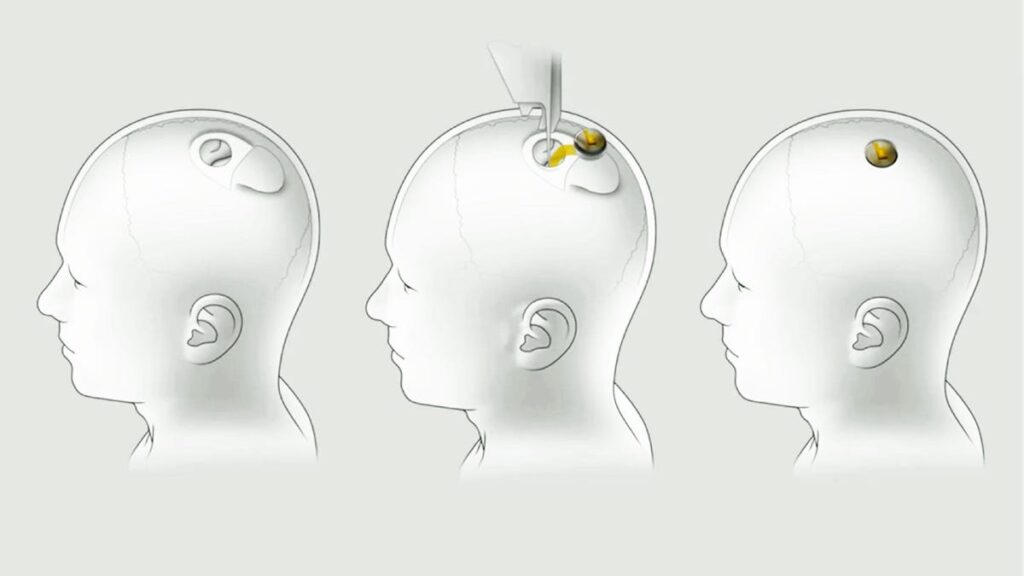
Neuralink is developing an implant designed to let users control devices through brain signals rather than physical movement. That makes the chip one of the most critical parts of the brain-computer interface system.
The implant is inserted through a surgical procedure that involves the skull, so reliability and efficiency are especially important. In that context, Samsung’s reported involvement places the foundry at the center of a highly sensitive medical-technology application.
The chip is said to use Samsung Foundry’s 4nm process, a sign that Neuralink is seeking high performance and power efficiency for the device. No additional technical specifications have been disclosed so far, including production volume or contract value.
Test production has already begun
The report says Samsung began work on the new chip at the end of last year, indicating that the project had been underway before the partnership became public. Test silicon production reportedly started last month, a key stage for checking whether the design and manufacturing flow are aligned.
If the schedule remains unchanged, the chip is planned for delivery in the first half of 2027. Mass production could begin in the second half of next year if testing goes smoothly, making the silicon validation phase a major decision point for the project.
The reported timeline suggests the chip is still in an early to mid-stage development phase, even though it has moved into testing. That also means the project remains dependent on whether the initial samples meet the required standards.
Samsung’s footprint around Musk keeps widening
The Neuralink work fits a broader pattern of cooperation between Samsung and companies linked to Musk. Samsung has already produced chips for Tesla electric vehicles, AI servers, and humanoid robots.
Adding a brain-implant chip to that list would push Samsung into an even more specialized field. For Samsung Foundry, the project could serve as a showcase of its ability to manufacture chips for demanding and unusual applications.
For Neuralink, working with a major foundry like Samsung could provide a more established manufacturing base as the company advances its technology. But because the information comes from a media report rather than a full official announcement from either company, some details may still change.
What is already clear is that the reported “O1” chip would mark another step in Samsung’s move into semiconductors for highly specific systems. It also shows how the foundry competition is now reaching brain-computer interface technology, an area that until recently remained far outside the mainstream chip business.