


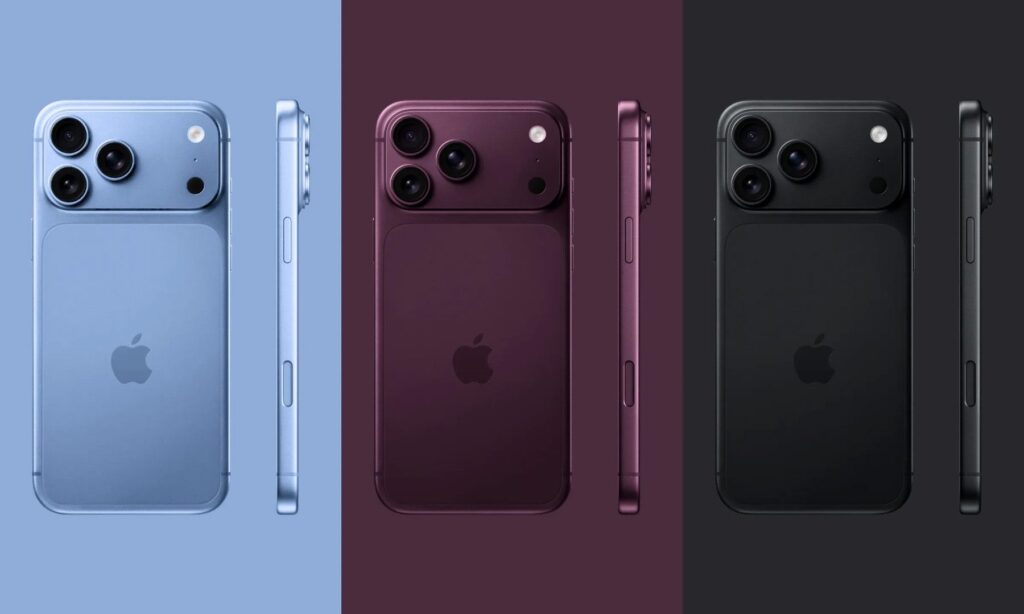
Apple appears ready to absorb another sharp price increase in its flagship line. The iPhone 18 Pro is expected to open at $1,399, a jump of $300 from the previous generation, yet the company is seen as having enough leverage to avoid immediate backlash.
The reason is simple: Apple remains deeply entrenched in the premium smartphone market. Its loyal user base, strong brand power, and high-margin business model give it room to raise prices while competitors still fight harder for scale.
Premium dominance gives Apple room to maneuver
Reporting cited from The Wall Street Journal points to Apple’s overwhelming position among high-end phone buyers. That strength makes the iPhone 18 Pro pricing strategy very different from rivals that depend more heavily on large shipment volumes.
Counterpoint Research data highlights the gap clearly. In 2025, Apple shipped 219.8 million smartphones priced at $600 or more, while Samsung shipped 60.4 million units in the same bracket.
Across the full market, the lead is narrower. Apple shipped 247.2 million smartphones overall, compared with Samsung’s 240.9 million, but the gap in premium devices is where Apple truly separates itself.
At the highest price tiers, the company’s influence is even stronger. iPhone models account for three-quarters of all smartphones sold at $1,000 or more, leaving Samsung, Huawei, and Google to split the remaining share.
Why a higher price still makes business sense
That dominance translates into profit. Apple is said to control 66% of gross profit in the smartphone industry, while Samsung holds 12% and Xiaomi just 2%.
With that kind of financial cushion, a higher entry price for iPhone 18 Pro does not automatically look dangerous. As long as premium demand holds and iPhone buyers stay loyal, Apple can defend strong margins.
The latest iPhone cycle also supports that argument. In the first quarter of 2026, Apple’s newest iPhone took three of the top-selling smartphone spots, while the iPhone 16 remained in the top five.
What is pushing prices upward
Apple CEO Tim Cook has pointed to rising memory costs as the main reason behind the price increase. He also said that many future releases are likely to cost more than the current generation because cost pressure continues to build.
The trend is not unique to Apple. Several rivals have already raised prices as well, suggesting that premium smartphones are entering a broader phase of higher pricing.
The broader market is shrinking, but premium demand is not
The global smartphone market is forecast to weaken overall. Shipments are expected to fall 14% from 1.26 billion units in 2025 to 1.09 billion units in 2026.
Premium devices are moving in the opposite direction. The category, which accounts for about a quarter of global shipments, is projected to grow 3.5% from 361 million units to 374 million units.
That shift gives Apple another reason to stay aggressive at the top end. When growth remains concentrated in premium devices, a high price does not necessarily block buyers who already favor the brand.
Risks still remain for Apple
Even with its strength, Apple is not without pressure. Concerns around a slower AI rollout and its absence from the foldable phone segment are beginning to draw attention.
Most loyal users are still expected to buy the iPhone 18 Pro regardless of the price. But this generation could also be the point where more ordinary buyers start reconsidering whether the premium is still worth paying.