


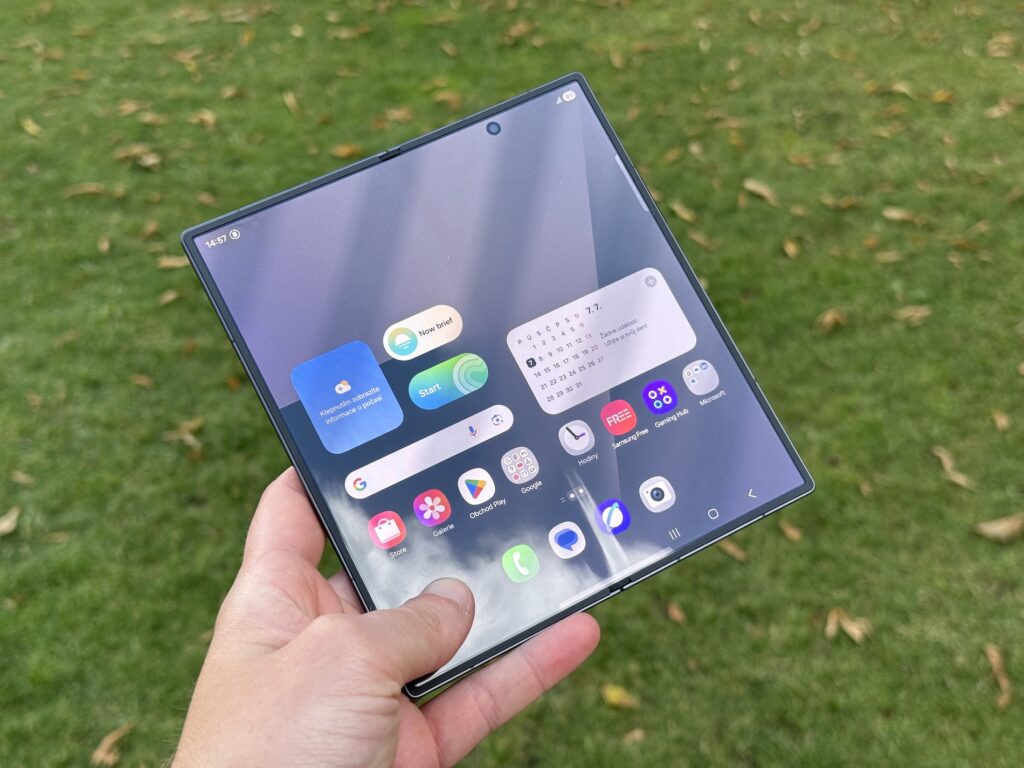
Samsung may be preparing a more durable foldable display strategy by making its Ultra Thin Glass noticeably thicker. The change is expected to appear first on a new model called Wide Fold, a device that could become one of the company’s most important foldables in the next lineup.
The move suggests Samsung is not only trying to reduce the visibility of the center crease, but also improve everyday resistance to pressure, scratches, and light impacts. If confirmed, it would mark one of the most meaningful display updates Samsung has made to its foldable line in years.
A thicker layer aimed at a stronger display
ZDNet Korea reports that Samsung plans to equip Wide Fold with UTG measuring about 60 micrometers. That would be thicker than the UTG used on several earlier Galaxy Z Fold generations.
A thicker UTG layer is expected to help soften the look of the crease in the middle of the panel. It may also offer better protection against external force, scratches, and minor knocks during daily use.
Samsung previously used thinner UTG to maximize flexibility. That approach helped the panel bend more easily, but it also made the crease more visible and reduced physical protection.
Wide Fold could join three new foldables
The same report says Samsung is preparing three new foldable devices: the Galaxy Z Flip 8, Galaxy Z Fold 8, and Wide Fold. That lineup would signal a broader push in the foldable market as competition continues to intensify.
Wide Fold is said to use a wider body with a shorter frame. When opened, its format is described as similar to a passport, giving users a larger canvas for multitasking and productivity.
Samsung is also looking to strengthen its position against Chinese rivals such as Huawei, Honor, and Vivo.
Samsung’s UTG approach has been evolving
The company has steadily adjusted UTG thickness across its foldables. The Galaxy Z Fold 6 reportedly used 30-micrometer UTG, while Samsung increased the figure to 45 micrometers on the Galaxy Z Fold SE and kept the same thickness for the Galaxy Z Fold 7.
On the other hand, the Galaxy Z Flip 7 is said to use UTG of around 50 micrometers. If the latest rumor proves accurate, Wide Fold would become the first Samsung device to go all the way to 60 micrometers.
Interestingly, the Galaxy Z Fold 8 is still expected to stay at 45 micrometers. That suggests Samsung may be testing market response before bringing the newer approach to a wider range of devices.
Possible test bed for future foldables
Industry observers see Wide Fold as a likely trial project for Samsung’s foldable roadmap. If the thicker UTG delivers a better experience without affecting the hinge or panel flexibility, the same technology could eventually reach later generations, including the Galaxy Z Fold 9.
From a business perspective, Samsung is also said to be targeting shipments of five to six million foldable units by the end of the year. Internal projections are reportedly more optimistic about the Galaxy Z Fold 8 and Wide Fold than about the Galaxy Z Flip 8.
One reason may be that the previous Flip generation did not sell as strongly as expected. Meanwhile, book-style foldables are still seen as gaining traction, especially in the premium segment.
Different supply chains for different foldable lines
The report also points to a split in Samsung’s foldable supply chain. Iconi and UTI are said to handle early UTG processing for the Galaxy Z Flip series, while Samsung performs the strengthening process itself.
For the Galaxy Z Fold and Wide Fold, front and back processing is reportedly handled by Dowinsys. The glass material is said to come from Corning and Schott, while the foldable OLED panels are made by Samsung Display.
For now, Wide Fold remains one of the most closely watched devices in Samsung’s foldable plans. Samsung has not confirmed the device’s existence or specifications.