


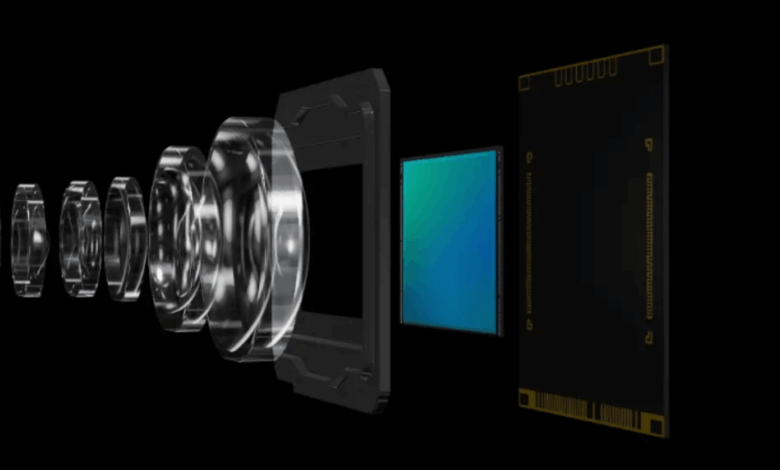
Sony’s new LYTIA 610 is designed to challenge one of the longest-running compromises in smartphone imaging: choosing between detail, autofocus speed, and video performance. The sensor aims to push all three forward at once, with the clearest payoff expected in secondary cameras such as telephoto modules.
The company positions the sensor as more than a routine spec upgrade. It combines a 64MP stacked CMOS design with a 1/2-inch format and 0.7μm pixels, and Sony says that setup is meant to improve image detail while keeping autofocus fast and accurate.
A new pixel structure built for sharper results
At the center of the LYTIA 610 is an RB2x2 On-Chip Lens, or OCL, structure that Sony says is the first of its kind to enter mass production in the industry. Instead of using the same lens arrangement across all pixels, the design gives green pixels individual lenses while red and blue pixels share a lens arrangement.
That architecture is meant to improve how light is captured across different colors, which should help both image clarity and autofocus precision. Sony says the result is more than a 20% increase in spatial resolution compared with conventional sensors using the same pixel size.
Video gains matter as much as still photos
The sensor is also built with video in mind. It supports 64MP capture at up to 24fps and 16MP pixel-binned output at up to 60fps, while 4K recording reaches 120fps.
Sony also lists 4K 60fps DAG-HDR support, underscoring that the sensor is intended for higher-quality footage and better dynamic range. Faster readout speed is another key element, since it allows the sensor to process more data in less time.
| LYTIA 610 Key Specs | Details |
|---|---|
| Sensor type | Stacked CMOS |
| Format | 1/2-inch |
| Resolution | 64MP |
| Pixel size | 0.7μm |
| Video support | 4K 120fps, 4K 60fps DAG-HDR |
Why telephoto cameras may benefit most
The most interesting implication of the LYTIA 610 may be outside the main camera. Sony says telephoto and other secondary modules could benefit from better image quality and stronger autofocus performance, areas where companion cameras often lag behind the primary sensor.
If that claim holds in real devices, multi-camera phone systems could become more balanced. Users would see less of a gap between wide and zoom cameras, especially when shooting detail-heavy scenes or moving subjects.
That matters in premium smartphones, where the value of a camera system is increasingly judged by how well all lenses work together. The main camera still matters, but the telephoto camera is no longer being treated as a simple add-on.
Sony has already framed the LYTIA 610 as a mass-production sensor, which means the next step is adoption by smartphone makers. How each manufacturer combines the sensor with lenses, image processing, and telephoto hardware will determine how far the new design can actually raise the bar for mobile photography.