


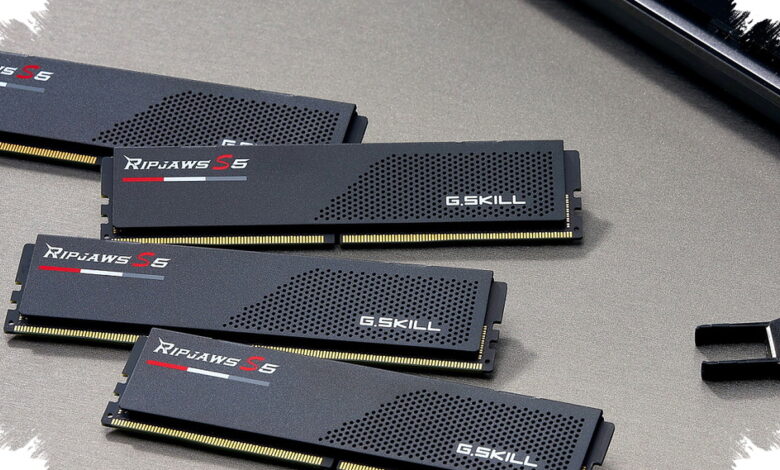
Global RAM prices are expected to stay under pressure throughout 2026 as demand from artificial intelligence infrastructure keeps reshaping the memory market. The strain may become most visible in the second half of the year, when analysts see the sharpest increases.
Forecasts point to a possible 40% to 50% jump in memory prices in the third quarter compared with the previous quarter, followed by another 30% to 40% rise in the fourth quarter. That would make the current shortage more than a short-term disruption.
AI is pulling supply toward data centers
The main driver is the rapid build-out of AI data centers, which require large volumes of high-spec memory. As more production is redirected to servers and other infrastructure, supply for consumer devices is tightening.
This shift affects personal computers, smartphones, and game consoles alike. What once served a broad consumer market is increasingly being allocated to the higher-margin server segment instead.
Ethan Tan, a memory industry consultant and former Samsung China executive, delivered the forecast in a briefing to analysts at Jefferies Equity Research. He said the expected price surge is well beyond what Western investors and Jefferies had initially anticipated.
The biggest suppliers are favoring servers
Samsung, SK Hynix, and Micron now account for nearly all global DRAM and NAND supply. The three companies are said to be prioritizing server memory because it offers stronger profit margins than consumer-focused products.
That commercial choice has a direct effect on everyday buyers. When less supply is left for mainstream devices, memory chips become harder to source and more expensive to buy.
The pressure does not stop at the component level. Higher memory costs eventually flow into the final price of laptops, desktops, phones, and consoles that consumers want to replace or upgrade.
| Period | Expected Change | Context |
|---|---|---|
| Q3 2026 | 40% to 50% increase | Compared with the previous quarter |
| Q4 2026 | 30% to 40% increase | Compared with the previous quarter |
| 2027 | 40% to 45% annual increase | Shortage still expected to continue |
| 2028 | 15% to 20% decline | Possible early recovery in memory prices |
Consumers are likely to feel it first
Recent years have already seen a steep rise in memory component prices, and that trend has made device upgrades more painful. Apple, Sony, and Microsoft are among the companies said to be affected by the higher hardware bill.
For consumers, the most immediate impact may be delayed purchases. Many buyers could postpone a new laptop, a custom PC, a phone, or a console until pricing becomes more stable.
Custom PC builders may face a double hit because RAM is rising while overall assembly costs also climb. That makes the upgrade cycle less attractive for users who want better performance without stretching their budgets.
Supply growth looks too small to close the gap
Ethan Tan estimates that modern semiconductor advances will raise supply by only 7% to 8% in 2026. That increase is unlikely to offset the much faster pace of demand from AI-related systems.
As a result, the memory shortage is expected to extend into 2027, with no clear sign of balance returning quickly. The first meaningful signs of relief are now projected to appear only when manufacturing capacity expands more broadly.
China remains unable to fill the hole
Chinese memory suppliers such as CXMT are not expected to become a major stabilizing force in 2026 or 2027. Their production remains limited by restricted access to advanced fabrication tools, including EUV lithography machines.
That technical barrier prevents domestic producers in China from making next-generation memory chips independently in the near term. Even so, NAND technology from China is still expected to narrow the gap with the global industry by 2028, when the broader market may also start to recover.
Until that happens, AI data centers are likely to keep absorbing much of the available supply. For the consumer market, that means RAM prices may remain elevated long after the current cycle of demand has become obvious.