


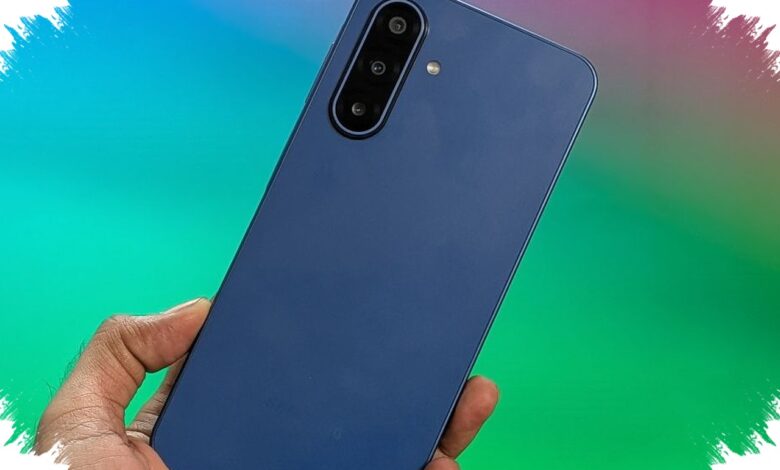
Samsung appears to be shifting its strategy for the Galaxy A18 Series, and the biggest change is likely reserved for the 5G model. Recent leaks suggest the Galaxy A18 5G will move away from Exynos and adopt Snapdragon, while the 4G version is expected to keep using MediaTek.
That split matters because the Galaxy A1x line has long been associated with Samsung’s own chipsets. In the entry-level segment, a change like this can shape how buyers judge performance, battery efficiency, and overall value.
Snapdragon for the 5G model
Information about the Galaxy A18 has surfaced through certification documents and specification leaks. Those details indicate Samsung is preparing two variants built on different platforms, not just different network support.
The Galaxy A18 5G is expected to use the Qualcomm Snapdragon 6s Gen 3. The chipset is built on a 6-nanometer process and is designed to deliver better power efficiency and stronger graphics performance than several earlier entry-level chips.
Snapdragon 6s Gen 3 features an octa-core CPU. Its setup includes two Cortex-A78 performance cores clocked at up to 2.3GHz and six Cortex-A55 efficiency cores.
The chipset also comes with an Adreno 619 GPU, an integrated 5G modem, and support for high-resolution cameras. That combination could make the Galaxy A18 5G better suited to multitasking and data-heavy apps.
| Model | Expected Chipset | Key Notes |
|---|---|---|
| Galaxy A18 5G | Snapdragon 6s Gen 3 | 6nm process, Adreno 619 GPU, integrated 5G modem |
| Galaxy A18 4G | MediaTek Helio G99 | Focused on everyday use and lighter gaming |
Exynos moves aside, MediaTek remains
The most notable shift is the absence of Exynos from the 5G model. If the leak proves accurate, the Galaxy A18 5G would be the first Galaxy A1x smartphone in several generations to skip Samsung’s in-house chipset in this category.
By contrast, the Galaxy A18 4G is said to stay with the MediaTek Helio G99. That processor is already familiar in the mid-range segment and remains competitive for daily tasks such as social media, video streaming, and light gaming.
The difference suggests Samsung is not only separating the Galaxy A18 by network compatibility. It also seems to be creating a clearer gap in user experience between the 4G and 5G versions.
A more flexible strategy for affordable phones
Samsung’s move appears aimed at matching performance with market demand while keeping prices competitive. Using two chipset vendors in one series is not new for the company, which has done so before to manage component availability, regional needs, and pricing strategy.
Even so, the switch from Exynos to Snapdragon on the Galaxy A18 5G stands out. The Galaxy A1x family has long been closely tied to Samsung’s own chips, so this change could signal a meaningful adjustment in strategy.
In Indonesia, the Galaxy A18 could arrive as the successor to the Galaxy A16, which previously came in both 4G and 5G variants. The Galaxy A16 targeted entry-level users and students, so the Galaxy A18 is expected to remain in the crowded affordable segment.
Samsung will face Xiaomi, OPPO, Vivo, Realme, and Infinix, all of which continue to push aggressively priced 5G phones. In that environment, Snapdragon on the 5G model could become a selling point, especially for buyers who care about performance and mobile gaming.
Familiar Galaxy A traits are still expected
Beyond the chipset, the leaked specifications suggest both devices will still carry familiar Galaxy A-series traits. Samsung is expected to equip them with an LCD display, a high refresh rate, a battery around 5,000mAh, and fast charging support.
The devices are also said to run One UI based on the latest Android version. Samsung is reportedly preparing a set of lighter Galaxy AI features that are gradually reaching mid-range and entry-level devices.
Still, there is no clarity yet on which AI features will appear on the Galaxy A18 Series. As of early July 2026, Samsung has also not announced an official launch schedule or the first countries to receive the device.
Appearing in certification documents is usually a sign that a formal launch is not far away. If the pattern follows previous generations, the Galaxy A18 Series could debut globally before reaching the Indonesian market.