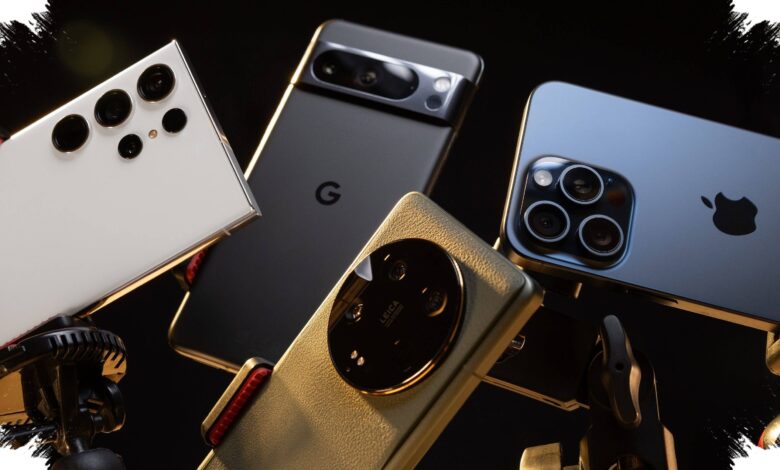
A blind video test involving three top-tier flagships has set up an unusual question for mobile camera fans: which phone actually delivers the best video when the brand name is hidden?
The devices in the comparison are the Samsung Galaxy S26 Ultra, Pixel 10 Pro XL, and iPhone 17 Pro Max, and the results are designed to be judged on the footage alone rather than on reputation or expectations.
A comparison built to remove bias
The test was carried out in collaboration with Versus, with Will from the video team joining Olive from Versus to watch a series of video samples and identify which phone captured each clip.
That blind setup matters because it pushes the evaluation away from brand loyalty and toward the actual look of the footage, including color, exposure, detail, processing, and overall balance.
Multiple shooting conditions were included
The comparison was not limited to one type of scene. The phones were tested in indoor and outdoor daylight conditions, along with portrait video, zoom, low-light footage, and selfie video.
Those scenarios matter because a device that looks strong in bright light may behave very differently once the environment changes.
| Device | Testing Context | Why It Matters |
|---|---|---|
| Samsung Galaxy S26 Ultra | Indoor, outdoor daylight, portrait, zoom, low light, selfie video | Shows consistency across a wide range of video situations |
| Pixel 10 Pro XL | Indoor, outdoor daylight, portrait, zoom, low light, selfie video | Reveals how well the phone handles processing and detail in different scenes |
| iPhone 17 Pro Max | Indoor, outdoor daylight, portrait, zoom, low light, selfie video | Highlights performance when the camera front and rear are both put to use |
Portrait video was included to show how each phone handles the subject and background separation. Zoom tests added another layer, since detail retention becomes more important as magnification increases.
Low light was one of the most important parts of the comparison, because that is where differences in noise handling, detail preservation, and stability usually become easier to see.
Selfie video also had a place in the test
Selfie footage was part of the evaluation as well, reflecting how often front cameras are used for video calls, social content, and everyday documentation.
By including the front camera, the comparison offered a broader look at each flagship instead of focusing only on the main rear camera.
The blind format changes the experience
For viewers, the format makes the test more interactive because the challenge is not just to compare results, but also to guess which phone produced each sample before the identities are revealed.
That approach can be especially revealing in a flagship battle, where expectations are often shaped long before the footage is watched.
The collaboration also adds another perspective, since the assessment comes from more than one viewer trying to recognize the visual character of each phone’s video output.
With Samsung Galaxy S26 Ultra, Pixel 10 Pro XL, and iPhone 17 Pro Max all in the same blind test, the comparison becomes less about familiar brand assumptions and more about which camera system stays strongest when judged on the footage alone.
Some of the outcomes are presented as potentially surprising, which is exactly what makes the blind format compelling for anyone following premium smartphone cameras.
In the end, the test asks a simple question in a difficult setting: when labels disappear, which flagship still looks like the best video phone?