


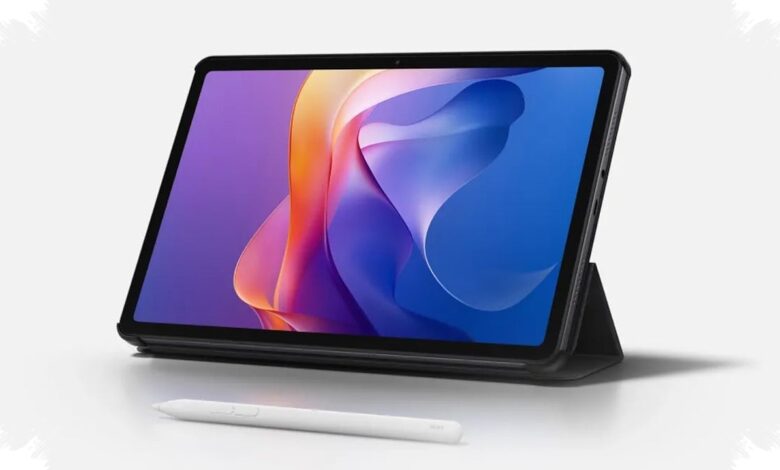
Redmi Pad 2 arrives with a clear message for buyers watching the entry-level tablet market: low cost does not have to mean limited usefulness. Priced at Rp2.999.000 for the 4 GB RAM and 128 GB storage variant, it positions itself as a practical option for everyday productivity.
That positioning matters because the segment is heating up again, and Xiaomi is leaning on a combination of display quality, battery life, and efficiency to make the device stand out. According to techno.viva.co.id, this mix gives Redmi Pad 2 a more serious profile for daily work than a typical budget entertainment tablet.
A Display That Does More Than Look Sharp
The strongest selling point is the 11-inch panel with 2.5K resolution, or 2,560 x 1,600 pixels. It also supports 1.07 billion colors, an AdaptiveSync 90 Hz refresh rate, and a peak brightness of 600 nits.
For users who spend time on text-heavy work, that combination should help spreadsheets, documents, and other detailed content remain easy to read. Xiaomi also adds DC Dimming and three-layer TÜV Rheinland certification to reduce eye strain during longer sessions.
| Display Detail | Redmi Pad 2 |
|---|---|
| Screen Size | 11 inches |
| Resolution | 2.5K, 2,560 x 1,600 pixels |
| Refresh Rate | AdaptiveSync 90 Hz |
| Peak Brightness | 600 nits |
| Colors | 1.07 billion colors |
Built for Daily Tasks, Not Heavy Workloads
Under the hood, Xiaomi uses the MediaTek Helio G100-Ultra built on a 6 nm process. The chip is paired with LPDDR4X RAM and UFS 2.2 storage.
For administrative work, cloud documents, article writing, and video meetings, that setup should remain smooth enough. The 4 GB RAM configuration, however, may feel tight once too many productivity apps are open at the same time.
| Component | Specification |
|---|---|
| Chipset | MediaTek Helio G100-Ultra |
| Process | 6 nm |
| RAM | LPDDR4X, 4 GB |
| Storage | UFS 2.2, 128 GB |
| Battery | 9,000 mAh |
Battery Life Is the Other Major Advantage
The 9,000 mAh battery is one of the main reasons Redmi Pad 2 looks attractive for long work sessions. In retail information from Erafone cited by techno.viva.co.id, the capacity is presented as enough to support consistent daily activity without frequent charging.
That kind of endurance helps the tablet avoid one of the most common weaknesses in low-cost devices. For students, writers, and freelancers who want a comfortable screen and long battery life, the package feels balanced.
There Are Still Clear Limits
Redmi Pad 2 is not designed to handle demanding work. Tasks such as 4K video editing or heavy database processing are expected to be limited by the Mali-G57 MC2 GPU.
So this is not a laptop replacement for users with more intensive workloads. But under Rp3 million, the tablet fills an important gap by focusing on the parts that matter most for everyday productivity.
It does not try to do everything, and that may be exactly why it makes sense. The display, battery, and practical hardware balance give Redmi Pad 2 a stronger identity than a budget tablet usually has.