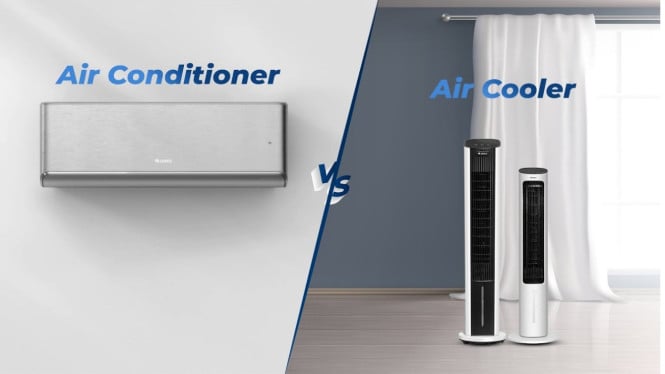
Choosing between an air conditioner (AC) and an air cooler depends on several factors such as room size, climate, and budget. Both devices cool the air but use very different methods and energy amounts to do so.
How Air Coolers Work
Air coolers operate on a simple evaporation principle. They pull hot air through wet pads, cooling the air by evaporation. Adding ice to the water tank can enhance the cooling effect, but this only lasts about 10-15 minutes until the ice melts. The fan then blows moist cool air into the room, which increases humidity.
How Air Conditioners Cool Rooms
ACs use a more complex refrigeration system involving a compressor and evaporator. The indoor unit’s evaporator cools down by refrigerant gas circulation, and a fan spreads the cold air evenly throughout the room. Unlike air coolers, ACs provide continuous cooling without needing ice or water replenishment.


Electricity Consumption Differences
Air coolers are extremely energy efficient, typically consuming only 50-90 watts per hour. This makes them suitable for homes with limited electrical capacity, such as those with 900-1300 watt power limits. On the other hand, a half-horsepower AC requires between 300-400 watts to run, greatly increasing electricity bills if used extensively.
Cooling Effectiveness and Room Suitability
Air coolers effectively cool only the immediate area where the airflow reaches. If you are not in the direct path of the cooler’s air, the room will not feel significantly cooler. ACs can lower the entire room temperature uniformly and maintain it according to the set temperature, often between 16-18°C, providing greater comfort.
Impact on Humidity Levels
Air coolers raise indoor humidity due to the evaporation process, which can lead to mold growth and damage to furniture. High humidity affects wooden and metal items negatively by causing decay and rust. ACs remove moisture from the air while cooling, helping maintain a dry and comfortable environment.
Ideal Usage for Air Coolers
Air coolers are best for small spaces around 3×4 meters or open areas such as verandas. They work well in dry, hot climates instead of humid regions. It is important to use them only in rooms with good ventilation and open windows or doors to prevent excess moisture buildup.
When AC Use Is Recommended
ACs are better suited for sealed or large rooms over 4×4 meters. They perform well in damp or tropical climates where controlling humidity is important. For sleeping comfort, ACs provide stable cooling throughout the night, unlike air coolers that lose effectiveness once the ice melts.
Investment and Maintenance Costs
Air coolers are budget-friendly, costing between approximately $35 and $140, and require minimal upkeep like cleaning filters occasionally. ACs start at about $175 and involve higher maintenance costs, including periodic professional servicing of filters and compressors, which can add to overall expenses.
Summary of Key Differences:
- Cooling Method: Air cooler → evaporation; AC → refrigeration.
- Power Usage: Air cooler → 50-90 watts; AC → 300-400 watts.
- Cooling Duration: Air cooler → limited (10-15 minutes cooler with ice); AC → continuous 24/7 cooling.
- Humidity Effect: Air cooler → increases; AC → decreases or maintains humidity.
- Ideal Room Type: Air cooler → small/open, dry areas; AC → large/closed, humid areas.
- Cost: Air cooler → low initial and maintenance cost; AC → higher investment and maintenance.
Choosing between an AC and an air cooler should align with your specific needs such as room size, climate, energy budget, and desired comfort level. Air coolers offer an economical and energy-saving solution for ventilated spaces in dry areas. Meanwhile, ACs provide superior, consistent cooling for enclosed rooms and humid climates despite higher electricity consumption.