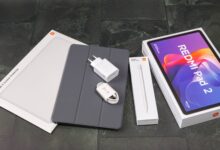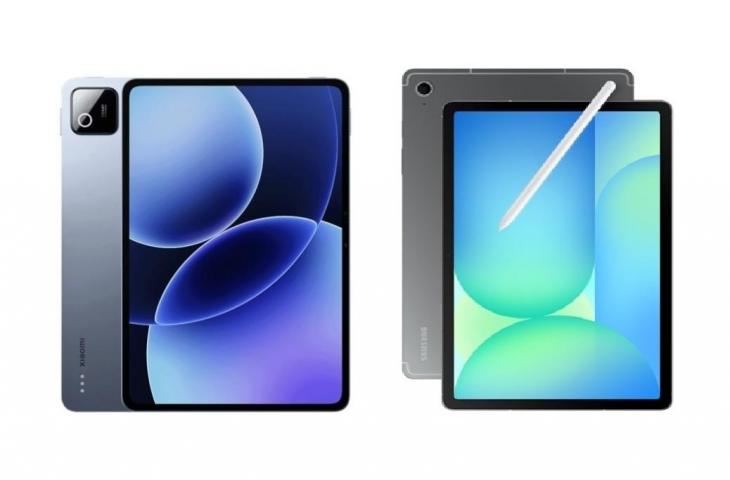
Xiaomi Pad 8 and Samsung Galaxy Tab S10 FE are two compelling tablets designed for daily activities such as working, learning, and entertainment. They both feature modern designs, sharp displays, and capable performance, yet differ in specifications, price, and features that can influence user choice.
The Xiaomi Pad 8 measures 250.5 x 162.5 x 6.26 mm and weighs 485 grams, with a thin aluminum body and matte finish to resist fingerprints. It has an IP53 rating for water and dust splashes and supports Xiaomi Smart Pen, making it suitable for school notes or digital sketching. Its slim design offers a comfortable grip for the 11.2-inch screen, although the bezels are slightly thick, which can reduce immersion.
In comparison, the Samsung Galaxy Tab S10 FE is more compact at 254.3 x 165.8 x 6.5 mm and weighs 523 grams. It features an aluminum frame with Gorilla Glass Victus and a flat-edge modern design in Gray, Silver, or Blue colors. Samsung provides an IP68 certification for underwater resistance up to 1.5 meters for 30 minutes, ideal for outdoor users, plus it includes an S Pen in-box for seamless note-taking. This tablet is sturdier for adventurous use, while Xiaomi feels lighter for travel.
The Xiaomi Pad 8 offers an 11.2-inch 3.2K (3200 x 2136 pixels) LCD screen with a 144Hz refresh rate and peak brightness of 800 nits. Its DCI-P3 color accuracy benefits PDF reading and Netflix streaming. The large screen supports split-screen multitasking and includes TÜV Rheinland eye comfort certification and Dolby Vision HDR. The display is sharp at 345 ppi, although its LCD nature means it has less contrast compared to OLED.
Meanwhile, the Samsung Galaxy Tab S10 FE uses a 10.9-inch WUXGA+ (1920 x 1200 pixels) TFT LCD with a 90Hz refresh rate and 800 nits brightness, protected by Gorilla Glass 5. It has a 16:10 aspect ratio suited for vertical productivity and wet touch technology for stylus use on wet surfaces. Xiaomi’s higher refresh rate benefits gamers and smooth scrolling, while Samsung’s display suffices for daily browsing. Both tablets include DC dimming for anti-flicker, but Xiaomi’s screen feels more immersive due to its faster refresh rate.
Under the hood, Xiaomi Pad 8 runs on the Snapdragon 8s Gen 4 chipset with octa-core up to 3.0 GHz paired with 8GB or 12GB RAM and up to 256GB of expandable storage. Its 4nm chipset achieves approximately 900,000 points in AnTuTu benchmarks and smoothly handles demanding games like Genshin Impact on medium settings with the Adreno GPU. The HyperOS 3 based on Android 16 integrates AI productivity tools such as drag-to-schedule and supports Wi-Fi 7 for stable connection. This makes it energy efficient and capable of running over 10 apps simultaneously.
The Samsung Galaxy Tab S10 FE is equipped with the Exynos 1580 octa-core processor up to 2.9 GHz, also with 8GB or 12GB RAM and 128GB or 256GB of expandable storage up to 1TB. It scores around 700,000 on AnTuTu, sufficient for photo editing in Lightroom or playing Free Fire at high settings with its Xclipse 540 GPU. Samsung’s One UI 7 on Android 15 features DeX mode for desktop-like experience and offers up to 4 years of updates. While Xiaomi leads on raw gaming power, Samsung shines with its AI ecosystem and long-term security patches.
Regarding cameras, Xiaomi Pad 8 carries a 13MP rear camera (f/2.2, autofocus) good for simple photos or QR code scanning and an 8MP front camera optimized for clear low-light video calls. It can shoot 4K video at 30 fps and has AI document modes, but lacks an ultra-wide lens, limiting group video call coverage.
The Samsung Galaxy Tab S10 FE features a 13MP rear camera (f/1.8, with optical image stabilization) suited for portraits and dual video recordings, plus a 12MP front camera with HDR for vivid selfies and video. It also supports 4K video at 30 fps with AI-enhancements for clarity. Although neither tablet has a macro lens, Samsung’s stabilization is better and the tablet benefits from additional accessories like tripods for steadier shots.
Battery life on the Xiaomi Pad 8 comes from a 9200mAh cell with 45W fast charging, delivering 12 to 14 hours of typical screen time for browsing and video streaming. It completes a full charge in about 1.5 hours and maintains standby for up to three days thanks to Qualcomm’s efficiency, making it ideal for long streaming sessions.
Samsung’s Galaxy Tab S10 FE houses an 8000mAh battery also supporting 45W fast charging and reverse charging. It lasts around 10 to 12 hours per charge and fully charges in 1.5 hours. Samsung optimizes battery usage with AI for up to two days in light usage. Neither device supports wireless charging, but both feature quad speakers with Dolby Atmos sound quality.
In summary, Xiaomi Pad 8 suits users prioritizing entertainment with a large, smooth display and strong performance for gaming and multitasking. Samsung Galaxy Tab S10 FE caters to productivity and creativity with robust stylus support, better durability, and integrated AI features. Both tablets have their unique strengths, making them appealing based on the user’s daily activity needs.