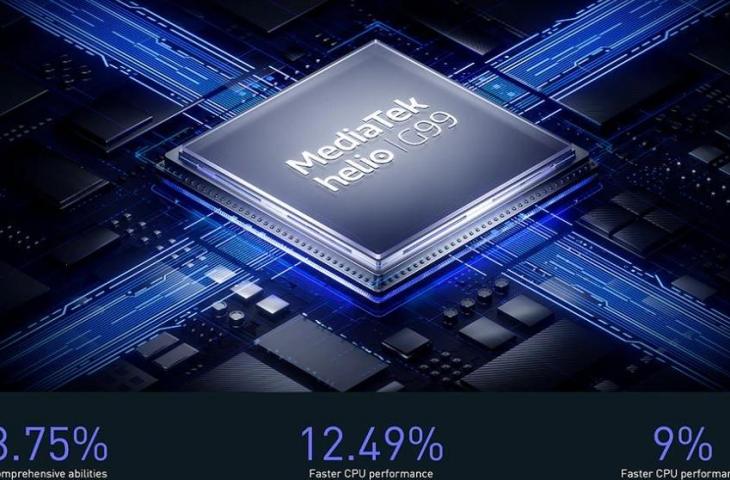
Snapdragon 680 and Helio G99 are two popular mid-range chipsets widely used in smartphones in 2025. Both offer efficient power consumption and reliable performance but cater to different needs. Snapdragon 680 emphasizes battery life and system stability, while Helio G99 targets gamers and users requiring higher multitasking capability.
Snapdragon 680, developed by Qualcomm, is built on a 6nm process featuring a CPU setup of 4x Kryo 265 Gold cores (Cortex-A73 at 2.4GHz) and 4x Kryo 265 Silver cores (Cortex-A53 at 1.9GHz). Its GPU is the Adreno 610, which supports smooth daily usage and moderate gaming. MediaTek’s Helio G99 also uses a 6nm TSMC process but incorporates 2x Cortex-A76 cores at 2.2GHz and 6x Cortex-A55 cores at 2.0GHz combined with the Mali-G57 MC2 GPU, providing better graphics rendering and performance for demanding titles.
When it comes to raw performance, benchmark results highlight a significant lead for the Helio G99. On AnTuTu v10, it scores approximately 400,000 points, while Snapdragon 680 settles around 280,000. Geekbench 6 shows single-core performance of 565 for Helio G99 compared to 413 for Snapdragon 680, and multi-core scores at 1,875 versus 1,539, respectively. In graphics testing with 3DMark Wild Life, Helio G99 achieves 1,101 points, markedly higher than Snapdragon’s 445. This gap underscores Helio G99’s suitability for gaming and resource-heavy applications.


Regarding gaming experience, Helio G99 can run titles like Genshin Impact at roughly 40 FPS on medium settings and PUBG Mobile at 60 FPS with high settings. Snapdragon 680 handles lighter games fluidly but may struggle with sustained high-frame-rate gaming. Additionally, Helio G99 supports faster RAM (LPDDR4x up to 4266MHz) compared to Snapdragon 680’s 2133MHz limit, aiding overall speed and multitasking capabilities.
On the power efficiency front, Snapdragon 680 outperforms Helio G99. Users can expect 10–15% longer battery life during browsing or streaming sessions. Its thermal management ensures cooler device temperatures even after extended use, contributing to system stability and comfortable handling. Snapdragon’s strong ISP (Image Signal Processor) called Spectra 346 supports camera sensors up to 108MP, making it a good choice for photography enthusiasts on a budget.
Both chipsets are commonly found in smartphones ranging from $130 to $220. Devices with Snapdragon 680, like Redmi Note 11 and Realme 9i, prioritize everyday use with consistent software support from Qualcomm, offering longer update cycles. Meanwhile, Helio G99 is favored in gaming-centric phones such as Infinix Note 30 and Tecno Pova 5, which often come with up to 12GB RAM and features like MediaTek’s HyperEngine 3.0 for smoother online play.
Key features at a glance:
1. Snapdragon 680:
– CPU: Octa-core Kryo 265 (Cortex-A73 + A53)
– GPU: Adreno 610
– RAM support: LPDDR4x up to 2133MHz
– Camera: Up to 108MP ISP
– Battery: More efficient, cooler temperatures
– Software: Longer update support from Qualcomm
2. Helio G99:
– CPU: 2x Cortex-A76 + 6x Cortex-A55
– GPU: Mali-G57 MC2
– RAM support: LPDDR4x up to 4266MHz
– Camera: Supports up to 200MP sensors
– Gaming: High frame-rate, smooth multitasking
– Connectivity: Bluetooth 5.2, AI processing via dedicated APU
Choosing between these chipsets boils down to user priorities. Those prioritizing excellent battery life, thermal efficiency, and stable daily performance lean towards Snapdragon 680. Conversely, gamers and multitasking-heavy users find Helio G99 more compelling given its superior processing power and graphics capability. Both chipsets bring solid value to mid-tier smartphones in 2025.