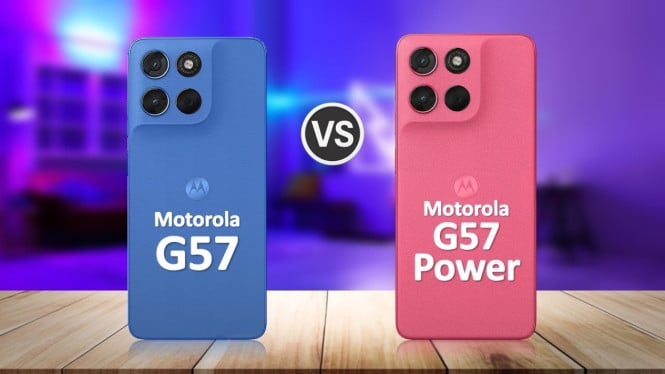
Motorola has recently unveiled two new mid-range smartphones, the Moto G57 and Moto G57 Power. Although they feature nearly identical designs, key differences emerge in their battery capacity and performance, targeting users seeking durable, modern, and efficient devices.
Both phones sport a slim body measuring 8.6 mm thick and weigh 210 grams with a volume of 109 cm³. Their sturdy build is complemented by an IP64 rating, protecting against dust and light water splashes such as rain, making them reliable for everyday activities. Motorola has maintained consistent physical dimensions across both models, focusing on a balance between aesthetic appeal and user comfort.
Display and Visuals
The Moto G57 duo impresses mainly through their displays. Each comes with a 6.72-inch IPS LCD screen that offers Full HD+ resolution (1080 x 2400 pixels), delivering sharp and crisp visuals at 392 pixels per inch (ppi). They both support a smooth 120Hz refresh rate, enhancing scrolling and gaming experiences. To guard against scratches and minor impacts, Gorilla Glass 7i protection is provided. However, Motorola has not officially disclosed the screen brightness level in nits.
Performance and Memory
Under the hood, both smartphones run the Qualcomm Snapdragon 6s Gen 4 chipset. This octa-core processor has four high-performance cores clocked at 2.4 GHz and four power-efficient cores at 1.8 GHz. Differences in RAM distinguish their multitasking capabilities: the Moto G57 includes 8GB of RAM, while the G57 Power boasts 12GB, benefiting users who engage in heavy gaming or video editing. Storage capacity is uniform at 256GB without support for microSD expansion, ample for extensive media and file storage needs.
Camera Systems
Both models offer a dual-camera setup with a 50MP primary sensor (f/1.8 aperture) and an 8MP ultra-wide lens (f/2.2 aperture). The front-facing camera is an 8MP shooter capable of clear selfies even in varied lighting conditions. Video recording supports up to 1440p at 30 frames per second. Despite solid camera specs, these phones lack optical image stabilization (OIS) and dual-tone LED flash, which may limit photo quality in low-light environments.
Operating System and Privacy Features
Equipped with Android 16, the latest version of Google’s operating system, both devices come with enhanced performance and security. Motorola integrates privacy safeguards such as clipboard alerts, location privacy options, and controls over camera and microphone access. Users can also customize themes extensively. On-device machine learning improves recognition of faces, places, and moments without sending data to external servers, reaffirming privacy protection.
Battery Life and Charging
The biggest distinction lies in battery capacity and charging features. Moto G57 Power contains a massive 7000 mAh battery, significantly larger than the 5200 mAh unit in the standard Moto G57. It supports 30W fast charging, whereas the regular G57 does not feature fast charging capabilities. The larger battery enables the G57 Power to last up to two full days under average use. Neither device supports wireless or reverse charging, but both provide battery indicators to help users monitor power levels effectively.
Audio and Connectivity
Both models retain a 3.5mm headphone jack and stereo speakers, offering enjoyable audio experiences for music and video consumption. Although they lack advanced audio codecs like LDAC or aptX HD, audio quality remains adequate. Connectivity options include 5G network support, Wi-Fi 5, Bluetooth 5.1, USB Type-C 2.0 ports, and a unique hybrid SIM setup allowing one physical SIM and one eSIM, but no expandable storage slot.
Choosing Between Moto G57 and G57 Power
Motorola’s Moto G57 and G57 Power cater to a similar audience, offering robust mid-range specifications with a focus on durability and versatility. The Moto G57 appeals to users seeking a balanced smartphone in terms of design, performance, and cost. Conversely, the G57 Power is ideal for those requiring extended battery life and faster charging, perfect for users with mobile lifestyles. Both share many features, but the decision ultimately depends on whether endurance or efficiency matters more to the individual buyer.