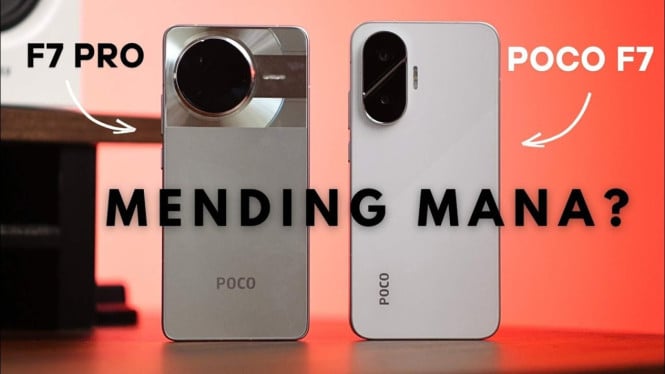
Poco’s latest flagship smartphones, the F7 and F7 Pro, present a tough choice for buyers due to significant differences despite close pricing. The price gap of around $100 separates two models that appeal to slightly different priorities: photography capabilities or raw performance.
Performance and Gaming
The Poco F7 sports the newer Snapdragon 8 Gen 4 chipset, while the F7 Pro uses last year’s Snapdragon 8 Gen 3. Interestingly, both variants offer up to 12GB RAM and 512GB storage, delivering nearly identical benchmark scores above 2 million on AnTuTu. In real gaming conditions, such as running Genshin Impact at 60fps on high settings, the F7 achieves an average of 59fps, slightly edging out the F7 Pro, which averages 58fps. This slim margin confirms both phones as powerful performers for demanding applications and gaming.
Camera Differences
Where the F7 Pro clearly pulls ahead is in camera performance. The Pro’s sensor delivers a wider dynamic range and more natural color tones. Additionally, it supports 4K 60fps log video recording, a feature tailored for content creators requiring high-quality footage with enhanced editing flexibility. In contrast, the Poco F7 shines in shooting RAW photos, appealing to professional photographers who prefer post-processing control. This distinction indicates that the F7 Pro targets multimedia users, whereas the F7 serves photography enthusiasts who work in RAW format.
Battery and Charging
Battery capacities differ by only 500mAh, but real-world endurance remains similar between the two models. Both phones emphasize power efficiency to maintain long daily usage. Fast charging technology rated at 90 watts powers both devices; the F7 Pro fully recharges in around 38 minutes compared to the F7’s 44 minutes. Such rapid charging times minimize downtime regardless of model choice.
Design and Display
Design philosophies diverge as well. The Poco F7 adopts a larger 6.83-inch screen with a simple matte finish resistant to fingerprints, projecting an elegant and sleek look. The F7 Pro opts for a more compact 6.67-inch display, favoring portability and a lighter form factor that increases everyday comfort. Additionally, the F7 Pro features an ultrasonic fingerprint sensor that offers faster, more accurate unlocking compared to the optical sensor on the F7.
Software and Additional Features
Software-wise, the F7 Pro boasts exclusive additions like AI-powered gallery search, manual video modes, and long exposure photography options. Both devices benefit from Xiaomi’s commitment to four years of software updates and six years of security patches. Standard flagship attributes such as IP68 water resistance and stereo speakers come included with both.
Choosing Between Camera and Performance
Considering the approximate $100 ($70 USD) price difference between the Poco F7 and F7 Pro, the F7 stands out for offering excellent value with its cutting-edge Snapdragon 8 Gen 4 and strong gaming capabilities. However, those prioritizing superior camera quality, compactness, and advanced features will find the F7 Pro a better fit.
Summary Table
- Processor: F7 (Snapdragon 8 Gen 4) vs. F7 Pro (Snapdragon 8 Gen 3)
- RAM/Storage: Both up to 12GB/512GB
- Gaming performance: Nearly identical with minor fps difference
- Camera: F7 Pro has better dynamic range, log video; F7 excels in RAW photos
- Battery: Similar capacity; F7 Pro charges faster (38 min vs. 44 min)
- Screen: F7 larger (6.83") with matte finish; F7 Pro smaller (6.67") and compact
- Fingerprint Sensor: Ultrasonic (F7 Pro) vs. Optical (F7)
- Software Features: F7 Pro offers AI search and manual video modes
- Price difference: Approx. $70 USD
Ultimately, choosing between Poco’s F7 and F7 Pro depends on whether you lean toward top camera specs and extra software perks or prefer the latest processor and slightly better gaming performance. Both models deliver flagship experiences in 2025 with competitive pricing and long-term software support.
-

-

-

-