

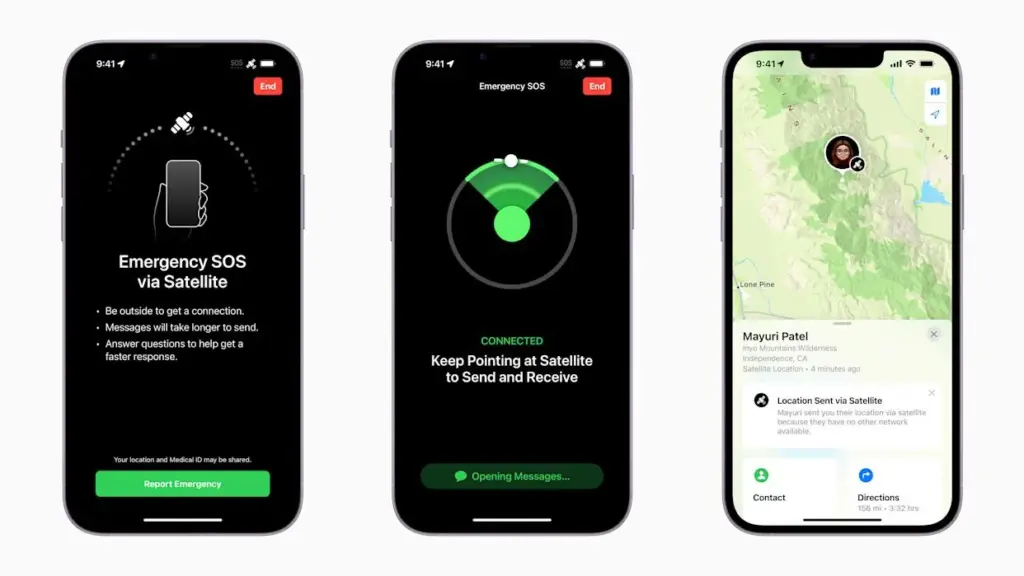
Apple is expanding its satellite feature on iPhones to offer more than emergency calls and messaging. The new update will enable users to send photos via satellite, providing enhanced communication in areas without cellular or Wi-Fi coverage.
According to Mark Gurman, reported by Engadget, Apple plans to integrate 5G Non-Terrestrial Network (NTN) support into iPhones. This technology utilizes satellites to extend cellular tower reach, improving connectivity in remote locations.
Enhanced Connectivity for Remote Areas
This expansion aims to help users navigate and communicate in regions lacking traditional networks. Apple is developing satellite connectivity for Apple Maps, allowing users to access directional guidance even in places with no signal.
The company is also working on a “natural usage” improvement. This innovation will enable iPhones to maintain satellite connections without requiring the device to be pointed directly at the sky, which is currently necessary.
API Development for Satellite Integration
Apple intends to empower third-party developers by offering satellite connectivity APIs. This will allow app creators to integrate satellite functions directly into their applications, broadening the range of satellite-enabled features.
Timeline and Previous Launches
While no official release date has been announced, Apple has a history of carefully timing satellite feature rollouts. The Emergency SOS via Satellite and Messages via Satellite debuted with iOS 18 after years of development and testing.
Summary of Key Upcoming Features
- Photo sharing via satellite messaging
- 5G NTN support to extend cellular coverage using satellites
- Apple Maps satellite connectivity for offline navigation
- Improved satellite connection that does not require direct line-of-sight to the sky
- API availability for developers to create satellite-enabled apps
Apple’s satellite feature expansion underscores its commitment to enhancing user safety and connectivity worldwide. This advancement could significantly benefit users in remote areas and emergency situations by providing reliable communication options when traditional networks fail.