


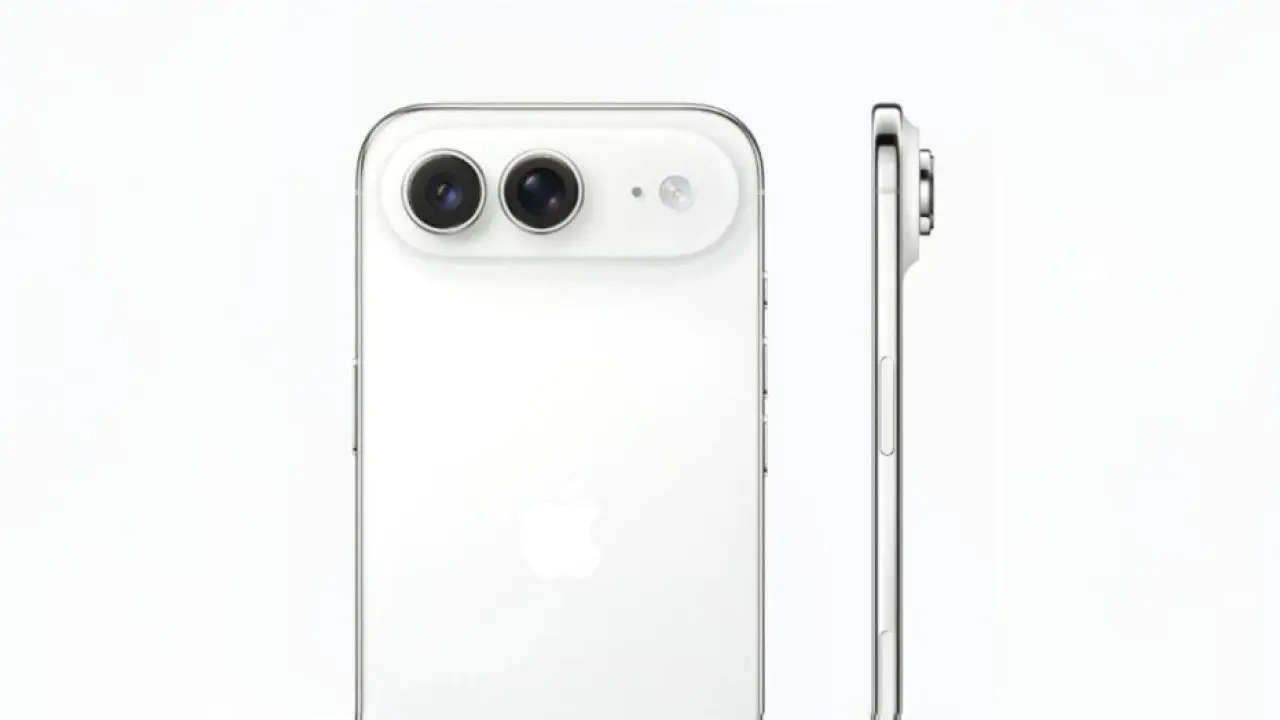
Apple has officially postponed the launch of the iPhone Air 2 until spring 2027, according to Bloomberg’s Mark Gurman. This delay signals a shift in Apple’s product strategy, turning the Air line into a testing ground for new technologies rather than a yearly refresh model.
The company intends to use this extended timeframe to thoroughly test components and manufacturing processes. These tests are crucial for minimizing risks associated with introducing more complex designs and materials in future foldable phones.
Emphasis on 2nm Chip and Battery Improvements
A key highlight of the upcoming iPhone Air 2 is the integration of a 2-nanometer chip. This advance promises better power efficiency and longer battery life. While the new device is expected to retain a similar external design to its predecessor, Apple focuses primarily on boosting internal performance, particularly in battery endurance.
Apple is also considering adding a secondary rear camera module to support ultra-wide-angle shots. This enhancement seeks to address shortcomings found in the first-generation Air while preserving the distinct identity of the Air series.
Mark Gurman notes that Apple deliberately avoided naming the new model “iPhone 17 Air” to differentiate the Air line from Pro and standard variants. This distinction reinforces the idea that the Air series does not follow the usual annual update cycle and serves as a platform for experimental technology.
Several design elements and materials used in the Air resemble those found in Apple’s foldable phone prototypes. Thus, the Air acts as a testbench for supply chains, engineering processes, and production feasibility for components destined for foldable devices.
Reviewing the First-Generation iPhone Air
Apple initially targeted the iPhone Air to capture about 6-8% of total new iPhone sales, a figure comparable to the iPhone 16 Plus sales share. Although drawing attention during launch, market reception fell short of expectations.
Critics pointed out several weaknesses, including smaller battery capacity, lower thermal performance compared to Pro models, and less advanced camera features. Priced roughly $100 lower than the iPhone 17 Pro, the Air still lagged behind in key specifications.
In Indonesia, for example, the first-generation iPhone Air pricing ranges from approximately $1,400 for the 256GB version to over $2,000 for the 1TB variant. The phone supports only eSIM and excludes a physical SIM card slot, a factor that complicates usage in certain regions.
Strategic Implications of the Delay
Apple’s decision to slow down the release cycle for the Air line allows more time to refine and perfect new technologies like the 2nm chip. It also helps validate crucial components that will be integral to the upcoming foldable iPhones.
This deliberate pacing demonstrates Apple’s cautious approach to innovation, opting to reduce potential pitfalls before scaling new hardware to the mainstream market. The Air’s role as a technological precursor underlines its importance beyond mere product diversity.
Apple’s approach reflects a broader industry trend where foldable smartphones require extensive R&D and trial phases due to their design complexity and supply chain demands. By leveraging the Air series for this purpose, Apple gains a controlled environment to experiment without fully committing to mass production risks.
In summary, the postponement of the iPhone Air 2 until 2027 is a strategic move to ensure better integration of cutting-edge components like the 2nm chip and enhanced battery systems. This pause also supports testing next-generation technologies that will power Apple’s entry into the foldable smartphone segment.