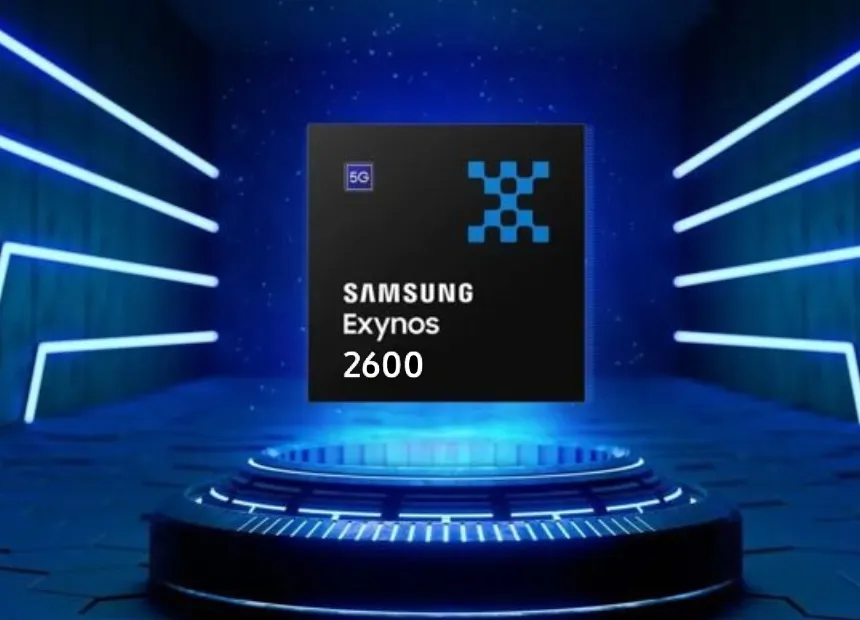
Samsung has officially discussed its first 2nm chip, revealing surprisingly modest numbers that hint at measured progress rather than revolutionary leaps. The new processor, Exynos 2600, is expected to debut in 2026 with the Galaxy S26 series, beginning in Europe.
On paper, the chip promises around a 5% boost in performance, an 8% increase in efficiency, and a 5% reduction in chip size compared to Samsung’s second-generation 3nm process. Although individually these improvements seem slight, Samsung’s advances have already resulted in major contracts and high market expectations.
For years, Samsung’s Exynos chips have been a weak point in their flagship phones, especially in Europe where devices often lag behind U.S. models equipped with Qualcomm Snapdragon processors. This disparity looks set to continue with the S26 and S26+ rumored to use Exynos 2600. In contrast, the S26 Ultra will reportedly feature the Snapdragon 8 Elite Gen 5 in all markets.
Samsung appears confident despite these mixed perceptions. In recent financial updates, the company highlighted that the new 2nm Gate-All-Around (GAA) technology allows efficiency gains suited for modern smartphones that demand longer battery life and more compact designs. Their current Exynos 2600 production boasts a 60% yield rate, deemed sufficient for serious mass production.
One significant milestone validating Samsung’s 2nm fabrication capability is a $16.5 billion contract secured with Tesla for the AI6 chip, which is based on early 2nm technology. This demonstrates industry trust well before full product launches. At the same time, Samsung reportedly secured about 25% of the Galaxy S26 chip orders, reflecting progress in reducing dependency on Qualcomm.
Samsung’s engineers estimate a potential cost savings of $20 to $30 per chip unit compared to Snapdragon alternatives. Such savings may improve profit margins or enable more competitive pricing for the European S26 models. This cost efficiency becomes crucial in the fiercely contested flagship chipset market, where every fraction of a percentage counts.
Several factors underpin Samsung’s cautious but optimistic approach:
1. Modest but steady gains in performance and efficiency.
2. Higher production yields facilitating large-scale chip manufacturing.
3. Strategic partnerships like Tesla’s contract validating the fabrication process.
4. Cost benefits that can influence pricing and component allocation.
5. Continued reliance on ARM’s Lumex core designs, contrasting with competitors’ highly customized CPU architectures.
Despite these positives, skepticism remains. Exynos historically has struggled with real-world performance and power efficiency compared to Qualcomm and Apple counterparts. Samsung’s continued use of ARM-standard cores rather than custom CPU designs may limit the chip’s maximum potential in practical scenarios.
Samsung’s 2nm chip launch is more than just numbers — it is a strategic move to regain footing in the premium chipset market and strengthen its supply chain independence. Whether this smaller, more efficient chip translates into a meaningful user experience improvement will be a key test as Galaxy S26 phones reach consumers.
Industry insiders see Samsung’s incremental upgrade strategy as pragmatic. The 2nm process may not deliver dramatic gains outright, but combined with improved yields and cost efficiency, it sets a foundation for future innovation. Samsung’s success will depend on maintaining high quality, reliable supply, and market acceptance amidst fierce competition.
The Exynos 2600’s performance in benchmark tests already suggests competitive potential. How Samsung leverages these initial 2nm chips in the Galaxy S26 lineup will likely influence market perceptions about whether this marks the start of a sustainable comeback or just another cycle of moderate promises.
Samsung’s chip advancements reflect a realistic and focused effort to evolve semiconductor technology while winning key business contracts and controlling production costs. The true impact of this 2nm breakthrough will unfold over the next year as devices reach users and the real-world benefits become clearer.