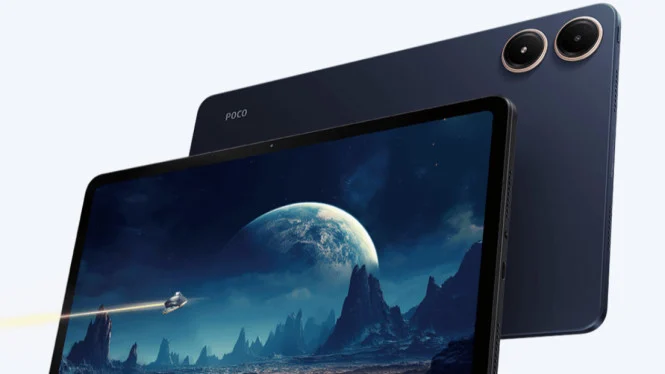
Poco Pad enters the tablet market as a standout option with a 12-inch screen and a price tag around Rp3 million (approximately $200 USD). This device combines premium features like a 2.5K display with a 120Hz refresh rate and the Qualcomm Snapdragon 7s Gen 2 chipset, typically found in more expensive models. Its aggressive pricing aims to attract students, remote workers, content creators, and casual gamers seeking value for money.
The tablet’s design features a solid aluminum unibody that feels sturdy and premium. Weighing just enough to convey quality, the Poco Pad avoids flex and offers a comfortable grip. Its 12-inch screen gives users a spacious workspace ideal for typing long documents, light photo or video editing, and immersive entertainment.
Display Quality and Multimedia Experience
Poco Pad impresses with a 2560 x 1600 resolution and adaptive 120Hz refresh rate that ensures smooth scrolling and crisp visuals. Certified by TÜV Rheinland, its display reduces eye strain, supporting longer usage sessions. Dolby Vision compatibility enhances HDR content viewing on platforms like Apple TV+ and Prime Video. One limitation is the peak brightness of 600 nits, suitable indoors but less optimal under direct sunlight.


Performance Powered by Snapdragon 7s Gen 2
Underneath, the Poco Pad packs an 8GB LPDDR4X RAM and 256GB UFS 2.2 storage, driven by Snapdragon 7s Gen 2. This mid-range chipset scores around 640,000 on AnTuTu benchmarks, providing smooth multitasking and app handling. Users can run multiple split-screen apps and floating windows without lag, making it efficient for productivity apps like Zoom and Google Docs.
Gaming on Poco Pad
While not a dedicated gaming tablet, it handles popular titles well. Wild Rift averages 59 FPS at medium graphics, and Genshin Impact runs stably at 54 FPS on medium settings. This level makes it suitable for casual gaming and entertainment without overheating or battery drain issues.
Smart Pen and Keyboard Cover for Productivity
The tablet supports a responsive Smart Pen with ultra-low latency and handwriting recognition, converting notes into text accurately. It features two physical buttons for erase, shortcuts, and screenshots. The pen lasts up to 12 hours continuously but lacks magnetic attachment for easy storage.
The complementary magnetic keyboard cover weighs 450 grams and offers a comfortable typing experience with soft-touch keys. It supports auto screen lock/unlock functionality and sports a synthetic leather-like finish resistant to fingerprints. Sold separately, these accessories transform Poco Pad into a reliable tool for work and study.
Battery Life and Additional Features
Equipped with a large 10,000 mAh battery and 33W fast charging, the Poco Pad delivers about 7 hours and 45 minutes of continuous usage based on PCMark benchmarks. This endurance is sufficient for a full day of lectures or remote work. Unique for its price range, the tablet retains a 3.5mm headphone jack, face unlock, and Dolby Atmos-enabled speakers. However, the lack of a fingerprint sensor represents a minor security downside.
Who Should Consider Poco Pad?
The Poco Pad is particularly well-suited for:
- Students needing a digital note-taking and research device
- Freelancers working in various environments
- Families seeking a shared tablet for learning, gaming, and streaming
- Casual gamers wanting a large-screen experience without a hefty investment
This 12-inch tablet at roughly $200 USD offers premium features typically found in devices costing nearly twice as much. While it has trade-offs like screen brightness and pen storage, its overall value proposition is compelling. Buyers should prioritize purchasing from official POCO or Xiaomi outlets to ensure warranty, genuine accessories, and software updates.
In summary, Poco Pad delivers a balanced package of large display, strong performance, useful productivity accessories, and competitive pricing. It stands out as a strong contender in the affordable tablet segment for 2025.