The Red Magic Gaming Pad and Redmi Pad target different segments, raising the question: which one wins in performance and value? Red Magic offers a dedicated gaming tablet with top-tier specs, while Redmi Pad aims for a balanced multimedia experience at a lower price.
Red Magic Gaming Pad centers on gaming with the Snapdragon 8 Elite chipset, delivering robust performance. It benchmarks an impressive 2.4 million in AnTuTu and nearly 10,000 in Geekbench. Gaming is smooth, with Genshin Impact running stable at 60 fps and Wuthering Waves experiencing no hiccups.
Its 12GB RAM and 256GB UFS 4.1 Pro storage support intensive multitasking and fast data access. The 8,200 mAh battery emphasizes endurance, consuming only 6% after 30 minutes of PUBG and 9% in Genshin Impact gameplay. These figures highlight excellent power efficiency for prolonged gaming sessions.

The display is a 9.06-inch OLED panel with a 165 Hz refresh rate, delivering vibrant colors and smooth visuals. It supports HDR upscaling on YouTube up to 2160p and reaches up to 1000 nits brightness for outdoor visibility. However, it lacks LTPO technology, so the refresh rate cannot go lower than 60 Hz for static images.
Audio performance impresses with dual stereo speakers offering clear treble and strong bass output. While Dolby Atmos is absent, the sound remains loud and crisp enough for casual gaming without headphones. This audio advantage outshines the Redmi Pad’s speaker setup.
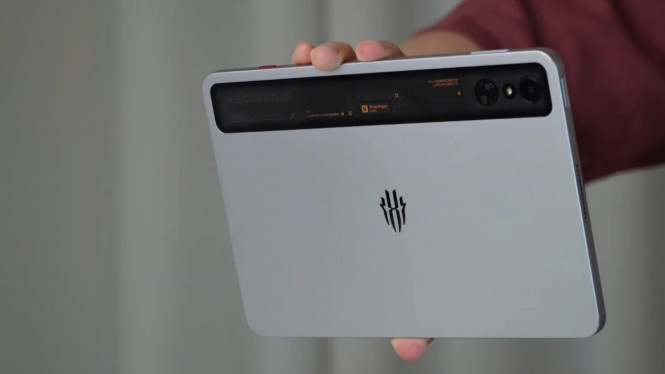
The device showcases a futuristic gaming design with a transparent accent highlighting Snapdragon 8 Elite branding. The aviation-grade aluminum frame and unibody back cover feel robust but tend to attract fingerprints, encouraging users to add a protective case. Red Magic’s signature cooling fan keeps the surface temperature below 40°C, ensuring comfort during long plays.
The cooling fan is programmable with customizable sound effects, creating a unique user experience. Fans blow cool air near the hands, outperforming Redmi Pad’s passive cooling, especially during demanding titles like Genshin Impact and Wuthering Waves.
Gaming features extend beyond hardware. A dedicated gaming mode toggles performance settings, game desktop and mobile modes, joystick pairing, and heat sink management. AI voice assistant Mora reminds users to take breaks, while multiscreen subscreen connectivity allows linking additional devices, resembling ASUS ROG’s complex Armory Crate ecosystem.
In contrast, Redmi Pad offers affordability with fewer gaming-centric features. Its lower price, around $600 compared to Red Magic’s approximately $620 (9 million IDR), fits budget-conscious users who want a reliable tablet for media and casual gaming.
The Redmi Pad’s display and audio remain good but do not match the advanced OLED panel or powerful stereo speakers in the Red Magic Gaming Pad. Also, the lack of active cooling may lead to higher surface temperatures when gaming intensively.
The camera systems on both devices are basic, mainly suitable for video calls; Red Magic’s performance-focused design sacrifices camera upgrades for better gaming specs.
Key Comparison Points:
- Performance: Red Magic’s Snapdragon 8 Elite delivers superior gaming power and smoothness.
- Display: Red Magic’s OLED 165 Hz panel outperforms Redmi Pad’s more standard display.
- Cooling: Red Magic includes an active fan, lowering device temperature considerably.
- Audio: Dual powerful speakers on Red Magic trump Redmi Pad’s audio system.
- Gaming Features: Red Magic supports advanced modes and AI assistance; Redmi Pad is simpler.
- Price: Red Magic costs roughly $620, with more gaming-oriented specs; Redmi Pad is cheaper but less suited for hardcore gaming.
The Red Magic Gaming Pad clearly caters to hardcore gamers needing high performance, fast refresh rates, and advanced cooling. Meanwhile, Redmi Pad suits those seeking an affordable tablet with decent multimedia capabilities and casual gaming potential.
Choosing the "winner" depends on individual priorities: pure gaming power and features versus price and all-around tablet use. Red Magic leads in gaming expertise, while Redmi Pad offers a balanced package for less demanding users.