


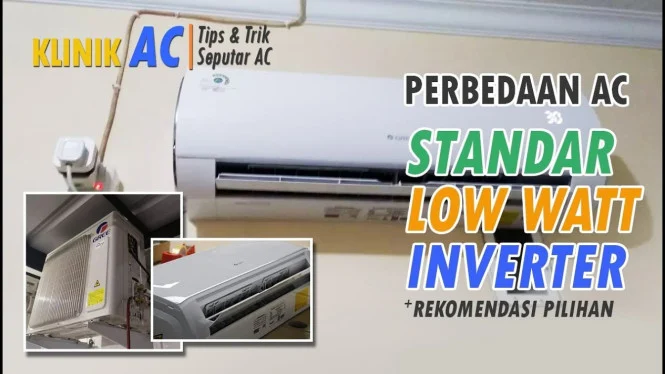
Many people wonder why their electricity bills skyrocket even after switching to an inverter AC, which is widely known for its energy-saving claims. The key lies in understanding the fundamental differences between standard AC, inverter AC, and low watt AC, as each type consumes electricity differently depending on the usage context.
Choosing the wrong AC type for a room’s size and activity can ironically cause higher power consumption. Knowing these distinctions will help users make informed choices and optimize energy efficiency.
Standard AC: Affordable but Energy-Intensive
Standard AC units operate with a simple on-off compressor system. The compressor runs at full capacity until the set temperature is achieved, then it shuts off, allowing the temperature to rise again. This cycling repeats continuously.
This frequent starting and stopping causes spikes in electricity consumption because starting the compressor requires a large surge of power. Standard AC’s upfront cost is the lowest among the three types, making it attractive for tight budgets. However, it tends to be inefficient in spaces with frequently opened doors or windows, such as living rooms or offices. The constant cold air leakage forces the AC to consume more energy to maintain the temperature.
Low Watt AC: Steady Consumption but Slower Cooling
Low watt AC models are designed to consume less power by running the compressor at a constant low speed. Unlike standard ACs, they do not cycle on and off; instead, the compressor keeps working steadily to maintain temperature. This design stabilizes electricity usage and prevents spikes.
The trade-off is that it takes longer to cool a room, as the compressor never runs at full speed. Pricing for low watt AC is roughly 1.3 times that of a standard AC, positioning it as a mid-range option. This type is ideal for households with limited electrical capacity seeking lower monthly bills but who can accept slower cooling times.
Inverter AC: High Initial Cost but Superior Efficiency
Inverter AC technology incorporates a compressor that dynamically adjusts its operational speed. When first turned on, it runs at maximum power to quickly reach the desired temperature. Instead of stopping once the target temperature is reached, the compressor slows down to maintain a stable climate efficiently.
This variable-speed mechanism significantly reduces electricity consumption by avoiding frequent power surges associated with on-off cycling. While inverter ACs are approximately twice as expensive as standard units, experts confirm their energy savings over the long term justify the cost—provided they are used correctly.
Energy-Saving Tips for All AC Types
- Select AC capacity appropriate to room size. An underpowered unit works harder, wasting electricity.
- Maintain thermostat settings between 22 and 25 degrees Celsius; lower settings cause compressors to run continuously, spiking energy use.
- Keep doors and windows tightly closed while the AC is operating to prevent cold air escape and improve efficiency.
No single AC type dominates all scenarios. Standard AC suits infrequent or short use and tight budgets. Low watt AC fits homes with limited electrical supply and steady cooling needs. Inverter AC is best for well-sealed rooms regularly used for extended periods, such as bedrooms used 8–10 hours daily.
Understanding these distinctions helps consumers reduce unexpected electricity costs despite owning supposedly “energy-saving” AC models. Selecting the right air conditioner for your space and usage style is fundamental to optimizing comfort and electricity efficiency.