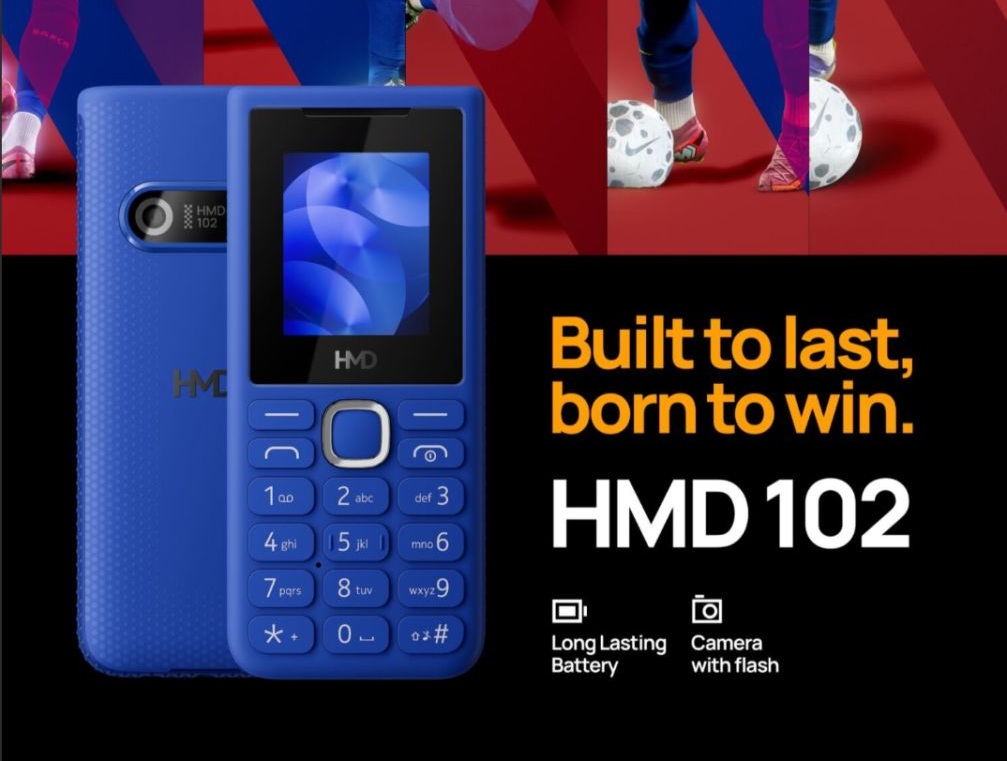
HMD Global has introduced three new basic mobile phones: the HMD 100, HMD 101, and HMD 102. These models do not support 4G connectivity, marking a step back from the company’s previous 4G-enabled devices.
The new phones feature fresh designs but come with fewer functionalities than their 4G predecessors. The announcement was shared by HMD’s CEO Jean-Francois Baril on LinkedIn, highlighting these as additions to HMD’s entry-level lineup.
Key Differences Among the Models
- HMD 102 stands out with an MP3 player and a camera equipped with an LED flash.
- HMD 101 lacks a camera entirely, limiting multimedia capabilities.
- HMD 100 appears even more basic, seemingly without an MP3 player or microSD slot, implying no internal storage expansion.
None of these models include 4G capabilities, which is significant as many countries are shutting down their 2G and 3G networks. This means these phones rely on older network technologies that may soon become obsolete.
Hardware and Connectivity Limitations
All three phones use microUSB ports for charging and data transfer. This is notable because regions like the European Union now mandate USB-C ports on mobile devices to reduce electronic waste and standardize chargers. This choice could limit their availability or compliance in those markets.
HMD offers 4G versions of similar models, which come equipped with dual SIM slots and USB-C ports. These variants cater to areas where 4G connectivity remains essential and networks support newer standards.
Market Relevance and User Guidance
The user manuals for the non-4G versions of HMD 100, 101, and 102 are available on HMD India’s website. This suggests the primary target market for these devices includes regions like India, where 2G networks continue to operate alongside growing 4G infrastructure.
Consumers looking specifically for 4G phones can consider alternative HMD models such as the HMD 105 4G and HMD 110 4G. These devices maintain essential features like newer ports and 4G connectivity to meet evolving user demands.
HMD Global’s strategy here is clear: provide ultra-basic phones suitable for markets or users who still rely on 2G and 3G networks. However, the lack of 4G and newer hardware standards may limit the longevity and usability of these devices as network technologies evolve worldwide.