Samsung and Turkish Airlines have teamed up to launch a pioneering service that integrates Galaxy SmartTag with the airline’s baggage system. This collaboration promises to revolutionize the way passengers track their luggage during air travel, reducing anxiety and lost baggage incidents.
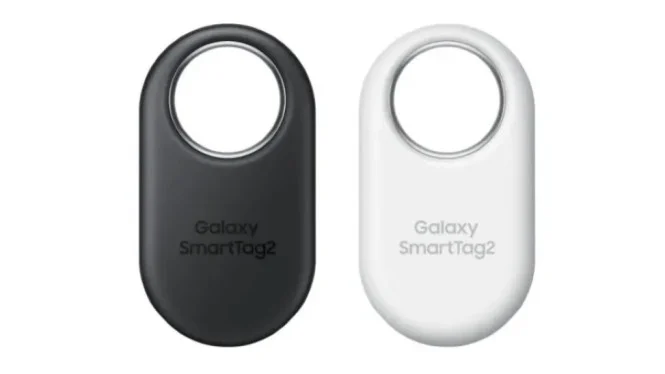
Galaxy SmartTag, initially created to find personal items like keys or wallets, now serves as a high-tech guardian for checked bags. By embedding this device in your suitcase, you gain real-time control and visibility over your luggage through Samsung’s SmartThings Find app.
How the Smart Tagged Baggage Service Works

The service operates with a straightforward yet innovative process:
- Before check-in, passengers place a Galaxy SmartTag or SmartTag+ inside their luggage.
- The checked bag undergoes regular processing with no extra steps required.
- If bags are delayed or lost, users open SmartThings Find to see the last detected location via Samsung’s extensive device network.
- Passengers share the accurate location link with Turkish Airlines support.
- The airline’s ground staff use the precise coordinates to locate and recover the suitcase faster than conventional methods.
This method significantly reduces search time and passenger stress, enhancing confidence in the airline’s service.
New Feature: Custom Luggage Image Upload
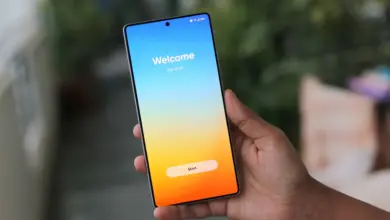
Samsung added a new feature in the SmartThings Find app called “Change Device Image.” Passengers can upload a photo of their actual suitcase, including unique marks like stickers or scratches. This personalized icon is sent along with location data to Turkish Airlines for rapid baggage recognition, especially in crowded hubs like Istanbul Airport.
This addresses a common problem where similar-looking luggage can cause confusion during recovery.
Key Technologies Behind the Innovation
Galaxy SmartTag uses dual technology to maximize tracking efficiency:
- Bluetooth Low Energy (BLE) for close-range detection
- Ultra-Wideband (UWB) on SmartTag+ and SmartTag 2, enabling centimeter-level precision and directional tracking
Most importantly, the system leverages a crowdsourced network of over 700 million Galaxy devices worldwide. Nearby Samsung phones anonymously relay the SmartTag’s position to Samsung’s cloud, making lost luggage traceable over large distances.
Why Turkish Airlines?
Turkish Airlines was chosen for several strategic reasons:
- It operates flights to more than 300 destinations globally.
- Its Istanbul hub is one of Europe’s busiest airports.
- The airline is heavily investing in digitizing passenger services.
The partnership aligns with Turkish Airlines’ ambition to be the most innovative carrier in the Middle East and Europe while boosting Samsung SmartTag’s status as a global standard for personal tracking.
Looking Ahead: Global Expansion Plans
This integration is not exclusive to Turkish Airlines. Samsung is negotiating with other major airlines such as Lufthansa, Air France, Emirates, Qatar Airways, and Asian carriers including Singapore Airlines. There is also hope that Indonesian airlines like Garuda Indonesia or Citilink will adopt this technology.
While some airports currently use RFID to track luggage internally, this system provides passengers direct control and transparency through their own devices, which is unprecedented.
Compatibility and User Requirements
The service supports all Galaxy SmartTag models with some distinctions:
- The first-generation SmartTag uses BLE only.
- SmartTag+ and SmartTag 2 support UWB for enhanced directional tracking.
In all cases, users must have a Samsung account and activate SmartThings Find on their Galaxy phone to utilize the service.
Privacy and Security Considerations
Samsung ensures that location sharing respects user privacy:
- Data transmission is encrypted end-to-end.
- Location is shared only with explicit user permission.
- Turkish Airlines does not retain location data after resolving baggage cases.
Users should remove the SmartTag post-flight to prevent unwanted tracking signals outside their control.
Potential Impact on Indonesian Travelers
With Indonesia’s large Samsung user base and the pressing need to improve baggage handling at busy airports like Soekarno-Hatta and Juanda, this service could profoundly benefit local travelers. A successful pilot in Turkey could serve as a catalyst for regional adoption in Southeast Asia.
Innovating Air Travel Experience
The Galaxy SmartTag integration offers passengers peace of mind by keeping them connected to their luggage. It shifts baggage handling from guesswork to data-driven precision, fundamentally changing the travel experience. The ongoing expansion of Samsung’s SmartThings ecosystem signals even more advanced features ahead, such as arrival notifications, visualized bag routes, and digital suitcase locks.
Currently, the Smart Tagged Baggage Service is available only for Turkish Airlines passengers with Galaxy SmartTag devices and the SmartThings Find app. There is no official release date yet for Indonesia or other countries, but the technology’s promising early results indicate a future where lost luggage could become a worry of the past.