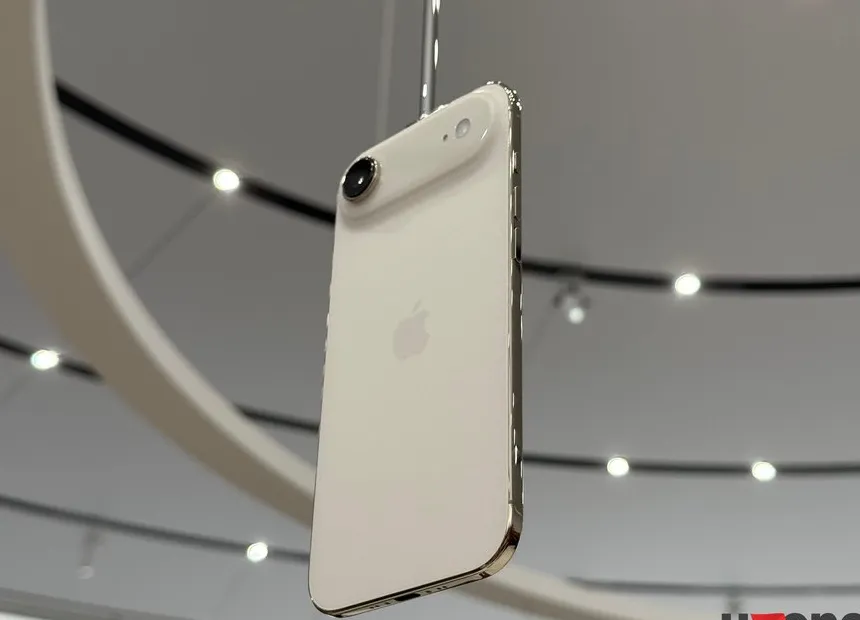
The latest iPhone model, the iPhone Air, has experienced weak sales, reflected by its significant drop in resale value. Recent data from SellCell reveals that the iPhone Air’s trade-in value in the United States has fallen sharply within just ten weeks.
According to the report, the depreciation rate for the iPhone Air ranges between 40.3% and 47.7%, depending on the storage capacity. For instance, the base 256GB version, originally priced at $999, now sells for 40.3% less on the secondhand market. This means buyers can find these models priced around $596, a considerable markdown.
Higher capacity variants show even steeper declines. The 512GB iPhone Air, which retailed at $1,199, has lost about 45% of its value. Meanwhile, the 1TB variant, originally $1,399, is now available for roughly $668, nearly halving its price within a short period. This substantial depreciation reflects the poor market reception of this particular model.
SellCell’s data also compared the iPhone Air to other recent iPhone models. Notably, the iPhone 16 Plus 128GB last year depreciated by approximately 41.6% over ten weeks, whereas the iPhone 16 standard 128GB saw a 44.2% drop. Despite this, the iPhone 17 series has performed better in maintaining value, with an average depreciation rate of 34.6% during the same period.
Among the 17 series, the Pro Max 256GB stands out for its relative value retention, losing only 26.1% of its initial price. The iPhone 17 Pro 256GB and the base 256GB model each depreciated by around 32-33%, a notably smaller loss compared to the iPhone Air. This indicates stronger demand or perceived value stability for these flagship models.
The rapid price decline of the iPhone Air has wider implications for the smartphone market. It affects competitors’ strategy, especially for brands focusing on ultra-thin phones. Chinese manufacturers like Xiaomi and Vivo are adjusting their development plans in response. According to an analysis on Selular.ID, these companies are reconsidering the viability of producing ultra-thin smartphones as the iPhone Air struggles to find buyers.
Below is a summary of the iPhone Air depreciation over ten weeks based on SellCell data:
| iPhone Air Model | Original Price (USD) | Depreciation (%) | Approximate Current Price (USD) |
|——————|———————-|——————|———————————|
| 256GB Base | $999 | 40.3% | $596 |
| 512GB | $1,199 | 45% | $660 |
| 1TB | $1,399 | 47.7% | $668 |
The pronounced drop in secondhand prices suggests cautious consumer response to the iPhone Air. Analysts note that while other iPhone 17 series variants maintain better resale values, the Air model’s failure signals challenges for Apple in the mid to upper midrange segment. This also hints at shifting user preferences and competitive pressures in the current smartphone landscape.
Industry watchers will be observing how Apple and rival makers adjust their strategies in coming months. The steep value losses for the iPhone Air may prompt innovation in design, pricing, or feature sets to regain market traction. For buyers, this trend offers attractive opportunities to acquire almost-new iPhone models at significantly reduced prices, but also highlights risks associated with rapid depreciation.
In summary, the latest iPhone Air’s poor sales performance and sharp decline in secondhand prices underline shifting dynamics in the smartphone market. With depreciation levels exceeding 40% within weeks, the device contrasts sharply with better-selling models and is causing competitors to rethink their product approaches. This situation serves as a critical case study in understanding consumer demand and pricing stability for premium mobile devices in 2025.