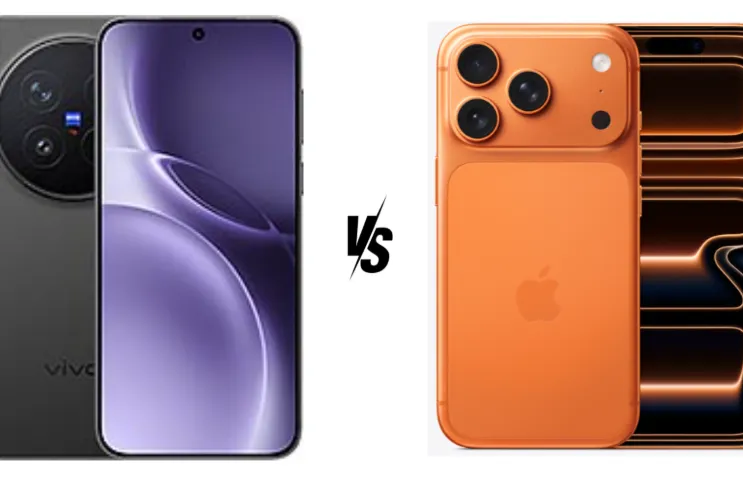
Two flagship smartphones dominate the 2025 market with distinctly different philosophies. The Vivo X300 Pro targets users seeking top-tier hardware performance and photography innovation. Meanwhile, the iPhone 17 Pro appeals to those prioritizing ecosystem integration and professional video capabilities.
Vivo X300 Pro impresses with its futuristic armor glass body and prominent camera module. It also includes practical features like an IR blaster, adding utility beyond typical flagship designs. In contrast, the iPhone 17 Pro keeps the iconic minimalist Apple design, featuring Ceramic Shield glass and a sturdy aluminum frame. This design philosophy ensures both durability and a premium feel that loyal Apple users expect.
Display Technology Comparison


The Vivo X300 Pro boasts a vibrant LTPO AMOLED screen enhanced with Dolby Vision support. This combination offers high brightness, rich colors, and an immersive HDR viewing experience. On the other hand, the iPhone 17 Pro employs a Super Retina XDR display. Although slightly smaller, it offers precise color calibration, excellent HDR handling, and an anti-reflective coating that improves outdoor visibility. Essentially, Vivo focuses on a vivid visual impact, while Apple delivers a smooth, color-accurate viewing experience.
Performance and Battery
Powered by a Dimensity 9500 chipset, the Vivo X300 Pro excels in handling intensive graphic tasks and multitasking. Its hardware is optimized for continuous heavy use, making it well-suited for power users. Conversely, the iPhone 17 Pro runs on the Apple A19 Pro chip, known for exceptional efficiency and powerful burst performance. Apple’s integration with iOS ensures consistent smoothness in everyday operations. Battery-wise, Vivo equips its device with a large silicon-carbon battery and rapid 90W charging support. Apple adopts a more conservative approach focusing on battery longevity and safe charging practices.
Camera Systems Battle
The camera setup is where the two brands show their distinct ambitions. Vivo X300 Pro features a 200MP periscope lens co-engineered with Zeiss optics, giving it superior zoom capabilities especially under low light. This has earned Vivo the highest camera scores in multiple evaluations. iPhone 17 Pro counters with advanced computational photography and video features. Its support for ProRes recording and Apple Log 2 makes it a go-to tool for professional creators seeking precise color science and dynamic range.
Additional Features and Ecosystem
Vivo adds value with an ultrasonic fingerprint sensor and optional satellite connectivity. Apple relies on its trusted Face ID, the second-generation UWB technology for device finding, and Emergency SOS via satellite for safety. These features underline each phone’s strategy — Vivo focuses on versatility and hardware innovation, while Apple emphasizes seamless integration and user safety within its ecosystem.
Pricing and Target Audience
The Vivo X300 Pro is priced around $800, appealing to users seeking comprehensive flagship specs at a competitive price point. In contrast, the iPhone 17 Pro starts at approximately $1100, reflecting its premium ecosystem and long-term software support. For existing Apple users, this price often justifies the value of the integrated experience and creative workflow tools.
Final Thoughts
Choosing between Vivo X300 Pro and iPhone 17 Pro comes down to individual priorities and usage patterns. Vivo attracts photography enthusiasts and value hunters wanting the latest tech. Apple remains unmatched for fans longing for a cohesive ecosystem and professional video tools. Both represent elite flagship offerings but cater to different philosophies in the smartphone market of 2025.