


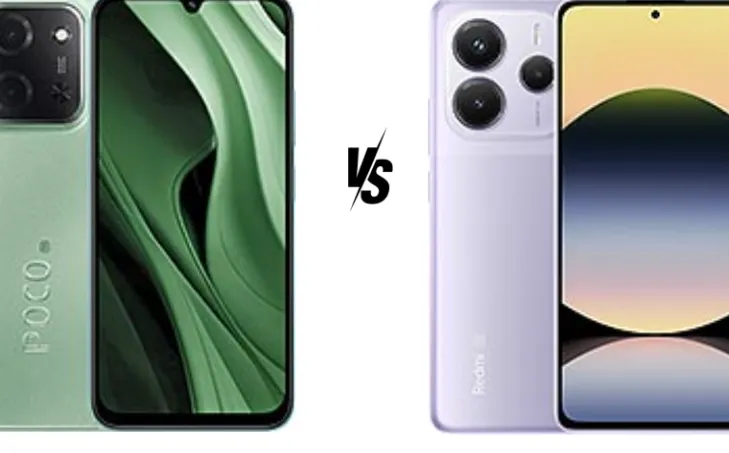
When choosing between the Poco C85 and Redmi Note 14, users face two distinct philosophies in the entry-level smartphone market. Both phones offer reliability for daily use but cater to different priorities and user needs.
Poco C85 focuses on durability and battery longevity, making it ideal for those who want a phone that lasts all day without fuss. In contrast, Redmi Note 14 targets users looking for a more premium experience with enhanced performance and superior display quality.
Design and Display: Practicality vs Premium Feel
Poco C85 showcases a straightforward design emphasizing toughness and practicality. Its build aims for resilience over luxury, featuring a sturdy feel suited for everyday tasks. On the flip side, Redmi Note 14 adopts a sleek design with Gorilla Glass protection and slimmer bezels. This results in a polished and refined hand feel typical of midrange devices.
Display-wise, Poco C85 uses a large IPS LCD with a 120Hz refresh rate, delivering smooth scrolling and adequate brightness. However, its HD+ resolution limits sharpness and contrast. Redmi Note 14 shines with an AMOLED panel offering FHD+ resolution, HDR10+ support, and deeper blacks. Additionally, its advanced PWM dimming helps reduce eye strain, enhancing viewing comfort over prolonged periods.
Performance and Battery: Efficiency vs Responsiveness
Under the hood, Poco C85 houses a MediaTek Dimensity 6300 chipset focused on efficiency rather than raw power. It handles common activities like browsing and streaming reliably but may lag under heavy gaming or intensive multitasking. Redmi Note 14 features the more potent Dimensity 7025 Ultra chipset, boosting app loading speeds, smoother animations, and steadier gaming performance.
The Poco C85’s standout feature is its massive 6000 mAh battery, ensuring all-day endurance. It supports 33W fast charging suitable for its class. Meanwhile, Redmi Note 14 balances a slightly smaller 5110 mAh battery with faster 45W charging, enabling quicker top-ups during breaks. This makes Poco superior for battery longevity, while Redmi excels in speed and responsiveness.
Camera Systems: Basic vs Ambitious
Camera capability differentiates these two further. Poco C85 keeps things simple with a 50 MP main sensor and fundamental camera features. It performs well in good light but loses detail in darker settings. Redmi Note 14 raises the bar with a 108 MP primary sensor equipped with optical image stabilization (OIS). This yields sharper photos, improved low-light shots, and steadier video recordings.
The Redmi offers an additional ultra-wide lens, increasing versatility for landscape and group shots—a feature absent in Poco C85. Front cameras also reflect this disparity; Redmi’s higher resolution selfie shooter delivers clearer images better suited for social media.
Price and Audience Considerations
Priced around $150, Poco C85 appeals to cost-conscious buyers valuing battery life and durability above extra features. It targets students and casual users with strict budgets who need a dependable phone for essential tasks.
Redmi Note 14 costs approximately $200, bringing a $50 premium for enhanced visuals, performance, and cameras. This investment makes sense for users seeking a more refined daily smartphone experience with longevity and flexibility.
Feature Comparison Table
| Feature | Poco C85 | Redmi Note 14 |
|---|---|---|
| Display | IPS LCD, 120Hz, HD+ | AMOLED, 60Hz, FHD+, HDR10+ |
| Processor | MediaTek Dimensity 6300 | MediaTek Dimensity 7025 Ultra |
| Battery Capacity | 6000 mAh | 5110 mAh |
| Charging Speed | 33W | 45W |
| Rear Camera | 50 MP | 108 MP (OIS) + Ultra-wide |
| Front Camera | Basic | Higher resolution |
| Price | ~$150 | ~$200 |
Choosing between Poco C85 and Redmi Note 14 depends on what users prioritize. If long battery life and simplicity matter most, Poco C85 is a practical choice. For those wanting better performance, display quality, and camera flexibility, Redmi Note 14 offers significant advantages without breaking the bank.
Ultimately, these models illustrate how entry-level smartphones can serve different user demands—from straightforward durability to polish and capability—reflecting evolving consumer expectations in 2025.