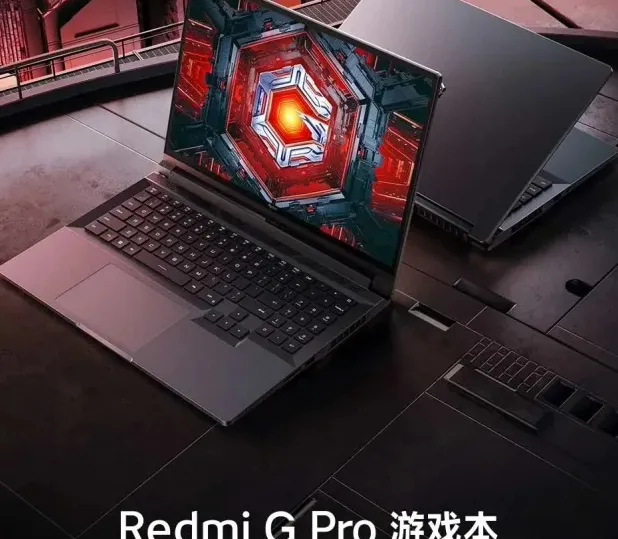
Xiaomi has officially confirmed that it will not launch any new Redmi gaming laptops throughout 2026. This announcement came from Ma Zhiyu, Xiaomi’s Product Marketing Director, who responded directly to user inquiries on the social media platform Weibo with a clear “no” regarding any upcoming releases in this segment.
This marks the second consecutive year that Xiaomi’s Redmi brand will abstain from updating or releasing gaming laptops. The company appears to be shifting its focus away from the high-performance gaming laptop segment for the foreseeable future, while still maintaining its commitment to other parts of the laptop market.
Current Redmi Gaming Laptop Status
The most recent model available from Redmi in the gaming category is the Redmi G Pro 2024. This laptop is designed to cater to gamers, equipped with an Intel Core i7-14650HX processor, 16GB of RAM, a 1TB SSD, and an NVIDIA GeForce RTX 4060 GPU. Its 16-inch display supports a 2.5K resolution, variable refresh rates up to 240Hz, and 3ms response time, along with G-SYNC technology and a brightness of 500 nits.
Additionally, the Redmi G Pro 2024 integrates Xiaomi’s HyperOS, which allows seamless collaboration between multiple devices, including shared keyboard and mouse control, app handoff, and enhanced ecosystem connectivity. Audio has been enhanced with Nahimic technology, although the higher-end Core i9-14900HX version is already sold out in official stores.
Focus Shift to RedmiBook Series
While gaming laptops are on pause, Xiaomi confirms that the non-gaming RedmiBook series will continue to evolve in 2026. The RedmiBook 2025 comes in 14-inch and 16-inch models powered by Intel Core i5 220H processors. These laptops provide up to 32GB RAM, 1TB PCIe SSD storage, and batteries with capacities of 56 Wh (14-inch) and 72 Wh (16-inch). Both models support fast charging with a 100W Gallium Nitride (GaN) adapter for efficient power management.
This suggests Xiaomi’s strategic priority may now favor mainstream productivity laptops over gaming due to market demand or internal resource allocation.
Competitive Landscape and Strategy Implications
The global gaming laptop market is highly competitive, with established brands such as ASUS ROG, Lenovo Legion, MSI, and Acer Predator dominating the field. Xiaomi’s Redmi series has yet to gain a strong foothold in this niche, despite offering commendable features.
By skipping releases in 2025 and 2026, Xiaomi may be taking the time to rethink design and technological innovation for future models. It also provides an opportunity to shift research and development efforts toward faster-growing segments or to wait for significant advancements like next-generation GPUs or processors.
Industry Trends and Market Effects
This approach aligns with industry practices where manufacturers occasionally pause product updates to avoid market oversaturation or to prepare for significant technology leaps. For Xiaomi, this could mean waiting for breakthroughs in NVIDIA or AMD GPU architectures or more efficient Intel and AMD CPU platforms before re-entering the gaming laptop runway.
Meanwhile, other competitors continue to expand offerings. For instance, the Red Magic Gaming Laptop 16 Pro 2026 is set to release on October 17, 2025, showcasing ongoing dynamism in the gaming laptop market.
Broader Redmi Product Expansion
Beyond laptops, Redmi is broadening its product portfolio. The brand recently introduced a curved TV aimed at delivering a cinematic home viewing experience. Competition also intensifies in the tablet segment, highlighted by products such as the Redmi Pad 2 Pro against rivals like the Honor Pad GT2 Pro.
This diversification underscores Redmi’s aim to cover multiple facets of consumer digital lifestyles.
Looking Ahead
Consumers interested in Redmi’s gaming laptops will need to consider the current Redmi G Pro 2024 or look to alternative brands for cutting-edge gaming machines. Meanwhile, attention turns to the promised upgrades within the RedmiBook laptop line in 2026.
Xiaomi’s strategic pause on gaming laptops reflects a broader need to balance innovation, market trends, and internal priorities in a fast-evolving technology landscape. The success of non-gaming models and other product categories will likely influence whether Redmi resumes its push in the gaming laptop segment in future years.
-

-

-

-