


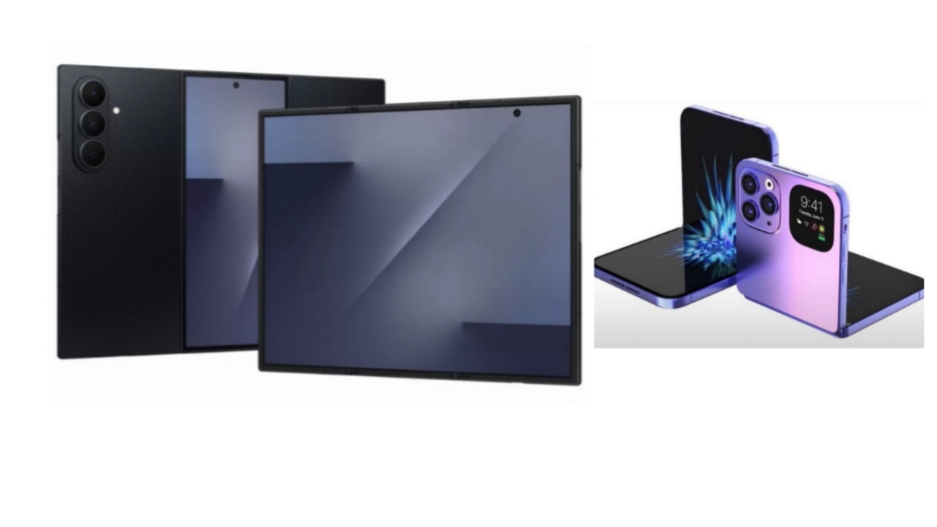
Samsung and Apple are entering a new battlefield with their foldable smartphone innovations. Samsung’s Wide Fold and the anticipated iPhone foldable are poised to redefine mobile device usability and form factor.
Samsung’s Wide Fold features a larger foldable display that opens like a book, providing an expansive screen ideal for multitasking and media consumption. The device pushes boundaries with a 7.6-inch main display and robust hardware, aiming to capture users who prioritize screen real estate and productivity.
Apple’s foldable iPhone is expected to adopt a different approach, focusing on a sleek design and seamless integration with iOS. While details remain largely speculative, industry insiders suggest Apple will emphasize a compact form and smooth user experience over sheer display size.
Display and Design
Samsung’s Wide Fold uses a Dynamic AMOLED 2X display with a resolution of 2208 x 1768 pixels, paired with a 120Hz refresh rate for smooth visuals. The fold mechanism is engineered to minimize crease visibility and ensure durability. Samsung’s expertise in foldable screens is evident here, targeting users who want a tablet-like experience in a phone-sized device.
Conversely, Apple’s foldable iPhone may use an LTPO OLED panel, rumored to range between 7 to 8 inches unfolded. Sources indicate Apple will prioritize an ultra-thin glass solution, attempting to overcome the challenges of foldable glass durability. Its hinge mechanism may be designed for a clamshell form factor, similar to a flip phone, to maximize portability.
Performance and Software
Samsung’s Wide Fold is powered by the latest Snapdragon 8 Gen 2 chipset, supported with up to 12GB RAM and 512GB of storage. It runs One UI optimized for foldables, supporting features like multi-window multitasking and adaptive app layouts. This software-hardware synergy enables users to run multiple apps simultaneously and transition smoothly between folded and unfolded modes.
Rumors suggest the Apple foldable iPhone will run iOS but with adaptations to support foldable features like dynamic app resizing and continuity across screens. Apple’s control over software and hardware often results in an environment with fewer bugs and better system optimization.
Camera and Battery
The Wide Fold comes equipped with a versatile triple-lens setup including a 50MP main sensor, a 12MP ultra-wide lens, and a 10MP telephoto lens. It supports 3x optical zoom and offers advanced photography features powered by AI. The battery capacity of 4400mAh supports fast charging and wireless charging options, balancing performance with endurance.
Specific camera specs for the iPhone foldable remain unknown, yet Apple is expected to maintain its reputation for leading in smartphone photography. Battery innovations will also be crucial, given the extra power demands of a foldable screen.
Pricing and Market Outlook
Samsung positions the Wide Fold as a premium flagship, with prices starting around $1,800, targeting tech enthusiasts and productivity-focused users. The device competes directly with other foldables in the market, aiming to secure early adopters.
The iPhone foldable is projected to debut at a similar price range, estimated between $1,700 and $2,000, depending on configurations. Apple’s entry could expand the foldable phone market by attracting loyal iPhone users who value design and ecosystem compatibility.
Key Comparison Table
| Feature | Samsung Wide Fold | iPhone Foldable (Project-based) |
|---|---|---|
| Display Size | 7.6 inches (folded & unfolded) | Estimated 7 – 8 inches (unfolded) |
| Display Technology | Dynamic AMOLED 2X, 120Hz | LTPO OLED, likely 60Hz-120Hz |
| Processor | Snapdragon 8 Gen 2 | Likely Apple A17 Bionic or newer |
| RAM | Up to 12 GB | Unknown (likely 8 – 12 GB) |
| Camera Setup | Triple: 50MP + 12MP + 10MP | Expected dual or triple lens |
| Battery | 4400mAh | Unknown, optimized for foldable usage |
| Price Range | Around $1,800 | Estimated $1,700 – $2,000 |
This showdown between Samsung Wide Fold and Apple’s foldable iPhone reflects two contrasting strategies in evolving smartphone design. Samsung bets on a larger immersive display with mature folding technology. Apple may prioritize a compact, refined experience tightly woven into its ecosystem.
Consumers interested in foldables should watch these developments closely as both giants push technology forward. The competition promises innovation that will reshape how we interact with mobile devices in the near future.