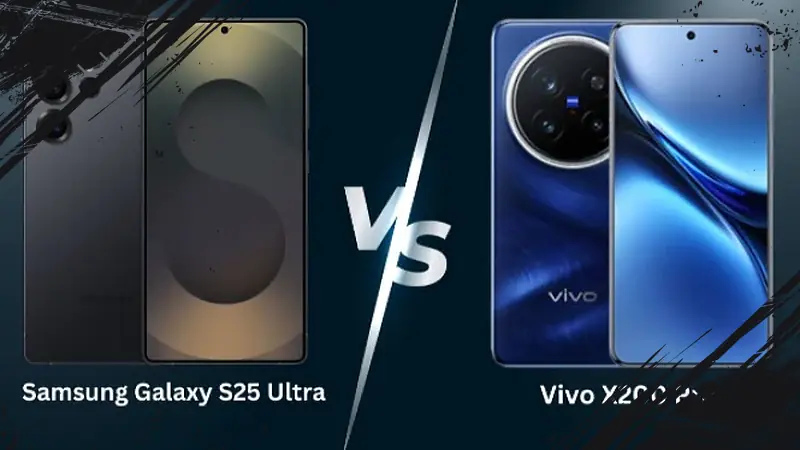
Samsung Galaxy S25 Ultra and Vivo X200 Ultra clash directly in the ultra-premium smartphone segment. Both target high-end users who demand maximum performance, advanced cameras, and strong durability. Despite sharing the flagship status, each brand follows a unique approach.
Design and Build Quality
Samsung’s Galaxy S25 Ultra is slimmer and lighter, weighing 218 grams with an 8.2 mm thickness. It offers a comfortable grip even with its large display. Vivo’s X200 Ultra is slightly heavier and thicker at 229 grams and 8.7 mm, giving a sturdier feel. Both devices use premium materials and have water and dust resistance certifications. Notably, Vivo’s IP69 rating surpasses Samsung’s IP68, indicating better resistance to water under pressure.
Display Technology
Both smartphones sport high-quality OLED panels with 120Hz refresh rates. Samsung provides a 6.9-inch screen with a resolution of 1440 x 3120 pixels and 498 ppi density. Vivo features a slightly smaller 6.82-inch panel but with a higher pixel density of 510 ppi. Vivo’s display also supports a peak brightness of 4,500 nits compared to Samsung’s 2,600 nits. This advantage makes Vivo’s screen more visible under direct sunlight.


Performance Comparison
Both models run on Qualcomm Snapdragon 8 Elite, currently the fastest chipset available. Vivo equips 16 GB of RAM, exceeding Samsung’s 12 GB configuration. This upgrade translates to better multitasking capacity on the Vivo X200 Ultra. Benchmark tests like AnTuTu show Vivo scoring around 2.8 million points, significantly higher than Samsung’s approximately 2.2 million. Samsung remains reliable for heavy gaming and productivity tasks with stable performance.
Camera Systems
Samsung’s Galaxy S25 Ultra uses a quad-camera setup led by a 200 MP main sensor, paired with telephoto and ultrawide lenses. Its strength lies in versatile photography, especially long-range zoom capabilities. Vivo’s X200 Ultra carries a triple-camera assembly, also led by a 200 MP sensor, focusing on sensor quality and image processing. Vivo excels in the front camera department with a 50 MP sensor, far surpassing Samsung’s 12 MP. Selfie enthusiasts will find Vivo’s camera a clear advantage.
Video Recording Features
Both phones support 8K video recording at 30 fps and include optical image stabilization. Samsung offers a slight edge with dual-tone LED flash for more natural lighting in low-light photography. This small yet meaningful feature enhances night-time video quality.
Operating System and Privacy
They run on Android 15 with similar privacy features like camera and microphone controls, clipboard protection, and customizable themes. Samsung leads with a site-tracking blocker, a feature missing in Vivo’s interface, providing stronger privacy protection for users.
Battery and Charging
Vivo X200 Ultra features a larger 6,000 mAh battery compared to Samsung’s 5,000 mAh. Vivo supports 90W fast charging via wired and 40W wireless charging. Samsung offers 45W wired and 15W wireless speeds. Vivo also bundles the charger in the box, a rarity in flagship offerings today.
Audio and Connectivity
Neither phone has a 3.5 mm headphone jack but includes high-quality stereo speakers. Vivo supports advanced audio codecs such as aptX Lossless and aptX Adaptive, suited for audiophiles using wireless headphones. Connectivity-wise, both models offer 5G, Wi-Fi 7, Bluetooth 5.4, and USB Type-C 3.2. Samsung adds eSIM support while Vivo sticks to dual physical SIM slots.
Choosing Between Samsung Galaxy S25 Ultra and Vivo X200 Ultra
Samsung’s flagship suits users who value a mature ecosystem, comprehensive camera features, and balanced premium experience. Vivo X200 Ultra appeals to those prioritizing extreme performance, larger battery capacity, a brighter display, and ultra-fast charging. Ultimately, the decision depends on individual preferences and usage style.