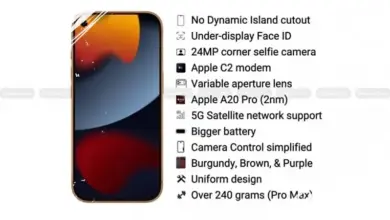
Global smartphone design trends are shifting towards more immersive and seamless displays. Apple is reportedly developing an iPhone with a quad-curved screen combined with an under-display camera, following the footsteps of Xiaomi and other Chinese manufacturers.
This move signals the gradual end of notch and punch-hole designs, aiming to offer users an uninterrupted full-screen experience. According to reliable sources like Digital Chat Station, Apple is experimenting with prototypes featuring screens curved elegantly on all four edges. This design nearly eliminates bezels around the device, unlike conventional curved displays that curve only on left and right sides.
Crucially, Apple is integrating this quad-curved display with its front camera hidden beneath the screen. If successfully commercialized, it could mark the biggest iPhone design evolution since the introduction of Face ID and the notch on the iPhone X in 2017. However, the project remains in early development, reflecting Apple’s cautious approach to quality and user experience.


Challenges of Under-Display Camera Technology
While under-display cameras (UDC) are not new—brands such as ZTE, Nubia, and Samsung have used them—current implementations still struggle to match mainstream camera quality. Selfie and video call clarity remain inferior compared to conventional front cameras.
For Apple, whose iPhones are known for exceptional front camera performance and Face ID accuracy, this poses a significant hurdle. This is a key reason why Apple has not yet released any model with UDC, despite internal research spanning years.
Xiaomi’s Pioneer Role in Quad-Curved Displays
Xiaomi previously showcased a bold concept phone named U4 in 2021 featuring a "hyper quad-curved 88-degree" waterfall display. This concept sported a screen curved around all sides and eliminated physical buttons and ports, relying entirely on pressure sensors and wireless technology.
Though never mass-produced, Xiaomi’s prototype demonstrated early mastery of quad-curved screen technology. Interestingly, commercially Xiaomi reverted to flat displays with the Xiaomi 13 through Xiaomi 17 flagships, prioritizing ergonomics, reducing accidental touches, and lowering production costs.
Why Quad-Curved Screens Are Making a Comeback
The resurgence of quad-curved designs reflects manufacturers’ ambitions to push screen-to-body ratios close to 100%. Unlike previous edge displays with aggressive left-right bends, modern quad-curved panels curve more subtly and symmetrically.
This creates a visual effect where content appears to float seamlessly with no visible frame boundaries. When paired with mature under-display camera tech, it could finally realize "true full-screen" smartphone displays that so far have remained conceptual.
Future Outlook for iPhone and Flagship Android Phones
No official release date has been confirmed for Apple’s quad-curved iPhone with under-display camera. Industry analysts estimate production readiness in two to three years, contingent on advancements in OLED panel quality and UDC optics.
Meanwhile, Chinese Android manufacturers might commercialize such features sooner, especially in the ultra-premium segment. Should Apple enter this trend fully, quad-curved displays could become the new flagship design standard, gradually replacing the dominant flat screen format in the smartphone market.