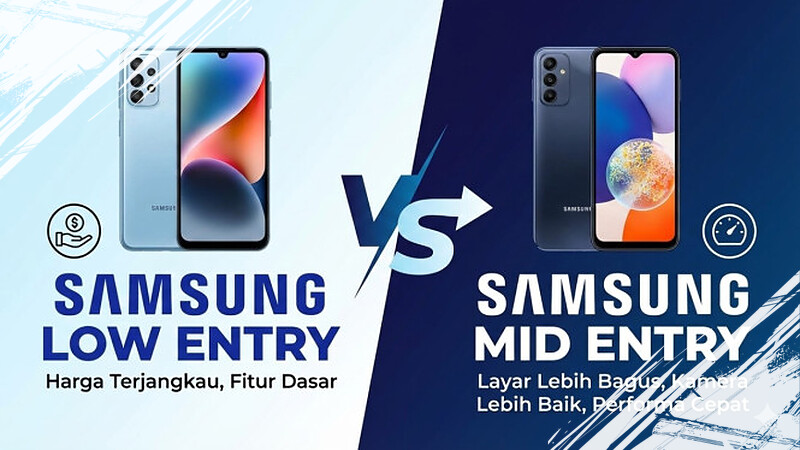
Samsung segments its smartphones to help consumers easily match their needs and budgets. Two of the most discussed segments are Samsung low entry and Samsung mid entry. Although they may look similar at first, their specifications, features, and everyday performance differ significantly.
Understanding these differences is crucial before purchasing a new smartphone. Samsung low entry targets first-time users and budget-conscious buyers, while mid entry aims at more demanding users seeking a balance between price and performance.
Samsung Low Entry: Essential Functions for Basic Use

Samsung’s low entry phones represent the most affordable tier, often including models such as the Galaxy A0x and A1x series. These phones prioritize essential communication tools over advanced features. They are designed to handle calling, texting, WhatsApp, social media, and light web browsing effectively.
In terms of pricing, these devices start as low as approximately $70, making them accessible to students and those needing a secondary phone. However, their processors belong to the basic class, limiting multitasking capabilities. RAM and internal storage are modest but sufficient for light daily use.
Camera performance in this segment is standard, suitable for simple photo documentation without additional enhancements like AI or night mode. Features such as NFC, high-watt fast charging, and high refresh rate displays are generally absent. Software updates tend to be fewer and shorter-lived compared to higher segments. Most low entry phones feature plastic bodies with simple designs.
Popular models in this segment include Galaxy A03, A04, and A05, widely favored for their affordability and reliable basic functionality.
Samsung Mid Entry: Balanced Performance and Features
Mid entry smartphones, including the Galaxy A3x, A5x, A7x, as well as Galaxy M3x and M5x series, cater to users demanding a better balance of performance and price. These devices come equipped with mid-tier chipsets that offer smoother multitasking and faster app handling.
RAM and storage in mid-range models are noticeably larger, providing more space for data and applications. Cameras are generally superior, featuring advanced modes like night shot, image stabilization, and AI assistance. Displays tend to use AMOLED panels with higher refresh rates, enhancing visual comfort.
Most mid entry phones now support 5G connectivity. Other features often found include NFC, responsive fingerprint sensors, and faster charging capabilities. Despite using plastic materials, their designs look more modern and premium.
Well-liked mid-range phones in the market include Galaxy A34, A54, M35, and M55. These models suit active users who require seamless social media use, work functionality, entertainment, and light gaming.
Key Differences Between Low Entry and Mid Entry
- Price: Low entry phones are much more affordable (starting at around $70), while mid entry devices are priced higher but still remain reasonable.
- Performance: Mid-range offers faster processors and more RAM, enabling better multitasking.
- Camera Quality: Mid entry has enhanced cameras with additional features; low entry offers only basic imaging.
- Display: Mid entry uses better AMOLED screens with higher refresh rates; low entry uses simpler LCD panels.
- Connectivity and Features: 5G, NFC, advanced sensors, and fast charging are more common in mid entry series.
- Build and Design: Mid entry phones look more refined and premium despite plastic construction, whereas low entry phones are simpler in design.
Samsung low entry devices primarily serve beginners and those with tight budgets who require fundamental smartphone functions. In contrast, mid entry phones serve users who multitask frequently, want better camera performance, and expect their phones to remain relevant longer with updated features.
By recognizing these differences, consumers can make smarter purchasing decisions aligned with their needs. Samsung’s structured segmentation ensures that whether looking for a simple device or a well-rounded smartphone, there is an option suited to every budget and user profile.