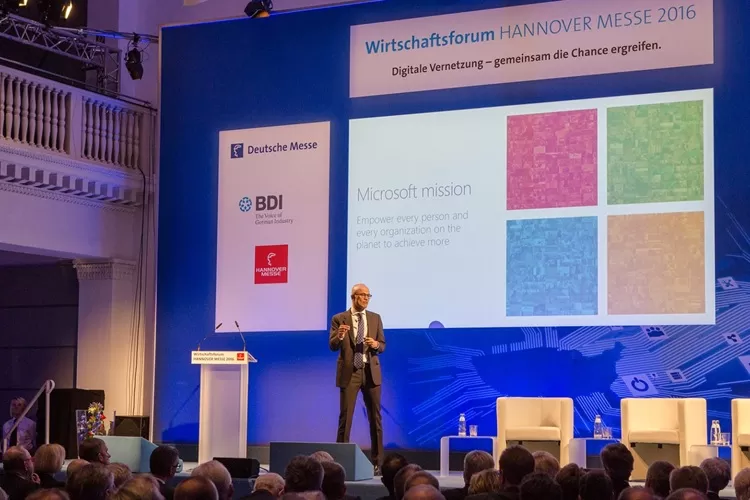
In recent discussions about artificial intelligence (AI), criticism often focuses on the low-quality content AI generates. However, Satya Nadella, CEO of Microsoft, urges society to rethink its perspective on AI fundamentally by 2026. He emphasizes that AI should not be dismissed as mere "slop," a term Merriam-Webster recently named word of the year, but recognized as a transformative tool for human cognition.
Nadella uses the metaphor "bicycle for the mind" to describe AI, suggesting it amplifies human thinking instead of replacing it. This redefinition positions AI as a partner that extends human potential rather than a competitor seeking to take over human roles.
Moving Beyond Extreme Views


The CEO points out that extreme opinions about AI—as either a source of meaningless content or a groundbreaking super-technology—are no longer constructive. Society needs a balanced understanding of how AI reshapes the way people think, work, and interact. He argues that AI tools should empower human productivity while remaining under human supervision and judgment.
Nadella’s call entails two important shifts:
- Stop broadly labeling AI-generated output as inferior or useless.
- Resist marketing AI as a full substitute for human labor, instead highlighting its role as an assistant.
Challenges in AI Adoption and Industry Narratives
Despite the call for balance, many AI developers promote automation with promises of extreme efficiency and labor displacement. These narratives often justify high price points and attract substantial market interest. However, there are genuine concerns from industry leaders as well. For instance, Dario Amodei, CEO of Anthropic, warned that AI could eliminate up to 50% of entry-level office jobs, potentially increasing global unemployment by 10–20% within five years.
Nevertheless, the actual impact on employment remains uncertain. Nadella underscores that most AI systems currently function under human oversight. As long as people verify AI outputs, the technology acts as a productivity enhancer rather than a job replacer.
Evidence from Research on AI’s Impact
Studies support Nadella’s pragmatic view. The MIT Project Iceberg reports AI can automate approximately 11.7% of paid human tasks, primarily targeting specific activities rather than entire jobs. Meanwhile, research by Vanguard reveals a surprising trend—about 100 jobs most vulnerable to AI automation have experienced both employment growth and real wage increases. Workers who effectively leverage AI tools are becoming more valuable in the labor market.
Contextualizing Microsoft’s Workforce Reduction
Microsoft’s 2025 decision to cut over 15,000 jobs adds complexity to the debate. While AI-informed transformation was cited as a factor, subsequent analysis clarified that broader corporate restructuring and business strategy played major roles. Hence, AI itself cannot be solely blamed for workforce reductions.
Navigating AI’s Double-Edged Reality
Nadella acknowledges AI-generated content that lacks quality—such as meaningless memes or trivial short videos—will persist and may even entertain audiences. However, he stresses this facet should not define AI’s future. Rather, society must evolve its perspective on AI from a source of low-value content or a job threat to a powerful tool that can boost creativity, productivity, and human capability at new levels.
Key Takeaways on Reframing AI
- Recognize AI as a cognitive amplifier, not a replacement.
- Demand balanced discussion beyond extremes of hype and fear.
- Promote human oversight in AI-powered workflows.
- Encourage workforce adaptation to harness AI’s benefits.
- Understand that AI-driven automation affects tasks more than entire jobs.
- Contextualize workforce impacts within broader business factors.
- Accept some “slop” or lighthearted AI content will coexist with valuable uses.
Satya Nadella’s perspective invites a thoughtful evolution in public attitudes. Embracing AI as a collaborative partner can unlock significant advancements across industries, redefining how humans think and work in an increasingly digital era. This balanced understanding is crucial as AI technologies continue to develop and integrate into daily life and the global economy.