The global smartphone industry is experiencing a notable shift in product naming conventions. After years of relying on labels such as "Standard," "Pro," and "Ultra," many Android smartphone brands are now embracing the "Pro Max" designation. OPPO, vivo, and Honor—three major players often grouped as OVH—are reportedly gearing up to launch flagship models incorporating this new tier.
According to reliable industry insider Digital Chat Station (DCS) on Weibo, these manufacturers are considering a four-level product naming structure: "Standard," "Pro," "Pro Max," and "Ultra." This approach seeks to clarify their flagship lineup and create a clear hierarchy for consumers.
The Rise of the Four-Tier Naming Scheme
The "Pro Max" label is no longer a Xiaomi-exclusive experiment but is emerging as a new industry standard. DCS emphasizes the potential for this naming strategy to spread beyond the largest brands, potentially influencing smaller manufacturers like Meizu. This move aims to simplify how customers perceive different flagship levels.
Typically, a "Pro Max" variant signals the top-end device within a series. It often features the largest display, highest-performance hardware, the most advanced camera systems, and premium design elements unavailable in lower-tier models. With the additional "Ultra" tier, manufacturers can further differentiate ultra-premium offerings.
Xiaomi 17 Pro Max as the Trendsetter
The mainstream adoption of "Pro Max" names can be traced back to Xiaomi’s September launch of the 17 Pro Max. This device marked a new benchmark by combining a large flat 6.9-inch screen with cutting-edge components. It was the first smartphone to feature Qualcomm’s Snapdragon 8 Ultra Gen 5 chipset.
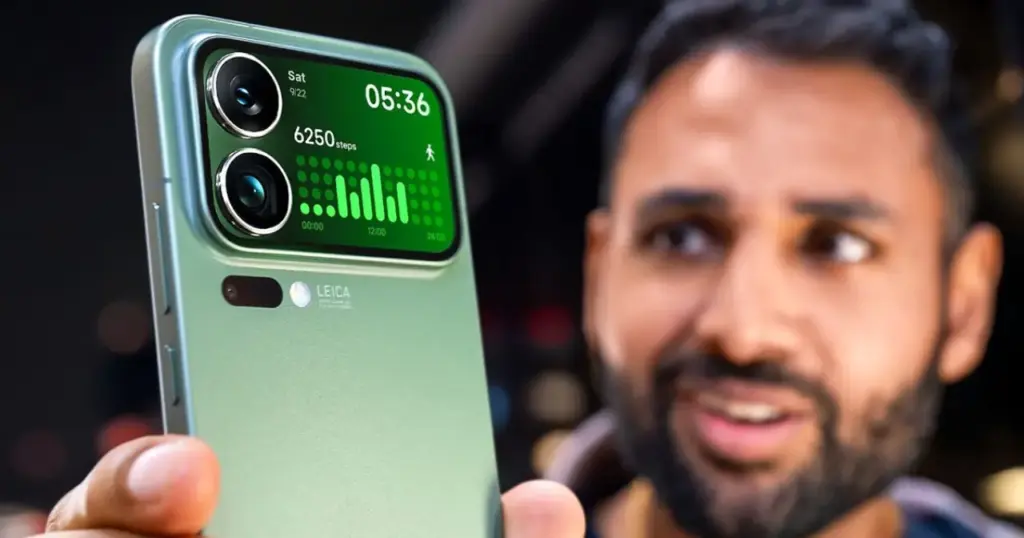
On the photography front, Xiaomi employed its “Leica Master of Light” camera strategy with the Light Hunter 950L sensor, emphasizing superior imaging quality. An innovative secondary display on the back offers notifications and camera previews, setting it apart in the ultra-premium segment.
As a flagship all-rounder, the Xiaomi 17 Pro Max has raised consumer expectations and compelled rival brands to rethink their flagship hierarchy to stay competitive at the high end.
Challenges of Homogenized Naming
While the adoption of the "Pro Max" label can enhance clarity for buyers, it also risks diluting brand uniqueness. Historically, each manufacturer’s naming style reflected its identity and design philosophy. Now, greater uniformity in naming combined with hardware similarities may reduce differentiation.
Consequently, the remaining distinctions among these flagship phones might rely heavily on software ecosystems and user interfaces, such as Huawei’s HarmonyOS, OPPO’s ColorOS, or vivo’s OriginOS. This trend could make it harder for brands to stand out beyond logos and software features.
What to Expect from OPPO, vivo, and Honor’s “Pro Max” Models
As OPPO, vivo, and Honor prepare to introduce their own "Pro Max" devices, industry observers eagerly await actual innovations that live up to the "max" label. The critical question remains whether these models will bring tangible technological breakthroughs or simply adopt the naming convention as a marketing tool to challenge Xiaomi’s dominance.
The launch details and specifications will reveal if their new flagships can claim a genuine advantage in performance, display, camera technology, or other key areas. Regardless, the "Pro Max" era marks a new phase in ultra-premium smartphone competition.
Summary of Upcoming Naming Tiers
- Standard – Entry-level flagship features, balanced specs.
- Pro – Enhanced performance and features relative to Standard.
- Pro Max – Largest display, advanced camera systems, premium components.
- Ultra – Top-tier, ultra-premium specs with cutting-edge innovations.
Overall, this evolution in naming reflects the smartphone industry’s ongoing effort to clarify product ranges amid rising competition. As OPPO, vivo, and Honor join the "Pro Max" trend initiated by Xiaomi, consumers can anticipate more clearly segmented choices and intense rivalry in the high-end market throughout the year.