


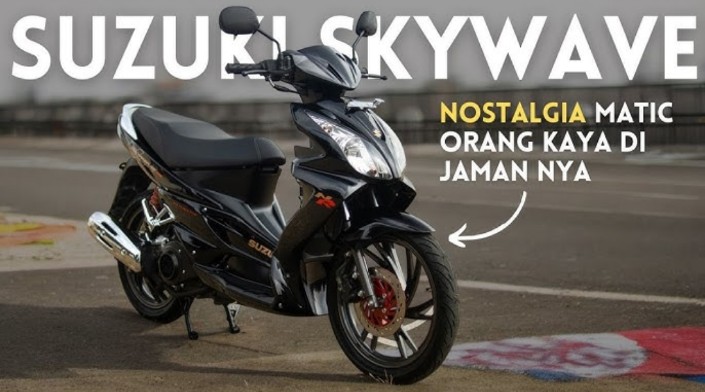
In an era dominated by sleek and technologically advanced scooters, the Suzuki Skywave—a large, old-school scooter from the 2000s—is gaining renewed attention from motorcycle enthusiasts. Once dismissed for its bulky size, the Skywave has now become a sought-after model in the used motorcycle market due to its unique appeal and nostalgic value.
The Suzuki Skywave first appeared on Indonesian roads between 2007 and 2011 as Suzuki’s premium 125cc automatic scooter. Its large frame and heavier body initially made it less popular compared to slimmer, more agile competitors. Market trends at the time favored lightweight and compact designs, relegating the Skywave to a niche status.
Design and Comfort
What sets the Suzuki Skywave apart today is its bold and masculine design. The scooter features a wide, well-padded seat and a comfortable, relaxed riding posture. This makes it especially attractive to riders with larger physiques who often find modern, streamlined scooters to be cramped. The sizeable body enhances rider comfort, whether for daily commutes or medium-distance trips.
Performance and Mechanics
Powered by a liquid-cooled, 125cc, SOHC four-stroke engine, the Skywave is known for smooth and reliable performance. Although it lacks the power output of contemporary 125cc scooters, its torque is sufficient for urban riding with gentle throttle response. This characteristic suits riders who prefer a relaxed acceleration without aggressive bursts.
Suspension and Handling
A notable advantage of the Skywave lies in its suspension system. Unlike most modern scooters that use a single rear shock absorber, the Skywave employs dual rear shocks. This setup, combined with larger diameter wheels, provides superior stability and comfort when navigating uneven or bumpy roads. Riders appreciate the secure and confident handling, which is often absent in smaller scooters.
Storage Capacity
The scooter’s under-seat storage is remarkably spacious for its age. It can easily hold an open-face helmet and additional items, which enhances its practicality for everyday use. This functional advantage is increasingly rare among vintage scooters, making the Skywave a versatile choice.
Limitations
Despite its strong points, the Suzuki Skywave faces some drawbacks. Its features are decidedly outdated; the instrument panel remains fully analog, and the engine technology is less efficient than modern fuel-injected systems. Additionally, the Skywave’s relatively heavy weight detracts from fuel economy and agility. Availability of spare parts is becoming more limited, though many owners adapt by using compatible substitutions.
Market Value and Community Impact
Used Suzuki Skywaves have an affordable price range in Indonesia, typically priced between Rp 3 million to Rp 7.5 million (approximately $200 to $500 USD). Well-maintained units with complete paperwork fetch prices at the higher end of this scale. These prices are attractive, given the comfort and distinctive character the scooter offers.
The resurgence of interest in the Skywave is supported by enthusiast communities and a general trend favoring classic motorcycles. For many riders, the Skywave represents more than transportation; it symbolizes the early period of maxi-scooter culture in Indonesia. Its revival demonstrates a shift in consumer values toward motorcycles with personality and historical significance.
Summary of Suzuki Skywave’s Appeal
- Large, comfortable seat and relaxed riding posture suitable for bigger riders
- Smooth and enduring 125cc liquid-cooled SOHC engine
- Stable dual rear suspension and large wheels for confident handling
- Spacious under-seat storage for practical daily use
- Affordable pricing in the used market
- Strong nostalgic and community support as a classic scooter icon
Overall, the Suzuki Skywave is emerging as a distinctive alternative in a landscape dominated by modern scooters. It offers a blend of comfort, uniqueness, and affordability that appeals to riders seeking character and reliability from a scooter with heritage. This shift highlights how vintage models can gain new life and relevance among contemporary motorcycle lovers.