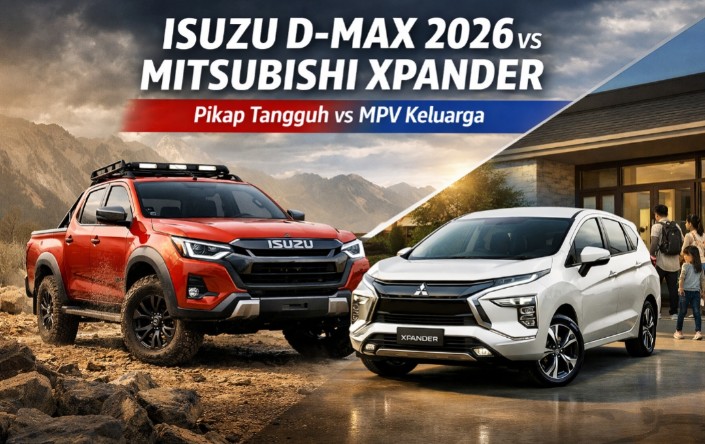
In Indonesia’s diverse automotive market, consumers seek vehicles that combine functionality with lifestyle needs. Two popular contenders often discussed are the 2026 Isuzu D-Max and the Mitsubishi Xpander.
Although these models come from different vehicle segments, both share strong reputations for reliability and comfort, stemming from their Japanese manufacturing roots. This article compares their key features, performance, and value to help determine which is more worth considering.
Performance and Capability


The Isuzu D-Max 2026 is a robust double-cabin pickup designed to handle tough terrains. It sports a powerful diesel engine delivering high torque, suitable for hauling, towing, and off-road driving. Its high ground clearance and sturdy ladder-frame chassis amplify its endurance under heavy load conditions.
This pickup appeals especially to contractors, business operators, and outdoor enthusiasts who demand rugged performance. Standard safety features include ABS brakes, Electronic Brakeforce Distribution (EBD), front airbags, and reliable braking systems, ensuring safe operation despite its utilitarian character.
On the other hand, the Mitsubishi Xpander is a seven-seater Multi-Purpose Vehicle (MPV) prioritizing comfort and fuel efficiency. It runs on a 1.5-liter gasoline engine that, while moderate in power, offers responsiveness for daily urban driving and long trips. The Xpander’s cabin is spacious, and soft suspension enhances ride comfort.
This model is designed to accommodate larger families, featuring flexible seating arrangements and modern infotainment. Higher trims include active safety features, making it an attractive choice for everyday commuting. Its fuel consumption is comparatively low, contributing to cost-effectiveness in the long run.
Interior and Comfort
Inside the D-Max, comfort is tailored for durability rather than luxury. The focus remains on functionality with enough ergonomic considerations for extended trips, especially off-road journeys. Its interior is practical and easy to maintain, suiting its workhorse image.
Conversely, the Mitsubishi Xpander excels in passenger comfort with ample space for seven occupants. Air conditioning reaches the second row, and advanced infotainment systems enhance the user experience. These features make it a better fit for family use and city traveling.
Price and Ownership Costs
The Isuzu D-Max sits in the upper-middle price tier, reflecting its specialized capabilities and sturdy build. Its purchase price and maintenance costs correspond to the heavy-duty nature of the vehicle.
In contrast, the Mitsubishi Xpander is more wallet-friendly at purchase and over its lifecycle. Lower fuel consumption and simpler mechanical components contribute to reduced operating expenses, making it appealing for budget-conscious consumers.
Who Should Consider Which?
Here’s a quick comparison to summarize who each vehicle suits best:
-
Isuzu D-Max 2026
- Ideal for those requiring strength and endurance in rough or work-heavy settings.
- Suitable for off-road adventurers, contractors, and small businesses needing reliable hauling capacity.
- Mitsubishi Xpander
- Designed for families and individuals seeking comfort, efficiency, and spaciousness.
- Best for daily commuting, urban driving, and weekend family trips.
The two models cater to distinctly different needs. The Isuzu D-Max thrives as a durable pickup for demanding activities, while the Mitsubishi Xpander shines as a versatile family MPV providing ease and comfort.
Ultimately, the choice depends on your lifestyle priorities and vehicle usage. If your routine involves tough terrain and carrying heavy loads, the D-Max stands out. If you value passenger comfort and daily practicality, the Xpander remains a strong candidate.
Both vehicles represent strong options from established Japanese brands, each excelling in its domain. Prospective buyers should weigh their needs carefully against these attributes to determine the most fitting investment.