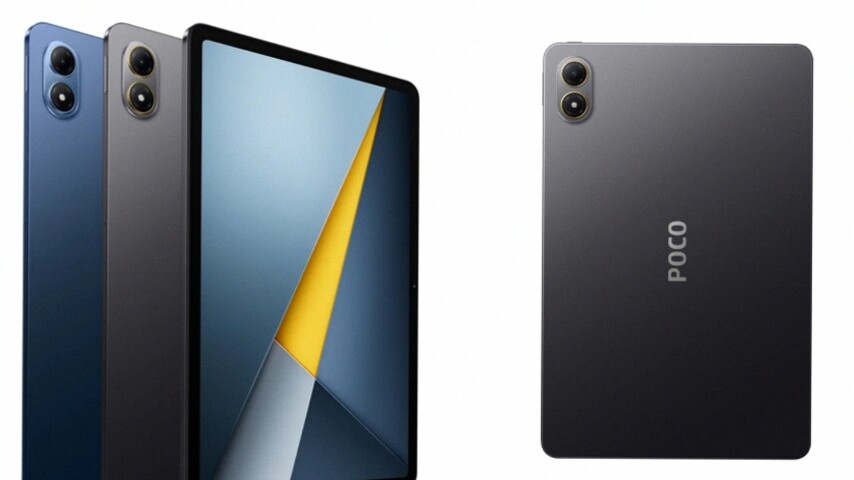
POCO has officially launched its new mid-range tablet, the POCO Pad M1, offering a compelling combination of features for users seeking a powerful yet affordable device. Priced at around $280, this tablet stands out with its large 12,000mAh battery and high-refresh-rate display, designed to meet both entertainment and productivity needs.
The POCO Pad M1 sports a sleek and premium design with a unibody metal chassis available in Blue or Grey. Measuring just 7.5mm thick and weighing 610 grams, it feels comfortable to hold. Its curved square camera module houses the main camera and LED flash, adding to the modern aesthetic. POCO also offers two accessories to enhance usability: the POCO Pad M1 Keyboard and Smart Pen, each priced near $40. The keyboard doubles as a protective cover with a kickstand, while the pen enables smooth writing and drawing with low latency and high pressure sensitivity.
Vivid Display and Smooth Performance
One of the tablet’s highlights is its 12.1-inch IPS LCD screen with a 2.5K resolution (2560 x 1600 pixels). This panel supports Dolby Vision, features up to 600 nits peak brightness, and includes a 120Hz refresh rate, which ensures fluid scrolling and immersive gaming experiences. The screen also incorporates Wet Touch technology, maintaining responsiveness even when fingers are wet or oily. Additional eye comfort is provided by DC dimming and TÜV Rheinland certification, helping reduce eye strain during extended use.
Under the hood, the POCO Pad M1 runs on the Qualcomm Snapdragon 7s Gen 4 chipset, built on a 4nm process. This powerful SoC delivers smooth multitasking and handles demanding apps and games efficiently. Testing data from POCO shows the device achieving an AnTuTu score of 1.06 million, which positions it strongly in the mid-range segment. The tablet includes 8GB LPDDR4X RAM and 256GB UFS 2.0 storage, expandable via microSD card up to 2TB, giving ample space for apps and media.
Massive Battery with Fast and Reverse Charging
Thanks to its 12,000mAh battery, the POCO Pad M1 promises impressive endurance, rated for up to 14 hours of video playback, 16 hours of reading, and a remarkable 105 hours of music streaming. Standby time can extend up to 83 days, making it reliable for users with heavy usage patterns. The device supports 33W fast charging, enabling quick top-ups, and includes 27W reverse charging functionality, effectively allowing the tablet to act as a power bank for other gadgets.
Sound and Connectivity Features
For multimedia consumption, the POCO Pad M1 includes four stereo speakers supporting Dolby Atmos, producing clear and immersive sound. The volume can be amplified by up to 300%, beneficial in noisy environments. The tablet integrates an 8MP front-facing camera suitable for video calls and conferencing. Connectivity options include Bluetooth 5.4 and WiFi 6, along with a USB Type-C port. It runs on HyperOS 2, based on Android 15, ensuring a smooth and up-to-date user experience.
Areas for Improvement
Despite its many strengths, the POCO Pad M1 lacks 4G-LTE cellular connectivity, which is a downside compared to some competitors within the same price range. Users relying on internet access on the go without WiFi may find this limitation significant.
Summary of Key Specifications
| Feature | Details |
|---|---|
| Display | 12.1-inch 2.5K, 120Hz, Dolby Vision |
| Processor | Qualcomm Snapdragon 7s Gen 4 (4nm) |
| RAM and Storage | 8GB LPDDR4X, 256GB UFS 2.0, expandable |
| Battery | 12,000mAh, 33W fast charging, 27W reverse charging |
| Camera | 8MP front camera |
| Audio | Four speakers with Dolby Atmos, 300% volume boost |
| Connectivity | Bluetooth 5.4, WiFi 6, USB Type-C |
| Operating System | HyperOS 2 (Android 15) |
| Accessories | Keyboard and Smart Pen (about $40 each) |
POCO’s latest tablet offers an attractive package for users looking for a high-refresh-rate display, long battery life, and solid performance. The thoughtful inclusion of productivity accessories further enhances its appeal for students and professionals. However, the absence of cellular support might encourage potential buyers to consider WiFi-only usage or alternative options depending on their connectivity requirements.