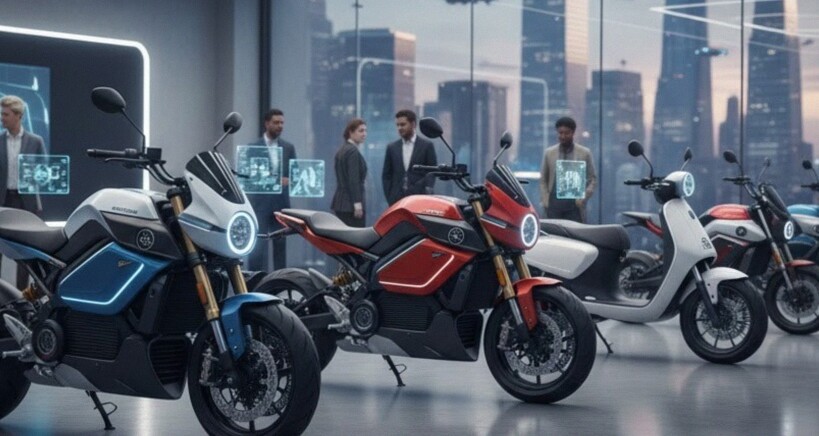
Electric motorcycles in 2026 have become remarkably affordable, breaking the stereotype of being expensive and exclusive. Prices now start as low as around $600, making them a practical choice for daily urban commuting.
This price drop is driven by growing domestic production and government subsidies targeting fast energy transition. Over 50 local brands manufacture electric bikes, using mainly Indonesian components to reduce costs.
Affordable pricing and subsidies


Entry-level electric motorcycles are offered between approximately $600 and $870 after subsidies. This is surprisingly cheaper than many new 110cc gasoline motorcycles sold today. The Indonesian government continues to back purchase incentives to accelerate the shift to electrified transport.
Growing local manufacturing base
Indonesia’s Ministry of Industry reports an expanding ecosystem of more than 50 active electric bike producers. Local assembly lines and increasing domestic parts content bolster competitive pricing. Battery production is also being scaled up locally, cutting import expenses significantly.
Competitive specs at low prices
Modern entry-level electric motorcycles feature lithium batteries, enabling 60–90 km range per full charge. Maximum speeds range from 60 to 75 km/h, ideal for city use. Features such as digital instrument panels, LED lighting, USB charging ports, and front disc brakes have become common even in affordable models.
Cost effectiveness beyond purchase price
Electric motorcycles are much cheaper to operate. Energy cost for about 70 km travel is just $0.13 to $0.23, compared with $1.00 to $1.70 for gasoline motorcycles over the same distance. Lower maintenance needs also contribute — electric motors have fewer moving parts, eliminating the need for oil changes, spark plugs, and air filters.
Challenges remain in battery lifespan and infrastructure
Lithium batteries typically last 800 to 1,200 charging cycles, or 3–4 years under daily use before capacity declines. Replacement costs still run into multiple hundreds of dollars but are decreasing yearly. Charging stations are concentrated mostly in major cities, though home charging using a standard outlet remains the preferred method, requiring 4–6 hours per full charge according to battery size.
Market response indicates changing perceptions
Dealers in Indonesia’s large cities report sharp increases in electric motorcycle sales in early 2026. Many buyers who initially only researched models ended up purchasing once the prices aligned with their expectations. This signals a shift from viewing electric motorcycles as niche luxury items toward viable everyday vehicles.
Outlook for electric motorcycles in Indonesia
Combining lower purchase prices, affordable running costs, easier maintenance, and independence from fuel price fluctuations creates compelling economics. Continued government support and industry competition may propel electric motorcycles as the mainstream choice within a few years. The year 2026 marks a pivotal point when many consumers realize electric motorcycles are far more accessible than previously imagined.