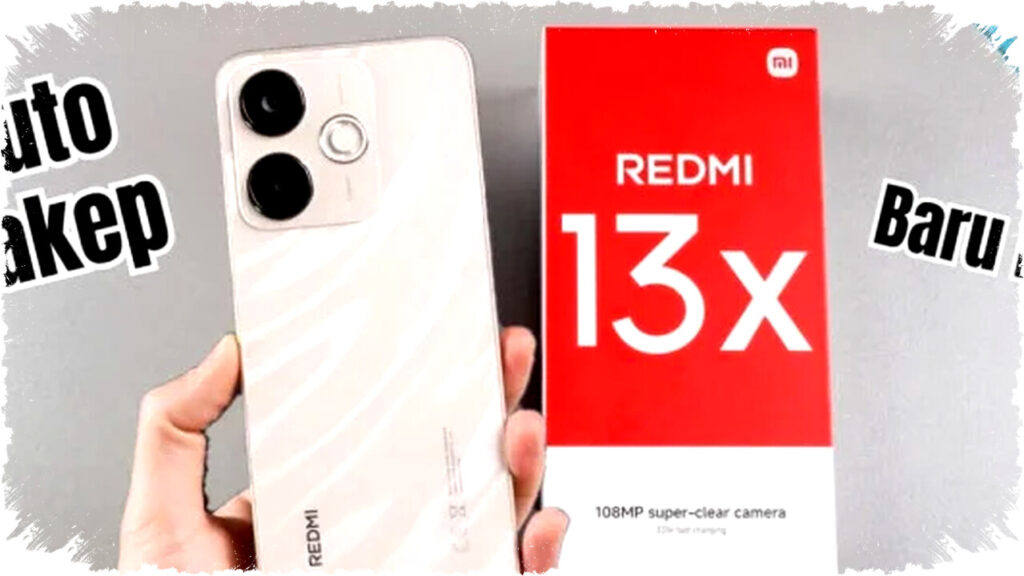
Smartphones featuring 8 GB RAM and 256 GB internal storage are increasingly accessible in the budget segment. These specifications, once typical for mid-range devices, are now found in models priced under Rp2 million, roughly $130 USD.
This shift reflects a global trend where mid-range features trickle down to entry-level smartphones. Intense competition from Chinese and African brands targeting emerging markets drives this change.
Impressive RAM and Storage at Affordable Prices
The availability of smartphones with large RAM and storage in the sub-$150 category has expanded consumer choices. Devices like the Redmi 13X offer 8 GB RAM combined with 256 GB ROM, a configuration previously rare in affordable phones. These specifications make multitasking smoother and provide substantial space for apps, media, and files.
Highlight on Redmi 13X
Redmi 13X is a prime example of this trend. It sports a 6.79-inch FHD+ display with a 90 Hz refresh rate, delivering a fluid visual experience. The device is powered by the MediaTek Helio G91 Ultra chipset, which balances performance and efficiency. Its dual-camera setup includes an impressive 108 MP main sensor paired with a 2 MP depth sensor. This camera module enables detailed photos, a feature usually expected from higher-tier smartphones.
The Redmi 13X comes with a sizable 5,030 mAh battery that supports extended use without frequent charging. Its retail price ranges between Rp1.7 million to Rp1.9 million, equating to approximately $110 to $125.
Competitors with Similar Specs
Other manufacturers also offer competitive alternatives in this price range. The Infinix Hot 60i is equipped with the same 8 GB RAM and 256 GB storage. It boasts a 6.7-inch HD+ display with a smooth 120 Hz refresh rate, powered by the MediaTek Helio G81 chipset. Although its camera resolution is 50 MP, lower than the Redmi 13X, it compensates with a 5,160 mAh battery capable of long endurance. The price hovers around Rp1.7 million to Rp1.9 million ($110-$125).
The Tecno Spark 30C similarly delivers 8 GB RAM and 256 GB storage. It features a 6.67-inch HD+ display with a 120 Hz refresh rate and the same Helio G81 chipset. Its 50 MP camera and a 5,000 mAh battery ensure decent performance for daily tasks. Price ranges between Rp1.6 million and Rp1.8 million, or about $105 to $115.
Market Pricing and Availability
As of January 2026, data from Indonesian e-commerce platforms reveal that models like the Infinix Hot 60i 8/256 GB are widely available at prices close to Rp1.9 million. Meanwhile, major brands such as Samsung and Oppo offer entry-level variants priced around Rp1.2 million to Rp1.8 million ($80 to $120), depending on RAM and storage configurations.
This pricing dynamic shows that larger RAM and storage capacities are becoming baseline features even in entry-level handsets. Still, chipset quality remains an essential consideration since most devices in this segment use entry-level processors.
Why RAM and Storage Are Key Yet Not the Whole Picture
RAM and storage play critical roles in smartphone usability. Larger RAM ensures smoother multitasking. Expansive internal storage accommodates apps, photos, videos, and software updates without rapid filling. However, buyers should be cautious because not all 8 GB RAM is the same. Some manufacturers combine physical RAM with virtual RAM, which may not offer equivalent performance.
Moreover, chipset capabilities heavily influence overall device speed, gaming potential, and system responsiveness. The Helio G91 Ultra or Helio G81 found in these devices provide reasonable performance for typical social media, streaming, or casual gaming activities but may struggle with demanding games or intensive multitasking.
Camera resolution, while important, does not always guarantee high photo quality. Sensor type, image processing software, and lens quality affect final image output significantly. Thus, a 108 MP or 50 MP camera resolution should be considered alongside real-world reviews and sample images.
Additional Features in the Affordable Segment
Some entry-level phones now also incorporate enhanced display refresh rates, such as 90 Hz or even 120 Hz. This advancement improves screen smoothness and user interaction experience but often comes at the cost of increased battery consumption.
Battery capacity in this category remains generous, mostly above 5,000 mAh, enabling longer usage hours—a beneficial feature for users who do not charge their phones frequently.
Growing Importance of Software Updates
Another factor gaining attention is software update support. While flagship devices generally receive timely and long-term updates, entry-level phones may lag behind. Customers should verify the update policies of specific brands to ensure security patches and system improvements over time.
Summary Table: Key Specifications of Selected Rp1 Jutaan Phones
| Phone Model | RAM / Storage | Display | Chipset | Camera (MP) | Battery (mAh) | Price Range Rp (approx. USD) |
|---|---|---|---|---|---|---|
| Redmi 13X | 8 GB / 256 GB | 6.79" FHD+ 90 Hz | MediaTek Helio G91 Ultra | 108 + 2 | 5,030 | 1.7-1.9 million (~$110-$125) |
| Infinix Hot 60i | 8 GB / 256 GB | 6.7" HD+ 120 Hz | MediaTek Helio G81 | 50 | 5,160 | 1.7-1.9 million (~$110-$125) |
| Tecno Spark 30C | 8 GB / 256 GB | 6.67" HD+ 120 Hz | MediaTek Helio G81 | 50 | 5,000 | 1.6-1.8 million (~$105-$115) |
These options illustrate how affordable smartphones are closing the gap with mid-range models in features like RAM, storage, and camera resolution.
Final Notes on Purchasing Decisions
Despite attractive specs, users must consider factors beyond RAM and camera megapixels. Chipset performance, build quality, software optimization, and post-purchase support are equally critical. For buyers seeking affordable smartphones with "sultan specifications," evaluating these aspects ensures better satisfaction and longevity.
In 2026, the emergence of 8/256 GB RAM/ROM smartphones priced under $150 exemplifies rapid technology democratization in mobile devices. This development benefits consumers, especially in emerging markets, by offering higher standards at lower costs than ever before.